



 Telluride Hybrid
Brake & Tire Care Tips for Daily Commuters in Beavercreek
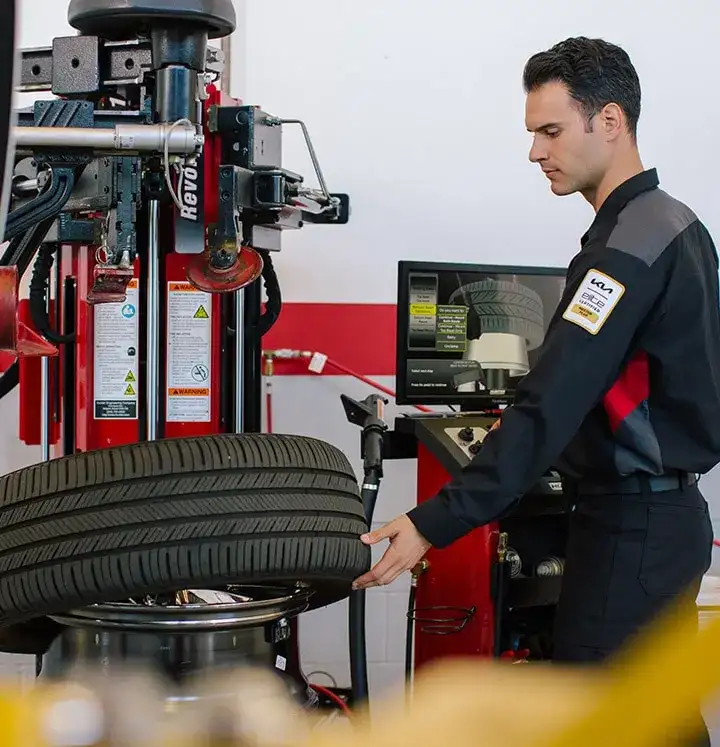
Last week, a Forte owner from Fairborn came in for tire rotation at 22,000 miles, his first since buying the vehicle new two years earlier. His front tires measured 3/32-inch tread depth, nearly worn to replacement limits, while rear tires still showed 7/32 inches. He’d been commuting daily on I-675 between Fairborn and Kettering, plus stop-and-go traffic through Beavercreek on North Fairfield Road. The uneven wear meant replacing front tires immediately at $340 despite the rears having 20,000+ miles remaining. The tire rotations he skipped? $45 every 7,500 miles, three rotations totaling $135 would have distributed wear evenly, extending all four tires to 45,000+ miles and saving him approximately $400 in premature replacement costs.
If you’re driving a Kia in the Beavercreek area—whether it’s a Forte navigating morning traffic to Wright-Patterson Air Force Base, a Sportage handling the Woodman Drive shopping corridor, or a Telluride carrying your family between home, school, and activities—your brakes and tires face unique challenges from our local driving conditions. Daily commutes combining highway miles on I-675, Route 35, and Route 444 with frequent stops through Beavercreek’s commercial districts create wear patterns that accelerate component deterioration beyond what suburban drivers in less-traveled areas experience.
Many Kia owners treat brakes and tires as components they’ll “worry about when something goes wrong,” checking them only when obvious symptoms appear. This reactive approach might work temporarily, but it costs substantially more than proactive maintenance. By the time you notice brake squealing or feel tire vibration, damage has already occurred—often to the tune of hundreds in additional repair costs that proper maintenance would have prevented.
Understanding how Beavercreek’s specific driving conditions affect your brakes and tires, following appropriate service intervals, and recognizing early warning signs protects your investment while ensuring the safety that proper brake and tire condition provide. Let’s explore the maintenance strategies that daily commuters need to maximize component life while minimizing costs.
Beavercreek Commuting Patterns and Their Impact
The Dayton metropolitan area’s traffic patterns create specific brake and tire demands that owners need to understand.
Wright-Patterson Air Force Base employment drives massive commuting volumes through Beavercreek. Morning and evening rush hours on Colonel Glenn Highway, North Fairfield Road, and I-675 create stop-and-go conditions that stress brakes through constant use while accelerating tire wear through frequent acceleration and deceleration cycles.
Each brake application generates heat and wears friction material from pads. Daily commuters might brake 40-60 times per trip—80-120 brake applications daily, 20,000-30,000 annually. This constant use wears front brake pads on typical Kias in 35,000-45,000 miles for commuters versus 50,000-65,000 miles for drivers with less frequent stopping.
Traffic light timing through Beavercreek creates additional brake wear. The Kemp Road corridor, Mall Woods Drive near The Greene, and North Fairfield Road through downtown Beavercreek feature numerous signals creating frequent stops. Each red light means brake application, heat generation, and material wear.
The acceleration from stopped positions after each light also stresses tires. The instant your foot leaves the brake and presses the accelerator, tire rubber scrubs against pavement as grip overcomes inertia. Multiply this by dozens of daily stops, and the cumulative tire wear becomes substantial.
Highway merging and lane changes on I-675 and Route 35 create cornering forces that wear tires, particularly on vehicles with front-wheel drive (most Kias). The front tires handle acceleration forces, majority of braking forces, and all steering forces simultaneously. This triple duty explains why front tires wear 50-70% faster than rears on front-drive vehicles.
Seasonal factors add complexity. Ohio winters mean road salt accelerating brake hardware corrosion and creating rust on rotors. Spring potholes from freeze-thaw damage can knock alignment out of specification, causing rapid tire wear. Summer heat stresses tire rubber compounds and increases tire pressure requiring monitoring.
The Mall Woods Drive and Upper Valley Pike commercial corridor sees heavy traffic throughout the day. Turning movements in and out of parking lots, slow-speed maneuvering, and frequent stops all contribute to brake and tire wear that pure highway commuting doesn’t create.
A customer from Fairborn calculated that his round-trip commute to Kettering Medical Center involved 47 stops on average—traffic lights, stop signs, and congestion delays. At 250 working days annually, that’s 11,750 brake applications per year just from commuting, not counting personal driving. “No wonder my brakes need service every 35,000 miles,” he said. “I never realized how many times I brake every single day.”
“Beavercreek and Dayton-area commuters put more stress on brakes and tires than they realize,” says Michael Chen, Service Manager at the Heller Drive location. “The combination of highway speeds on I-675, frequent stops through commercial areas, and seasonal challenges from Ohio weather creates demanding conditions. Commuters who follow conservative maintenance intervals—tire rotations every 7,500 miles and annual brake inspections—consistently get better tire life and avoid expensive brake repairs that reactive drivers face. The investment in proactive maintenance is small compared to the savings from extended component life and avoided emergency repairs.”
Understanding Your Kia’s Brake System
Knowing how your brakes work helps you understand maintenance requirements and recognize problems early.
Modern Kia brake systems use disc brakes on all four wheels (most models) with sophisticated ABS and stability control integration. Front brakes handle 60-70% of stopping force due to weight transfer during braking, explaining why front pads wear faster than rears.
Brake pads contain friction material that presses against rotors to create stopping force. This friction generates tremendous heat—brake temperatures can exceed 600°F during aggressive highway braking or extended downhill descents. The friction material gradually wears away, requiring eventual replacement.
Brake pad life varies enormously based on driving style and conditions:
- Conservative highway driving: 50,000-65,000 miles
- Mixed commuting (typical Beavercreek): 35,000-45,000 miles
- Aggressive city driving: 25,000-35,000 miles
Brake rotors are the steel discs that pads clamp against. Rotors wear more slowly than pads but eventually become too thin or develop surface irregularities requiring replacement. Typical rotor life is 70,000-100,000 miles or two to three pad replacements, though this varies with driving conditions and whether rotors are resurfaced or replaced when pads wear out.
Brake fluid is hydraulic fluid transferring pedal force to the calipers. Brake fluid absorbs moisture over time, lowering its boiling point and causing internal corrosion. Brake fluid service every three years regardless of mileage protects against fluid-related brake problems and maintains proper pedal feel.
Warning signs requiring brake service:
Squealing or squeaking: High-pitched noise during braking indicates wear indicators (metal tabs on pads) contacting rotors. This is an early warning—you have perhaps 1,000-2,000 miles before pads wear completely. Schedule service promptly.
Grinding or scraping: Metal-on-metal sound means pads are worn completely and brake backing plates are grinding against rotors. This damages rotors, turning a $320 pad replacement into a $650 pad and rotor service. Stop driving immediately and have vehicle towed to avoid accident risk and additional damage.
Vibration or pulsation: Pedal pulsing during braking indicates warped rotors or uneven pad deposits. This requires rotor replacement or resurfacing. Don’t ignore vibration—it worsens rapidly and affects stopping ability.
Soft or spongy pedal: Pedal that feels soft or sinks toward floor suggests air in brake lines or low brake fluid. This is dangerous—have vehicle towed to service facility immediately. Don’t attempt to drive with compromised brake pedal feel.
Vehicle pulls to one side: Pulling left or right during braking indicates uneven brake force, possibly from seized caliper, contaminated pad, or brake hose restriction. This requires immediate diagnosis and correction.
Dashboard warning lights: Brake system warning light (red) or ABS light (amber) indicate problems requiring immediate professional attention. Don’t ignore brake warning lights—they signal safety-critical issues.
Brake Service Intervals for Commuters
Understanding appropriate brake service timing helps you budget and schedule maintenance proactively.
Annual brake inspection should be standard practice for daily commuters. This inspection includes:
- Brake pad thickness measurement (minimum 4mm remaining)
- Rotor thickness measurement and comparison to specifications
- Rotor surface condition assessment
- Brake fluid level and condition check
- Caliper operation and seal inspection
- Brake line and hose condition evaluation
Annual inspection costs $45-75 and catches developing problems before they require expensive corrections. Many Kia service facilities include brake inspection with oil changes at no additional charge.
Brake pad replacement timing depends on inspection findings, not arbitrary mileage. However, typical intervals for Beavercreek commuters are:
Front brake pads: 35,000-45,000 miles Rear brake pads: 50,000-70,000 miles (disc brakes) or 70,000-100,000 miles (drum brakes if equipped)
Brake pad replacement costs:
Front brake pads (installation included): $280-380 Rear brake pads (installation included): $240-320 Front pads + rotors: $520-680 Complete brake service (all four wheels, pads + rotors): $850-1,250
These costs reflect quality OEM or premium aftermarket parts. Budget parts may cost $100-150 less but often produce excessive dust, noise, or premature wear making them false economy.
Brake fluid service every three years costs $120-165 and protects expensive ABS components ($1,200-1,800 to replace) from moisture-induced corrosion. This time-based interval applies regardless of mileage—brake fluid degrades from age and moisture absorption even if you drive minimally.
Ohio’s humid summers accelerate moisture absorption in brake fluid. Annual humidity testing using a brake fluid tester ($15 at auto parts stores) can verify fluid condition between service intervals. Moisture content above 3% suggests fluid service is overdue even if three years haven’t elapsed.
Winter brake maintenance deserves special attention in Ohio. Road salt corrodes brake hardware—caliper slide pins, pad backing plates, and metal brake lines. Annual brake cleaning and lubrication service ($85-125) removes salt accumulation and lubricates moving parts, preventing the seized calipers and corroded hardware that winter neglect causes.
A customer from Xenia ignored brake squealing for 3,000 miles, planning to “deal with it eventually.” When she finally brought her Sorento in, the front pads had worn completely through and the backing plates had grooved her front rotors beyond resurfacing thickness. The delayed service turned a $320 pad replacement into a $680 pad and rotor job. Her procrastination cost her an additional $360 plus several weeks of worsening brake performance and safety concerns.
Tire Fundamentals: Pressure, Rotation, and Alignment
Proper tire maintenance is the most cost-effective vehicle service, dramatically extending tire life through simple, inexpensive procedures.
Tire pressure is the foundation of tire care. Proper inflation affects tire life, fuel economy, handling, and safety.
Check tire pressure monthly when cold (before driving or at least three hours after driving). Use a quality digital tire pressure gauge ($15-25) rather than gas station gauges which are often inaccurate from abuse.
The correct tire pressure appears on a sticker inside the driver’s door jamb, NOT on the tire sidewall. Typical Kia pressures range from 32-35 PSI depending on model. The sidewall shows maximum pressure the tire can handle, not the optimal pressure for your vehicle.
Under-inflation consequences:
- Rapid shoulder wear (outer edges wear faster than center)
- Heat buildup increasing blowout risk
- Reduced fuel economy (1-2 MPG loss from 5 PSI under-inflation)
- Poor handling and increased stopping distances
Over-inflation consequences:
- Center wear (middle wears faster than edges)
- Harsh ride quality
- Reduced traction in wet conditions
- Increased susceptibility to impact damage from potholes
Ohio’s temperature swings cause significant pressure variations. Tire pressure changes approximately 1 PSI per 10°F temperature change. Tires properly inflated at 35 PSI on a 70°F autumn afternoon will measure 31 PSI on a 30°F winter morning—4 PSI under specification. Monthly pressure checks accommodate these seasonal variations.
Tire rotation every 7,500 miles distributes wear evenly across all four tires, extending total tire life by 20-30%. Rotation costs $35-55 and takes 30 minutes. Many Kia dealers include rotation with oil changes at no additional charge.
Front-wheel-drive Kias benefit most from rotation because front tires wear 50-70% faster than rears from handling acceleration, braking, and steering forces. Without rotation, you’ll replace front tires at 25,000-30,000 miles while rears show 60%+ remaining tread—wasteful and expensive.
Rotation patterns vary by drivetrain:
- Front-wheel drive: Front tires move straight back, rear tires cross to front
- All-wheel drive: Front tires move straight back, rear tires move straight forward
- Directional tires: Side-to-side swaps only (no crossing)
Wheel alignment ensures tires contact the pavement at proper angles. Misalignment causes rapid, uneven wear destroying tires prematurely.
Alignment should be checked:
- Every 12-15,000 miles as preventive maintenance
- After any pothole strike or curb impact
- When installing new tires
- When symptoms appear (pull, drift, uneven wear, off-center steering)
- After suspension or steering component replacement
Four-wheel alignment costs $145-195 and protects your $600-1,000 tire investment from premature wear. The cost-benefit equation strongly favors regular alignment—the $165 alignment service prevents $400-600 in premature tire replacement.
Beavercreek’s spring potholes from winter freeze-thaw cycles are particularly hazardous to alignment. After any significant pothole strike on Colonel Glenn Highway, Dayton-Xenia Road, or I-675, schedule alignment verification within a few days. Don’t wait for symptoms—proactive checking catches problems before tire damage accumulates.
Tire Replacement Timing and Selection
Knowing when tires need replacement and choosing appropriate replacements protects safety and value.
Tread depth monitoring is essential for safety and legal compliance. New tires have 10/32 to 11/32-inch tread depth. Legal minimum in Ohio is 2/32 inch, but safety requires replacement at 4/32 inch when wet-weather traction begins degrading significantly.
Measure tread depth using a tread depth gauge ($8-12) or the penny test: insert a penny into tread grooves with Lincoln’s head upside down. If you can see the top of Lincoln’s head, tread depth is 2/32 inch or less—replace immediately. If Lincoln’s head is partially covered, use a gauge for accurate measurement.
Replace tires at 4/32 inch for optimal safety. Ohio’s variable weather creates wet conditions where adequate tread depth is essential for channeling water and maintaining grip. Worn tires hydroplane at lower speeds, increase stopping distances, and reduce cornering grip.
Tire age matters as much as tread depth. Rubber degrades chemically over time regardless of mileage. Replace tires at 6-8 years regardless of remaining tread depth. Check tire age using the DOT code on the sidewall—last four digits show week and year of manufacture (example: “2319” means 23rd week of 2019).
Uneven wear patterns indicate underlying problems requiring correction before installing new tires:
- Inside or outside edge wear: Alignment problems
- Center wear: Chronic over-inflation
- Both edge wear: Chronic under-inflation
- Patchy or cupped wear: Suspension component wear or balance problems
- Feathering: Toe alignment issues
Address the cause before replacing tires to ensure new tires wear evenly.
Tire selection for Kia models:
Size must match what’s specified on your door jamb sticker and owner’s manual. Don’t deviate from specified size—it affects speedometer accuracy, handling, and potential drivetrain issues.
Quality tiers:
Premium brands (Michelin, Bridgestone, Continental, Goodyear): $130-200 per tire. Best wet traction, longest life, superior handling. Worth the premium for safety and total ownership cost.
Mid-tier brands (General, Hankook, Kumho, Yokohama): $90-140 per tire. Good quality and reasonable longevity. Appropriate compromise for budget-conscious buyers.
Economy brands: $60-90 per tire. Minimal safety standards but inferior wet traction and shorter life. False economy—savings disappear through premature replacement and compromised safety.
For Ohio’s variable weather including winter precipitation, invest in quality all-season tires with strong wet traction ratings. The $200 premium for four premium tires over economy options pays back through longer life (50,000 vs. 35,000 miles) and superior safety.
All-wheel-drive Kia models (Sportage, Sorento, Telluride AWD) require replacing all four tires simultaneously to avoid drivetrain issues. The AWD system monitors tire rotation speeds and becomes confused by different tire diameters from uneven wear. Replace all four tires at once on AWD vehicles.
A customer from Bellbrook replaced only two tires on his Sorento AWD, mixing new fronts with worn rears. Within 5,000 miles, he developed transfer case shudder and unusual noises. The tire diameter mismatch from different tread depths had damaged AWD components requiring $1,450 in repairs. The two additional tires we’d recommended cost $280. His decision to save money on two tires cost him $1,170 in AWD repairs.
Seasonal Considerations for Ohio Driving
Ohio’s distinct seasons create changing brake and tire maintenance priorities throughout the year.
Winter (December-February):
Road salt accelerates brake hardware corrosion. Rotors develop surface rust from limited driving during snow events. Brake calipers corrode without proper lubrication. Monthly winter driving through salted roads demands end-of-winter brake cleaning service.
Tire pressure drops with temperature. Check weekly during cold snaps—pressure can drop 4-6 PSI from autumn to winter, significantly under-inflating tires if not monitored.
Tread depth becomes critical for snow and ice traction. Ensure minimum 6/32-inch depth before winter for adequate snow performance. Tires at 4/32-inch wear limit lack sufficient tread for winter safety.
Consider winter tire installation if budget allows. Dedicated winter tires dramatically improve snow and ice traction compared to all-season tires. Installation costs $80-120 for mounting, balancing, and swapping, but the safety improvement is substantial.
Spring (March-May):
Pothole damage peaks as freeze-thaw cycles destroy pavement. After winter, inspect tires for sidewall bulges or cuts from pothole strikes. Schedule alignment check if you’ve hit significant potholes—even one major impact can knock alignment out of specification.
Remove accumulated salt and grime from wheels and brake components. Professional detailing or DIY wheel cleaning prevents corrosion from winter salt that continues working even after roads are clear.
Brake inspection after winter verifies no corrosion damage requires attention before summer driving season.
Summer (June-August):
Heat stress on tires increases. Check pressure weekly during heat waves—pressure increases 3-5 PSI from morning to afternoon on hot days. Over-inflation from heat buildup can affect handling and tire wear.
Brake fluid can boil during extended highway driving in extreme heat if moisture-contaminated. Ensure brake fluid service is current before summer road trips.
Tire condition becomes critical—aged or worn tires are more susceptible to blowouts in heat. Replace tires showing age-related cracking or near wear limits before summer.
Fall (September-November):
Pre-winter preparation timing is ideal. Schedule brake inspection, tire tread depth check, and wheel alignment verification before winter arrives. Address any developing issues in comfortable fall weather rather than during winter emergencies.
Temperature swings require pressure monitoring. Morning lows in the 40s and afternoon highs in the 70s create daily pressure variations requiring adjustment.
Cost-Effective Maintenance Strategies
Smart maintenance timing and choices maximize component life while minimizing costs.
Bundle services when possible. Schedule tire rotation with oil changes, combine alignment with new tire installation, and request brake inspection during any service visit. Bundling saves labor costs and convenience.
Follow recommended intervals rather than waiting for symptoms. Tire rotations every 7,500 miles cost $135-150 over 45,000 miles but extend tire life by 10,000-15,000 miles worth $200-300. The preventive service pays for itself plus additional savings.
Address problems early. Brake squealing means worn pads needing replacement ($320) before they damage rotors ($680 with rotors). Early intervention saves money and prevents safety-compromising situations.
Track maintenance history to predict future needs and budget accordingly. If your front brakes lasted 38,000 miles, expect similar life on replacements with equivalent driving patterns. Plan financially rather than facing surprise expenses.
Choose quality over lowest price. Premium brake pads cost $50 more than economy pads but last 15,000 additional miles and produce less dust. Quality tires cost $200 more per set but last 15,000 additional miles and provide superior safety. Total ownership cost favors quality despite higher initial price.
Leverage warranty and service plans if available. Some Kia warranties or purchased service plans include brake and tire service reducing out-of-pocket costs.
DIY pressure checks save money while maintaining safety. A $20 tire gauge and five minutes monthly prevents the under-inflation that costs $200-400 annually in reduced fuel economy and premature tire wear.
Rotate tires yourself if capable and equipped. The only requirement is a jack, jack stands, lug wrench, and torque wrench—total investment under $150 that pays back within 3-4 rotations. However, professional rotation includes inspection that DIY may miss, so consider the value of expert eyes examining your tires and brakes.
A customer from Centerville calculated her brake and tire costs over six years and 90,000 miles following our recommended maintenance schedule versus her previous reactive approach. Proactive maintenance cost $2,340 total (rotations, alignments, one brake service, one tire set). Her previous reactive approach over similar mileage cost $3,800 (three brake services from delayed attention, two tire sets from skipped rotations and alignment). Proactive maintenance saved $1,460 over six years—substantial return on the time spent following schedules rather than ignoring maintenance until problems developed.
Your 30-Day Brake and Tire Action Plan
Taking control of brake and tire maintenance starts with three actions you can complete this month.
This week: Perform comprehensive tire inspection and pressure check. Check all four tires when cold using a quality gauge. Adjust to door jamb specification if needed. Measure tread depth at multiple points on each tire. Inspect sidewalls for cuts, bulges, cracks, or embedded objects. Look for uneven wear patterns suggesting alignment or pressure issues. Document findings with measurements and photos. If problems exist (low pressure, low tread, damage, uneven wear), schedule service immediately. For healthy tires, establish monthly pressure checking habit with phone calendar reminders.
Within two weeks: Review service history and verify brake and tire maintenance is current. When was your last tire rotation? If over 10,000 miles ago, schedule rotation now. When was last brake inspection? If over 12 months, schedule inspection. When was last alignment check? If over 15,000 miles or you’ve hit potholes, schedule alignment. Create maintenance calendar with proper intervals for your driving patterns—rotations every 7,500 miles, brake inspection annually, alignment every 12,000-15,000 miles.
By month’s end: Calculate expected component replacement timing based on current condition and your driving patterns. If tires measure 6/32-inch depth and you drive 15,000 miles annually, you’ll need replacement in 12-15 months. Budget $600-1,000 for tires. If brake pads are at 6mm thickness, estimate 15,000-20,000 miles remaining—schedule replacement in 12-18 months and budget $600-800 for front and rear service. Planning prevents financial surprises and allows shopping for best prices rather than accepting emergency service pricing. Consider setting aside $75-100 monthly in a vehicle maintenance fund covering predictable expenses like brakes and tires.
These three steps take approximately 90 minutes total but establish monitoring and planning habits that save hundreds to thousands over your ownership period.
When to Seek Professional Service
While some maintenance tasks are DIY-friendly, professional service ensures safety-critical systems receive expert attention.
Brake service always requires professional expertise. Brakes are life-safety systems where improper work creates accident risk. Brake pad replacement, rotor resurfacing/replacement, caliper service, and hydraulic system work should only be performed by trained technicians with proper equipment.
Attempting DIY brake work risks:
- Improperly seated pads causing brake failure
- Incorrect caliper operation from improper installation
- Contaminated brake fluid from poor bleeding procedure
- Damaged ABS components from improper service
The $320 professional brake service provides safety assurance that DIY work can’t guarantee.
Tire mounting and balancing requires specialized equipment that DIYers lack. While you can rotate tires yourself, new tire installation demands professional service ensuring:
- Proper bead seating preventing leaks
- Correct balancing eliminating vibration
- Appropriate torque specifications on lug nuts
- TPMS sensor service and programming
- Visual inspection for wheel or suspension damage
Alignment service requires computerized equipment measuring angles to hundredths of a degree. This isn’t DIY-possible without $20,000+ alignment rack. Professional four-wheel alignment ensures all angles meet specifications protecting your tire investment.
When DIY is appropriate:
- Tire pressure checking and adjustment
- Visual tire inspection
- Tread depth measurement
- Tire rotation (if equipped and knowledgeable)
- Brake fluid condition testing
These simple tasks save money while maintaining safety. However, know your limits—safety-critical repairs require professional expertise.
Need expert brake and tire service from technicians who understand Beavercreek commuting demands? Our service department offers comprehensive brake and tire care with quality parts and certified technicians.
Schedule Your Brake & Tire Service Today
Your Kia’s brakes and tires are safety-critical components that daily commuting stresses continuously. Proper maintenance through regular inspections, timely service, and quality parts ensures reliable stopping power and safe handling through every mile.
Our certified Kia technicians at the Heller Drive location understand the specific demands that Beavercreek and Dayton-area commuting places on brakes and tires. We use quality components, follow manufacturer procedures, and provide honest assessments helping you maintain safety while managing costs effectively.
Schedule your brake and tire service today by calling our service department or booking online. Visit us at 2220 Heller Dr, Beavercreek, OH 45434, conveniently located just off I-675 with easy access throughout the Dayton area.
Proper brake and tire maintenance protects your safety, extends component life, and saves money through proactive care rather than reactive repairs. That’s the confidence expert service delivers.

0 comment(s) so far on Brake & Tire Care Tips for Daily Commuters in Beavercreek