


Cranking Slow in Greene County? How Battery Acid & Parasitic Drain Degrade Your Kia’s Electrical System
Key Takeaways
- Slow cranking is an early warning: A starter that turns over lazily usually means the battery is losing capacity or the connection to it is compromised, and it rarely fixes itself.
- Battery acid corrodes more than terminals: Electrolyte vapor and residue can eat into clamps, cables, and nearby metal, adding resistance that makes a healthy battery behave like a weak one.
- Parasitic drain works while the car sits: Modules, aftermarket accessories, and faulty components can pull current after shutdown and leave you with a flat battery by morning.
- Testing early costs far less than a breakdown: A battery, charging, and draw test identifies the real cause before it turns into a tow, a missed shift, or a failed alternator.
You turn the key or press the start button outside your home in Beavercreek, and instead of a crisp start you get a sluggish, groaning crank. Maybe it fires on the second try, maybe it clicks and goes quiet. Either way, your Kia is telling you something about its electrical system. Replacing a corroded cable or a tired battery on your own schedule costs far less than a roadside jump, a tow, and an emergency repair on a freezing morning. Understanding what is actually happening under the hood, from battery acid residue to a hidden current draw, helps you act before a small problem becomes an expensive one.
Why Greene County Winters Are Hard on a Kia Battery
A car battery is a chemical device, and chemistry slows down in the cold. When temperatures drop across Greene County, from the early frosts in Xenia to the bitter January mornings along the Little Miami River corridor, the reactions inside a lead-acid battery become less efficient. At the same time, cold engine oil thickens and the starter needs more current to turn the engine over. Your Kia asks more of the battery precisely when the battery can give less.
Ohio’s swings make this worse. A mild afternoon followed by a hard overnight freeze puts the battery through repeated stress, and summer heat quietly damages the internal plates long before winter exposes the weakness. Many drivers assume a battery fails in winter, but the damage is often done during July and August, and the first cold snap simply reveals it.
What Battery Acid Actually Does to Your Electrical System
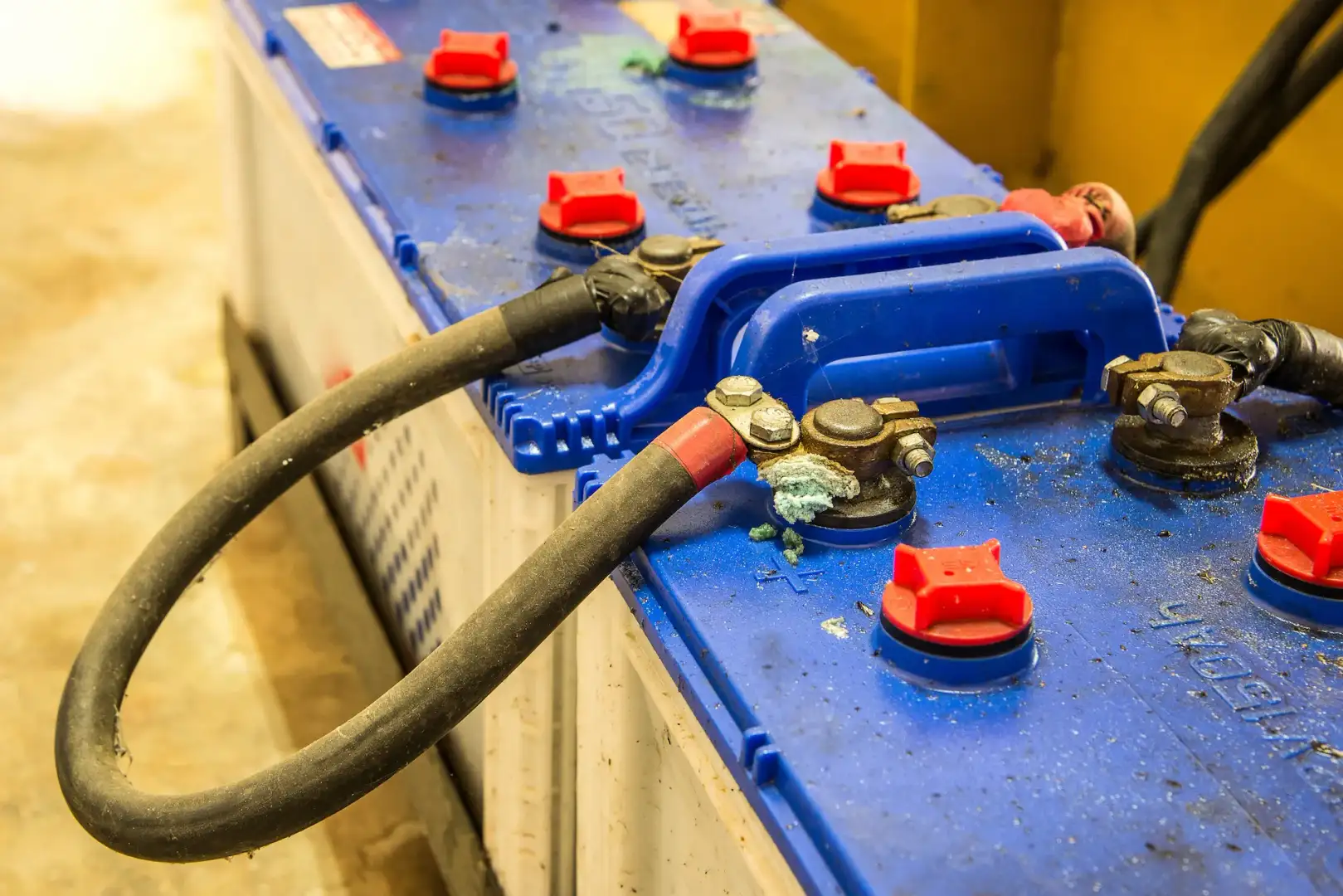
Inside a conventional lead-acid battery, the electrolyte is a mixture of sulfuric acid and water. During normal operation and especially during charging, small amounts of vapor can escape around the terminals and vents. That vapor reacts with the metal of the posts and clamps, forming the crusty white, blue, or green buildup many drivers have noticed.
This is more than a cosmetic problem. Corrosion is a poor conductor, so every layer of buildup adds resistance between the battery and the rest of the car. The starter needs a large burst of current to crank the engine, and even a small amount of added resistance can reduce that flow enough to cause slow cranking, dimming lights, or a clicking sound. The battery may be perfectly capable, yet the car behaves as though it is failing.
Left alone, acid residue can creep into the cable ends, wicking along the copper strands under the insulation where you cannot see it. It can also attack the battery tray, hold-down hardware, and surrounding brackets. If you spot heavy buildup, a leaking case, or a swollen battery, treat it as a service item rather than a do-it-yourself cleanup. Battery acid is hazardous, and old batteries should be recycled properly, as the EPA explains for used lead-acid batteries.
How Parasitic Drain Quietly Empties the Battery
Even when your Kia is parked and locked, it is not completely asleep. Body control modules, the keyless entry receiver, the alarm system, and memory circuits for the clock and radio all draw a very small current. A normal draw is tiny, generally measured in milliamps, and it settles down after the vehicle’s modules go to sleep a short time after shutdown.
Parasitic drain is what happens when something keeps drawing more than it should. Common culprits include a trunk or glove box light that stays on, a faulty relay, a module that fails to sleep, an aftermarket dash camera or remote starter wired incorrectly, or a USB charger that stays powered. Over a few days, even a modest excess draw can pull a battery down far enough that the car will not start, and repeated deep discharges permanently shorten battery life.
Here is the part many owners miss: a battery drained this way often accepts a jump start and runs fine for a day, which makes it look like the battery was simply old. The real cause remains, and the next dead battery is only a matter of time. Finding it requires measuring current flow with the vehicle off and isolating circuits one at a time, which is why a quick visual check rarely solves it.
Signs Your Kia’s Electrical System Is Struggling
Electrical trouble tends to announce itself gradually. Watch for these common warning signs:
- The engine cranks slower than usual, especially on cold mornings
- Headlights dim at idle or flicker when accessories turn on
- A clicking sound when you press start, with no engine turnover
- Visible corrosion on the battery posts or cable clamps
- A battery or charging system warning light on the dash
- Infotainment glitches, resetting clocks, or random warning messages after the car sits
Any one of these can have several causes, but together they point toward the battery, its connections, the alternator, or a hidden draw. The sooner the source is identified, the less likely you are to be stranded on Dayton-Xenia Road or in the parking lot at work.
Why Short Trips Around Beavercreek Make It Worse
Daily driving habits matter. Running to Beavercreek’s shopping corridors, dropping kids at school, or making quick hops along Route 35 and I-675 might total only a few minutes behind the wheel. Starting the engine uses a large amount of battery energy, and the alternator needs sustained driving time to put it back. Repeated short trips leave the battery in a chronic state of partial charge.
A battery that never fully recharges develops sulfation, where hard lead sulfate crystals form on the plates and reduce capacity. Add heated seats, defrosters, a heated steering wheel, and a phone charging the whole way, and the electrical load in winter can outpace what short trips replenish. The result is a battery that slowly loses ground until one cold morning it cannot keep up.
AGM Batteries and Idle Stop and Go Systems
Many newer Kia models use start-stop technology, often called Idle Stop and Go, which shuts the engine off at stoplights and restarts it automatically. These vehicles rely on an absorbent glass mat battery built for the repeated deep cycling this feature demands. An AGM battery tolerates heavy use better than a conventional one, but it is also more sensitive to chronic undercharging and to excessive parasitic drain.
Replacement matters too. Using the wrong battery type in a vehicle designed for AGM can cause premature failure and may disrupt start-stop operation. Some Kias also use a battery sensor that tracks charge state, so a replacement should be handled correctly rather than treated as a simple swap. Genuine and correctly specified parts keep the charging strategy working as designed, and you can browse options through the Kia of Beavercreek parts center.
What a Proper Diagnosis Looks Like
Guessing wastes money. A thorough electrical check starts with a load test and state-of-health reading on the battery, then inspects the terminals, clamps, and grounds for corrosion and looseness. Next comes a charging system test to confirm the alternator produces the right voltage under load. If the battery keeps dying, a parasitic draw test follows, measuring current after the vehicle’s modules have gone to sleep and then isolating fuses one at a time until the problem circuit appears.
This process separates a failing battery from a failing alternator, a corroded connection, or a hidden draw. Replacing parts without testing can mean buying a battery that dies again within weeks. The technicians at the Kia of Beavercreek service center can walk through each step with factory-level knowledge of how your model’s electrical system should behave.
What Repairs Cost Compared
Costs vary by model, battery type, and what the diagnosis uncovers, but the pattern is consistent: early attention is cheaper. As a general comparison:
- Terminal and cable cleaning: A modest service that restores a clean connection and often solves slow cranking caused by corrosion
- Battery replacement: A mid-range repair, with AGM batteries costing more than conventional ones
- Parasitic draw diagnosis and repair: Time-based labor to trace the circuit, plus the cost of any faulty module, relay, or wiring fix
- Alternator replacement: One of the larger electrical repairs, and often the result of a battery that was repeatedly deeply discharged and overworked the charging system
Catching a corroded terminal or a small draw early can mean the difference between the first item on that list and the last.
Protecting Your Kia Through the Season
A few habits go a long way. Take longer drives periodically so the alternator can fully recharge the battery. Turn off accessories before shutting the engine down, and unplug chargers and devices when parked. Have the battery tested before winter arrives rather than after, since most batteries give little warning before failing. If your Kia sits for long stretches, ask about keeping the battery maintained so it does not slowly drain.
Most important, do not ignore a slow crank. It is the earliest and clearest signal your electrical system gives. If your Kia is struggling to start, showing corrosion, or leaving you with a dead battery after sitting overnight, you can schedule service online and get an accurate answer instead of a guess. Whether you live in Beavercreek, Fairborn, Xenia, or anywhere across Greene County, Kia of Beavercreek, located at 2220 Heller Dr, Beavercreek, OH 45434, United States, is ready to test your battery, trace any hidden drain, and keep your Kia starting strong all winter long.
0 comment(s) so far on Cranking Slow in Greene County? How Battery Acid & Parasitic Drain Degrade Your Kia’s Electrical System