



 Telluride Hybrid
EV9 Fast Charging Tips: How Beavercreek owners can optimize 10-80% charging in 25 minutes
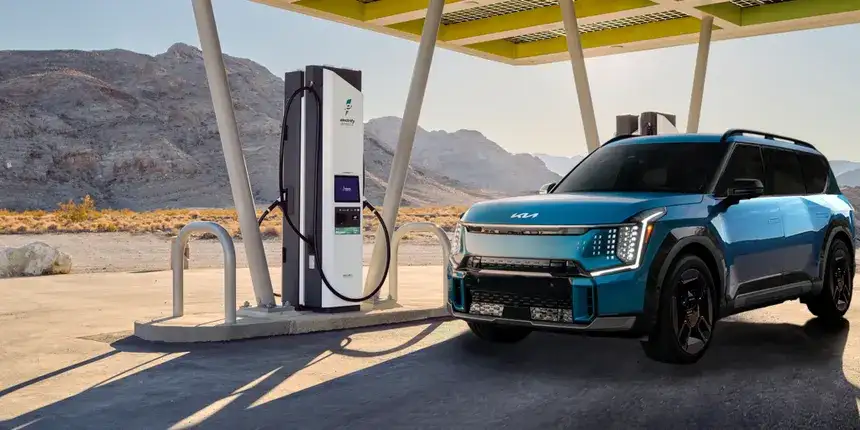
A Kia EV9 owner came into our service bay last month after growing frustrated that his charging sessions at the DC fast charger near the I-675 and Wilmington Pike interchange were regularly taking 45 minutes or more to reach 80 percent, well beyond the 25-minute window he had been promised during the purchase process. He had never used the navigation system’s route planning feature and had been arriving at chargers with a cold battery after his morning commute on Dayton-Yellow Springs Road. A 45-minute session costs him roughly 20 extra minutes every charging stop. Over a month of twice-weekly charging, that’s more than two and a half hours of avoidable waiting that a single software and charging habit adjustment resolved completely.
The Kia EV9’s 800-volt electrical architecture is genuinely capable of the 25-minute 10-to-80-percent charge that Kia’s specifications describe. That number is not a marketing figure achieved under laboratory conditions that real-world drivers can never replicate. It is a real-world capability that Beavercreek owners can achieve consistently, but it requires understanding the specific conditions the battery needs to be in before the charging session begins, the infrastructure requirements the EV9 needs to deliver at its peak rate, and the seasonal factors that southwest Ohio’s climate introduces into the equation. Most owners who are not hitting that window are missing on one or more of those conditions rather than experiencing a vehicle that is underperforming.
At Kia of Beavercreek, we have been working through EV9 charging questions with local owners since the vehicle arrived in our market, and the gap between what the EV9 is capable of and what most owners are experiencing in the first year of ownership is almost always closeable. What follows is what every EV9 owner in the Greene County area needs to know to consistently achieve the charging performance the vehicle was designed to deliver.
How the EV9’s 800V Architecture Delivers Its Charging Speed
The EV9’s 800-volt electrical architecture is what separates its charging capability from the majority of electric vehicles on the market. Most EVs operate on 400-volt systems, which means the same amount of power requires twice the current to transfer, generating significantly more heat and limiting the rate at which the battery can safely accept a charge. The EV9’s 800-volt system transfers power at half the current for the same energy delivery, which means less heat generated during the session and the ability to sustain high charging rates across a longer portion of the charging curve.
That capability only materializes when the battery pack is within its optimal temperature window before the session begins. The EV9’s battery management system limits charging rate when the pack is too cold or too warm, not as a defect but as a protection mechanism that prevents thermal stress on the cells. A cold battery arriving at a charger after a winter morning commute on Heller Drive will charge more slowly until the pack warms to its operating range, which can add 10 to 20 minutes to a session that would have taken 25 minutes with a pre-conditioned pack. Pre-conditioning, which the EV9 performs automatically when you route to a charging station through the built-in navigation, is the single most impactful step most owners are skipping.
What Southwest Ohio’s Climate Does to EV9 Charging Performance 🌨️
Beavercreek’s seasonal temperature range creates charging conditions that vary meaningfully from summer to winter, and understanding that variation helps EV9 owners set accurate expectations and take the steps that close the gap in colder months.
During Greene County’s summer months, charging performance is generally close to the vehicle’s peak capability when the pre-conditioning step is followed. Ambient temperatures in the range the EV9 operates in most efficiently mean the battery arrives at a charger close to its optimal temperature with minimal pre-conditioning time required. The stretch from May through September is when Beavercreek EV9 owners are most likely to consistently hit the 25-minute window without additional effort.
The winter months are where the gap opens. Temperatures below freezing on Dayton-Yellow Springs Road and the I-675 corridor mean the battery pack needs more pre-conditioning time to reach its charging-optimal temperature window, and a pack that hasn’t pre-conditioned fully will throttle the charging rate until it does. Ohio’s winter also affects the DC fast charging equipment itself. Cold ambient temperatures reduce the thermal headroom charger electronics have for sustained high-power output, which can limit the rate a charger delivers even when the vehicle is ready to accept full power. Understanding both variables helps owners choose the right charging approach for the season.
What Optimized vs. Non-Optimized Charging Costs in Real Time 💰
The charging performance gap between an optimized and non-optimized session has a direct time cost that accumulates significantly for regular EV9 users:
- Optimized session (pre-conditioned battery, 350kW charger): 24 to 27 minutes, 10 to 80 percent
- Non-optimized session (cold battery, no pre-conditioning): 40 to 55 minutes, same range
- Time lost per non-optimized session: 15 to 28 minutes
- Cost of session at typical Beavercreek area DC fast charger: $12 to $18 per session at per-kWh pricing
- Cost difference between optimized and non-optimized session: Minimal in energy cost, significant in time
For an owner charging twice weekly over a year:
- Non-optimized sessions at 20 extra minutes each: Approximately 35 hours of additional waiting annually
- Optimized sessions consistently: Approximately 35 hours recovered annually at no additional cost
The optimization is entirely free. It requires using the navigation system’s charge routing feature and understanding the infrastructure requirements the EV9 needs to perform at its peak rate. Neither involves any additional expense.
A Fairborn Owner Who Changed One Habit
A Kia EV9 owner from Fairborn came in last winter frustrated that his charging sessions near the US-35 and I-675 interchange were consistently running long. He had been arriving at the charger after a cold commute, plugging in without pre-conditioning, and waiting significantly longer than he expected every time. When we walked him through the navigation-based route planning feature and explained how to activate manual battery pre-conditioning for sessions not routed through navigation, his very next charging session came in at 28 minutes from 12 to 80 percent at the same charger that had been taking him 47 minutes. He told us afterward that nobody at the time of purchase had explained the pre-conditioning step and he had owned the vehicle for four months without knowing it existed.
Warning Signs Your EV9 Isn’t Charging at Peak Performance ⚠️
These indicators suggest something in the charging process is limiting the EV9’s capability below its potential:
Sessions that consistently exceed 35 minutes from 10 to 80 percent: A single long session can reflect charger infrastructure limitations. Consistently long sessions at multiple locations point to a battery pre-conditioning or thermal management issue worth investigating.
Charging rate that starts low and ramps up slowly: A healthy pre-conditioned EV9 should begin accepting charge at or near peak rate quickly after the session starts. A session that begins at a low rate and climbs gradually over the first 10 to 15 minutes indicates the battery was not at optimal temperature when the session began.
Peak charging rate that is lower than the charger’s rated output: If you are using a 350kW charger and your vehicle’s charging display shows a significantly lower peak rate, the battery temperature, state of charge, or battery management system calibration may be limiting acceptance. A rate below 200kW on a 350kW charger at a 15 to 20 percent state of charge warrants a diagnostic check.
Charging performance that has declined noticeably from early ownership: If your sessions were consistently hitting the 25-minute window when the vehicle was new but have lengthened over time without changes in your charging habits or locations, a hybrid battery health check and thermal management inspection is appropriate.
Battery pre-conditioning that doesn’t activate when routing to a charger: The EV9 should initiate battery pre-conditioning automatically when you navigate to a charging station. If the pre-conditioning indicator is not appearing during the approach to a planned charging stop, the navigation and battery management system integration may need a software check.
Charge that stops before 80 percent without explanation: An EV9 that terminates a session early or significantly reduces its charging rate before reaching the target state of charge may be responding to a battery temperature excursion or a cell-level anomaly that the battery management system is protecting against.
What Our Service Team Says
“The EV9 is a genuinely impressive charging platform when owners understand how to use it correctly. Pre-conditioning is the one step that makes the biggest difference and the one that most first-year owners don’t know about. The second thing I tell people is to use a 350kW charger when they can, because the EV9 is one of the few vehicles that can actually use that level of power, and running it on a 50kW charger is like filling a large tank through a garden hose. The capability is there. It just needs the right conditions to show itself.” — Kevin Slade, EV Systems Advisor, Kia of Beavercreek
When Understanding the System Changed the Experience
Patricia drives her EV9 between Beavercreek and her workplace near the Dayton Mall on SR-725 and had been managing charging anxiety since taking delivery because her sessions were consistently running long at the charger near Cornerstone of Centerville. She came in for her first service appointment and we spent 20 minutes walking through the charging optimization steps with her, including the navigation pre-conditioning feature, the charger selection criteria for the EV9’s 800-volt system, and the winter-specific approach of allowing extra pre-conditioning time before cold-weather sessions. At her next appointment three months later, she reported that her sessions were consistently coming in under 30 minutes and her range anxiety had essentially resolved because she was spending less time at chargers than she had budgeted for.
Your 30-Day EV9 Charging Optimization Plan
This week, use the EV9’s built-in navigation to route to your next charging stop rather than simply driving to the charger and plugging in. The navigation system’s charge routing activates the battery pre-conditioning sequence automatically, and most Beavercreek-area owners notice the difference in their very first session after making this single change. If your charger location is not in the navigation database, activate manual pre-conditioning through the vehicle’s climate or charging settings menu approximately 20 to 30 minutes before you plan to arrive.
Within two weeks, identify the DC fast charging locations in the Greene County and Montgomery County area that offer 150kW or higher output, preferably 350kW stations where available. The EV9’s 800-volt architecture delivers its best performance on high-output infrastructure, and a 50kW charger that is convenient but undersized for the vehicle’s capability will always produce longer sessions regardless of how well the battery is pre-conditioned. Knowing where the right infrastructure is in your regular driving area is as important as the pre-conditioning step itself.
By month’s end, schedule a charging system health check at Kia of Beavercreek if your sessions are still running consistently longer than 30 minutes after implementing the pre-conditioning and charger selection steps. Our team can connect the EV9 to Kia’s diagnostic system, review the battery thermal management data, verify the charging control module software is current, and identify whether anything in the system is limiting performance beyond the environmental and operational factors. These steps take less than a morning total and unlock charging performance you are already paying for in the vehicle you own.
Schedule Your EV9 Charging Consultation at Kia of Beavercreek
The EV9 owner who was spending 45 minutes at the charger near I-675 now consistently charges in under 28 minutes at the same location. Nothing about his vehicle changed. His understanding of how to prepare the battery for a charging session changed, and the time savings compounded immediately across every session that followed. The 25-minute window is real. It just requires the right conditions, and those conditions are entirely within your control.
Visit us at Kia of Beavercreek, located at 2220 Heller Dr, Beavercreek, OH 45434. Our service department is open Monday through Saturday. Schedule your EV9 consultation or service appointment online through our website or speak with one of our EV-trained advisors directly. We serve drivers from Beavercreek, Fairborn, Xenia, Kettering, Centerville, and throughout Greene County. Your EV9 was built to charge in 25 minutes. Let’s make sure it does. ⚡

0 comment(s) so far on EV9 Fast Charging Tips: How Beavercreek owners can optimize 10-80% charging in 25 minutes