


Ohio Temperature Swings: Battery Load Testing & Terminal Cleaning for K5 & Sorento
Key Takeaways
- Swings Stress the Battery: Warm afternoons followed by freezing mornings force a battery to work harder to deliver the same starting power.
- Load Testing Beats Guessing: A proper load or conductance test shows how much starting strength a battery really has, which a quick voltage reading cannot.
- Clean Terminals Carry Current: Corrosion on the posts and clamps adds resistance that can mimic a failing battery.
- Battery Type Matters: Vehicles with ISG idle stop and go technology require an AGM battery, so the replacement must match the original specification.
- Test Before the Cold Arrives: A fall checkup finds weak batteries while the weather is still forgiving.
Anyone who has lived through an Ohio October knows the pattern. The afternoon feels like a mild 70 degrees, and by sunrise the windshield is frosted and the air is cold enough to see your breath. That swing is hard on every part of your Kia, but it is especially hard on the 12 volt battery that wakes up the engine, the electronics, and everything else. A quick battery test and terminal cleaning costs very little compared with a tow, a missed shift, or an emergency battery replacement on the coldest morning of the year. Your K5 or Sorento depends on that battery every time you turn the key or push the button.
Why Ohio Weather Is Tough on Car Batteries
The Miami Valley is known for rapid weather changes. A warm front can push temperatures into the 70s one day, and a cold snap can drop them below freezing within a couple of days. Drivers around Beavercreek commuting along I-675, US-35, or Dayton-Xenia Road to Wright State University or Wright-Patterson Air Force Base feel those changes on every trip.
Cold slows the chemical reaction inside a battery, which reduces the power available to crank the engine at the same moment the cold engine needs more power to turn over. Heat, meanwhile, speeds up internal wear, so a battery that spent the summer working in a hot engine bay may already be weakened by the time frost arrives. Checking the National Weather Service forecast for the Dayton area helps you spot the first cold snap and gives you a reason to schedule a test beforehand.
What a Car Battery Actually Does
Many people think of the battery as the part that starts the engine, and it is, but modern vehicles ask it to do much more. The K5 and Sorento use the battery to power the starter, support the infotainment screen, run the driver assistance systems, and keep control modules awake. When the engine runs, the alternator takes over and recharges the battery, but short trips do not always give it enough time to replenish what the cold start used.
Some Kia vehicles also use ISG, which stands for idle stop and go. This system shuts the engine off at a stop and restarts it when you lift off the brake, so the battery goes through many more start cycles. Vehicles with ISG require an AGM battery, which is built to handle that demand, and your owner’s manual lists the correct type for your vehicle. A standard battery in place of an AGM can wear out very quickly.
Signs Your Battery Is Weakening
Batteries rarely fail without warning. Here are common signals that a battery needs testing before the next cold morning:
- Slow Cranking: The engine turns over more slowly than usual, especially on a cold start.
- Dim Lights or Flickering Screens: Headlights or the dash display dim when the engine starts or at idle.
- Warning Messages: The vehicle shows a battery or charging system message on the instrument cluster.
- Age of the Battery: Most batteries last roughly three to five years, so one near that age deserves a test even if it seems fine.
Do not ignore one of these signs just because the vehicle started fine today. A weak battery often works until the first hard freeze and then fails all at once.
Load Testing: The Real Measure of Battery Health
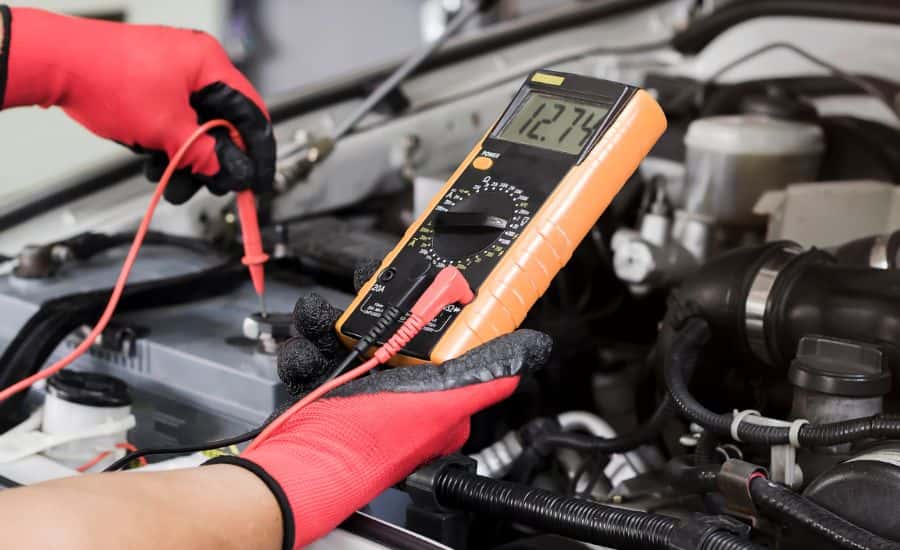
A simple voltage reading tells you how much charge a battery holds, but it does not show how well the battery can deliver power under demand. A load test, or a conductance test using professional equipment, measures the battery’s ability to supply the current needed to start the engine. It is the difference between a battery that looks full and one that can actually do the job.
A technician will also check the charging system, including the alternator output, to make sure the battery is being recharged properly. In some cases a battery that seems to be failing is actually a charging problem or a parasitic draw, which is a component that keeps pulling power after the vehicle is shut off. Testing the whole system avoids replacing a battery that was not the real culprit.
Terminal Cleaning: Small Job, Big Payoff
Corrosion on the battery posts and cable clamps appears as white, blue, or green crust, and it acts like a roadblock for electrical current. Even a healthy battery can fail to start an engine if the connection is poor. Temperature swings make this worse because moisture and condensation form on the terminals as the air warms and cools.
If you clean terminals yourself, work carefully with eye protection and gloves, and make sure the engine is off. A mixture of baking soda and water neutralizes the corrosion, and a small brush scrubs it away. Rinse lightly, dry thoroughly, and apply a protective terminal coating or dielectric grease to slow future buildup. Always disconnect the negative cable first and reconnect it last, and never let a tool touch both terminals at once.
Because many modern vehicles use a battery monitoring sensor on the negative cable and sensitive electronics, it is often smarter to let a service team handle terminal work and any battery replacement. Proper registration of a new battery helps the charging system treat it correctly.
Habits That Help a Battery Last
A few simple habits extend battery life through Ohio’s temperature swings. Take a longer drive from time to time so the alternator can fully recharge the battery, since a string of short trips can leave it undercharged. Turn off accessories such as the heater, seat warmers, and the audio system before you shut the vehicle off, which reduces the load on the next start.
Make sure the battery is held down securely, because vibration shortens battery life. If the vehicle will sit for weeks, a charger designed for AGM batteries can keep it healthy. Avoid jump-starting repeatedly, since a battery that needs frequent jumps is telling you it is time for a test or replacement.
What Battery Care Typically Costs
Costs vary by the model, battery type, and services needed, so treat this as a general picture and not a quote:
- Battery Load Test: A small cost that tells you whether the battery still has the strength for winter.
- Terminal Cleaning: A minor service that removes corrosion and restores a solid connection.
- Charging System Check: A modest cost that confirms the alternator is keeping the battery charged.
- AGM Battery Replacement: A larger but planned expense, which costs far less than an emergency replacement after a tow.
- Neglected Battery Failure: Often adds towing, lost time, and sometimes stress on other electrical parts.
If your battery tests weak, the parts center at Kia of Beavercreek can help you find the correct battery for your K5 or Sorento.
Start Every Cold Morning with Confidence
Ohio’s temperature swings are not going away, but a no-start morning is easy to prevent. A load test, clean terminals, and a quick look at the charging system give you a clear picture of your battery before the cold sets in. If you want a professional to test your battery and charging system before winter, the service center at Kia of Beavercreek, located at 2220 Heller Dr, Beavercreek, OH 45434, United States is ready to help your K5 or Sorento start strong all season.
0 comment(s) so far on Ohio Temperature Swings: Battery Load Testing & Terminal Cleaning for K5 & Sorento