


Protecting Your Kia’s Spark Plugs and Ignition Coils Against Greene County Humidity & Temperature Swings
Key Takeaways
- Spark plugs and ignition coils work together to fire the combustion process: A weakness in either component can produce similar-looking symptoms, making proper diagnosis important.
- Greene County’s humid summers create conditions that accelerate ignition component wear: Moisture and heat both play a role in how quickly these parts degrade.
- Sharp seasonal temperature swings add thermal stress beyond normal operation: Repeated expansion and contraction cycles affect ignition coil insulation over time.
- Catching early ignition wear prevents cascading damage to the catalytic converter: A persistently misfiring cylinder can send unburned fuel into the exhaust system, risking a far more expensive repair.
Greene County’s combination of humid summers and the sharp temperature swings common to the Beavercreek and Fairborn area puts more cumulative stress on your Kia’s spark plugs and ignition coils than a milder, more consistent climate would. A misfire caused by neglected ignition components that’s allowed to persist can eventually damage the catalytic converter, turning what would have been a routine spark plug service into a significantly more expensive repair. Understanding how these components work together and what the local climate does to them helps you catch wear before it cascades into a bigger problem.
How Spark Plugs and Ignition Coils Work Together
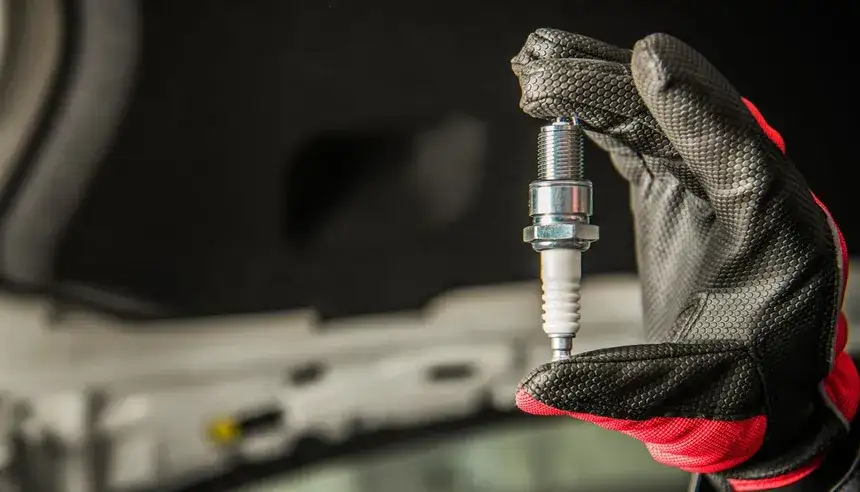
Every combustion cycle in your Kia’s engine depends on a precisely timed spark to ignite the air-fuel mixture in each cylinder. The ignition coil takes the vehicle’s relatively low battery voltage and steps it up dramatically, delivering that high-voltage charge to the spark plug at exactly the right moment. The spark plug then completes the job, creating the actual spark across its electrode gap that ignites the mixture.
Because these two components work in sequence, a problem with either one can produce very similar symptoms, a rough idle, a misfire, reduced power, or a check engine light. This is one reason ignition system issues sometimes get misdiagnosed, since a worn spark plug and a failing ignition coil can look nearly identical from the driver’s seat, even though the underlying fix is different for each.
Why Greene County’s Humidity Plays a Role
Humidity affects ignition components in a couple of meaningful ways. Moisture in the air can find its way into small gaps around spark plug boots and ignition coil connections, and over time, repeated exposure to humid conditions can contribute to minor corrosion at these connection points. This corrosion increases electrical resistance exactly where the system needs a clean, low-resistance path for the spark to fire reliably.
Greene County’s summer humidity, common throughout the Beavercreek and greater Dayton area, means ignition components here are exposed to more of this moisture-related stress annually than the same components would see in a drier climate. This doesn’t cause sudden failure, but it does mean corrosion-related resistance can build up gradually and contribute to ignition performance that degrades faster than the manufacturer’s baseline expectations assume.
How Temperature Swings Add Thermal Stress
Beyond humidity, Greene County experiences fairly sharp seasonal temperature swings, hot, humid summers giving way to cold winters, and the ignition coils in particular are sensitive to this kind of repeated thermal cycling. Ignition coil windings and their surrounding insulation expand and contract with temperature changes, and over years of seasonal cycling, this repeated expansion and contraction can gradually stress the coil’s internal insulation.
Once that insulation begins to break down, even slightly, the coil becomes more prone to internal arcing or voltage leakage, which reduces the strength and consistency of the spark it delivers to the plug. This kind of degradation tends to progress gradually rather than causing sudden failure, which is part of why an aging ignition coil can produce an intermittent misfire, one that shows up occasionally rather than consistently, long before it fails outright.
Signs Your Spark Plugs or Ignition Coils May Need Attention
A few symptoms are worth watching for, particularly as spark plugs and coils age:
- A rough or uneven idle, sometimes more noticeable when the engine is cold
- A hesitation or stumble during acceleration, particularly under load
- A check engine light, especially one accompanied by a misfire code
- Reduced fuel efficiency that develops gradually rather than suddenly
Why Catching a Misfire Early Really Matters
A misfire might seem like a minor inconvenience, but an ongoing misfire sends unburned fuel into the exhaust system, where it can overheat and damage the catalytic converter, a component considerably more expensive to replace than spark plugs or ignition coils. This is the real financial stake in staying ahead of ignition system wear: a spark plug or coil issue caught and addressed early is a routine, moderate-cost service, while the same issue ignored long enough to damage the catalytic converter turns into a repair in an entirely different cost category.
What Inspection and Service Typically Involve
A proper ignition system check involves inspecting spark plug condition and gap, testing ignition coil output, and in the case of a reported misfire, using diagnostic equipment to identify which cylinder is affected and whether the root cause is the plug, the coil, or a related wiring issue. Because Greene County’s climate genuinely does add wear compared to more moderate environments, it’s worth having this system checked somewhat proactively rather than waiting until a misfire or check engine light forces the issue. Our Rev Rewards program includes complimentary oil and filter changes that pair naturally with a periodic ignition system check during the same visit.
If your Kia has gone through a few Greene County summers and winters without an ignition system check, it’s worth having spark plugs and coils inspected before a developing misfire has a chance to affect the catalytic converter. Kia of Beavercreek, located at 2220 Heller Dr, Beavercreek, OH 45434, offers ignition system diagnostics and service to help keep your Kia running smoothly through every seasonal swing. You can schedule a service appointment online at your convenience, and our parts center stocks genuine replacement spark plugs and ignition coils.
0 comment(s) so far on Protecting Your Kia’s Spark Plugs and Ignition Coils Against Greene County Humidity & Temperature Swings