



 Telluride Hybrid
Spring Cleaning Your Kia Telluride: Preparing for Ohio Family Road Trip Season
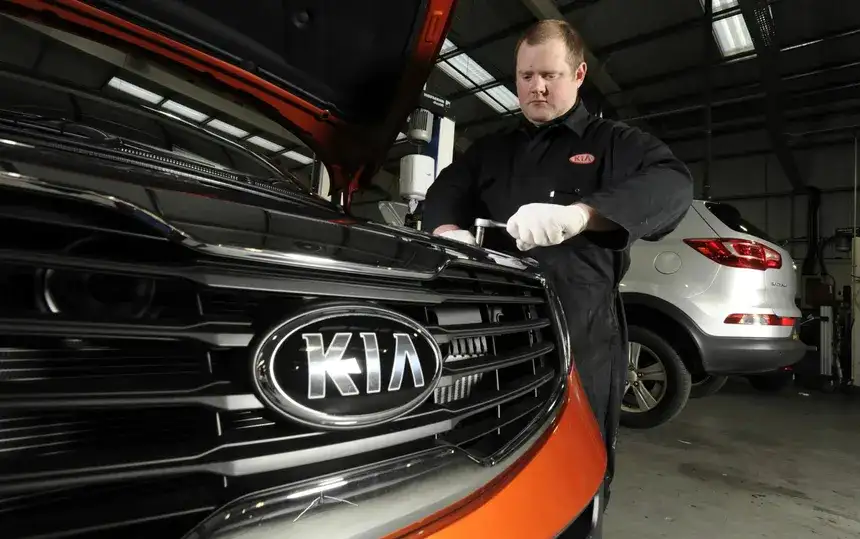
Last month, a Telluride came in from Fairborn after its owner had been planning a Memorial Day weekend drive up to Cedar Point with his family. He had noticed a faint vibration on the highway for most of the winter but kept putting off the inspection until after the holidays, then after tax season. Three weeks before the trip, a routine tire rotation revealed two tires with dangerously uneven wear from an alignment that had been off since a hard pothole impact on I-675 in January. The alignment check he had deferred for four months? $99. The two replacement tires he needed immediately to make the trip safely? $580.
That kind of timing, a family trip deadline forcing a maintenance conversation that should have happened months earlier, is something we see regularly at Kia of Beavercreek. And it almost always costs more than it needed to.
Spring in the Greater Dayton area is genuinely the right moment to assess what winter has done to your Telluride before road trip season begins in earnest. Greene County roads, the interchange construction zones along US-35, and the frost-heaved surface streets around Beavercreek and Kettering absorb a punishing freeze-thaw cycle every year. By April, your Telluride has absorbed months of cold starts, road salt, rough pavement, and short-trip driving that individually feel manageable but collectively add up.
The Telluride is one of the most capable three-row family SUVs on the market, and it’s built to handle Ohio driving conditions across a long ownership life. But “built tough” isn’t the same as “maintenance optional.” This guide walks through every system worth checking before you load up the family and point the Telluride toward Put-in-Bay, Hocking Hills, or the Columbus Zoo.
What a Ohio Winter Actually Does to Your Telluride
Most Telluride owners think about winter maintenance in terms of what they add, snow tires, wiper fluid, an ice scraper in the cargo area. The spring maintenance conversation is about what winter takes away, and the list is longer than most drivers expect.
Road salt and brine applied heavily across Greene County and Montgomery County roads throughout December, January, and February create a corrosive environment that attacks brake hardware, suspension bushings, wheel bearing seals, and undercarriage components. The damage isn’t always visible from the driver’s seat. It accumulates quietly in the areas your eyes don’t reach.
Cold-start oil thickening, repeated over dozens of winter mornings in Beavercreek where overnight temperatures regularly drop into the teens, stresses engine components during the brief period before oil reaches full operating temperature and viscosity. Short-trip driving, the school run, the grocery store, the quick errand on Dayton-Yellow Springs Road, means the engine rarely reaches full thermal stabilization before shutting down again. That pattern accelerates oil degradation faster than the mileage counter alone reflects.
What Greene County Roads Do Specifically
The stretch of I-675 between Beavercreek and Fairborn sees significant heavy truck traffic that accelerates pavement degradation. US-35 through the active construction corridor introduces uneven surfaces and abrupt transitions that stress suspension components repeatedly. And the residential streets throughout Beavercreek, Sugarcreek Township, and Bellbrook develop the classic freeze-thaw frost heaves that make March and April driving feel noticeably rougher than the summer months.
For a Telluride carrying three rows of passengers and luggage, those road inputs hit the suspension harder than a lightly loaded commuter vehicle. The additional weight load means bushings, struts, and alignment geometry absorb more energy per impact, which translates to faster wear over a winter season of loaded family driving.
The Five Systems to Check Before Ohio Road Trip Season
A spring Telluride inspection isn’t a single service, it’s a systematic review of the five systems most affected by Ohio winter driving. Working through them in order gives you a complete picture of where your vehicle stands before you’re 200 miles from home on the Ohio Turnpike.
Tires and Alignment
Tires are the starting point because they’re both the most visible record of what winter has done and the most safety-critical item on the vehicle. Walk around your Telluride and look at the tread wear across the full width of each tire. If you see more wear on the inside or outside edge than across the center, your alignment has been pulling the tire at an angle against the road surface for an extended period.
For a three-row SUV with the Telluride’s footprint, an alignment that’s off specification by even a small margin creates measurable tire wear over a winter season. The alignment check itself is fast and inexpensive. The tires it can save are not. 🔧
Cost comparison:
- Proactive spring alignment check and correction: $99 to $130
- Two replacement tires after a full season of misalignment wear: $500 to $780
- Your savings from acting in spring: $370 to $650
Brakes
Ohio winters accelerate brake rotor surface rust in a specific way. The salt brine that keeps Greene County roads clear of ice also coats your rotors overnight and etches the surface during the periods your vehicle sits between drives. Over a full winter season, this contributes to rotor surface irregularity that shows up as a pulsation under braking that wasn’t there the previous fall.
A Telluride SX owner from Xenia came in last April after noticing a subtle shudder when braking on the US-35 offramp. The rotors had developed enough surface variation from winter salt exposure to require resurfacing on both front axles. Pad life was still adequate, but the rotor condition had to be addressed. Caught in spring with resurfacing: $180. Left until the pulsation worsened and resurfacing was no longer viable: $420 in rotor replacements.
Fluid Condition and Engine Oil
Winter driving, particularly the short-trip pattern common in suburban Beavercreek, degrades engine oil faster than highway miles do. Cold starts, brief warm-up periods, and engines that rarely reach full thermal equilibrium before shutdown leave moisture and combustion byproducts in the oil that accelerate oxidation.
If your last oil change was before December, spring is the right time to refresh it regardless of what the mileage counter says. Kia specifies full synthetic oil for the Telluride’s 3.8-liter V6, and the protection difference between fresh synthetic and winter-degraded oil is most meaningful during the higher-load driving that road trip season involves.
Coolant condition, brake fluid moisture content, and power steering fluid clarity are three additional fluid checks worth bundling into a spring appointment. None of them are expensive to address proactively. All of them become more expensive after a failure event.
Suspension and Steering
The Telluride’s independent rear suspension and front MacPherson strut setup handle the demands of three-row family hauling with genuine capability, but both systems rely on rubber bushings and ball joint tolerances that degrade with repeated impact loading. A winter on Greene County roads delivers that loading consistently.
Walk your Telluride slowly over a speed bump in a parking lot and listen from inside the cabin. A healthy suspension is quiet or produces only a soft thud. Clunking, creaking, or a hollow knocking sound on one side points to a bushing or strut mount that has reached the end of its service life and deserves attention before a long trip puts sustained load on it.
Battery and Electrical Health
Cold weather is genuinely hard on automotive batteries, and the Telluride’s electrical load, between the dual-zone climate control, the power liftgate, the infotainment system, and the safety tech suite, is substantial. A battery that marginally passed last fall’s cold cranking test may not have the reserve capacity to handle a hot summer road trip with all systems running and a full passenger load.
A battery load test takes about five minutes and costs nothing during a spring service appointment. It either confirms you have reliable capacity through summer or tells you now, while replacement is convenient and planned, rather than in a rest stop parking lot on the Ohio Turnpike. 🔧
“The Telluride is a genuinely well-built vehicle and people trust it, which is great,” says Amber Whitfield, Lead Kia Service Advisor at the Heller Drive location. “But I see families load up for their first big trip of the year on a vehicle that hasn’t had eyes on it since the fall. Spring is when we find what winter left behind. Give us one appointment before the road trips start and you’ll spend the whole season driving with confidence instead of hoping nothing comes up.”
Warning Signs Your Telluride Is Telling You Something Before the Trip
Your Telluride communicates suspension, brake, and drivetrain issues in ways that are easy to normalize during a busy spring. These are the signals worth treating as a spring service prompt rather than background noise.
A vibration at highway speed that wasn’t there last fall, especially one that changes with speed, points to wheel balance disruption or a bent wheel from a winter pothole impact. This is the one most commonly dismissed as “just the road.”
A pulling sensation on a flat, straight road means your alignment has shifted and your tires are wearing unevenly with every mile between now and when you address it.
A spongy or longer brake pedal travel than you remember from last summer indicates brake fluid moisture absorption over the winter, a common finding after a full Ohio cold season.
A grinding or scraping sound when turning at low speed in a parking lot suggests a CV axle boot may have cracked during winter cold and allowed the joint to run dry of grease.
The check engine or tire pressure light that appeared in January and got dismissed when it went away on its own deserves a diagnostic scan before a long trip. Many codes store in the system even after the light clears.
If any of these are familiar from your current driving, the spring service appointment is the right moment to address them, not the week before Memorial Day when the schedule fills up.
Your 30-Day Telluride Road Trip Prep Plan
This week: Do a walkaround inspection of all four tires, checking tread depth, sidewall condition, and wear pattern across the full tread width. Press your thumb into the tread grooves and note whether any tire feels noticeably different in firmness than the others, a sign of uneven inflation history from winter temperature swings. Also check that all exterior lights are functioning, including the third brake light above the liftgate, since bulb failures are common after months of temperature cycling.
Within two weeks: Book your spring Telluride service appointment at our Heller Drive location and ask specifically for the spring road trip inspection package. Mentioning your planned trips and approximate passenger and cargo load gives our service team useful context for evaluating your brake and suspension condition under realistic operating conditions. If you have a specific trip date in mind, mention it so we can prioritize appropriately.
By month’s end: Confirm your Kia Connect or UVO app is active and that your vehicle’s service reminders are current. The Telluride’s onboard system tracks oil life, tire rotation intervals, and several fluid service reminders that are easy to lose track of across a busy winter season. A five-minute app review either confirms you’re current or surfaces a deferred item before it becomes a road trip problem.
These three steps take less than an hour across the month and can be the difference between a road trip season full of confident family miles and one punctuated by an avoidable breakdown on I-71 between Columbus and Cleveland.
Ohio road trip season is genuinely one of the best reasons to own a Telluride. Cedar Point, Hocking Hills, the Lake Erie islands, Cuyahoga Valley National Park, and a hundred miles of scenic two-lane between them are all within a comfortable day’s drive from Beavercreek. Your Telluride is built to handle every one of those trips. A focused spring inspection makes sure it’s ready to.
Schedule Your Spring Telluride Inspection Today
The Fairborn Telluride owner from the opening made his Cedar Point trip on schedule, two new tires and a corrected alignment later. He came back the following February for a pre-spring check specifically, skipping the deadline pressure entirely. His family road trip season started earlier and cost less.
At Kia of Beavercreek, our certified Kia technicians perform spring Telluride inspections with the training and model-specific knowledge that Greene County and Greater Dayton driving conditions require. Whether you’re planning a weekend trip to Hocking Hills or a full summer of family travel, one spring appointment gives you an honest assessment and a clear path to confident road trip season.
Schedule your spring Telluride inspection today by contacting our service department or booking online. You’ll find us at 2220 Heller Dr, Beavercreek, OH 45434.
Proper spring maintenance protects your Telluride’s reliability, keeps your family safe across every Ohio mile this season, and ensures the only surprises on your road trips are the good kind. That’s what a well-prepared Kia delivers.

0 comment(s) so far on Spring Cleaning Your Kia Telluride: Preparing for Ohio Family Road Trip Season