



 Telluride Hybrid
The Benefits of Regular Tire Balancing for Kia SUVs
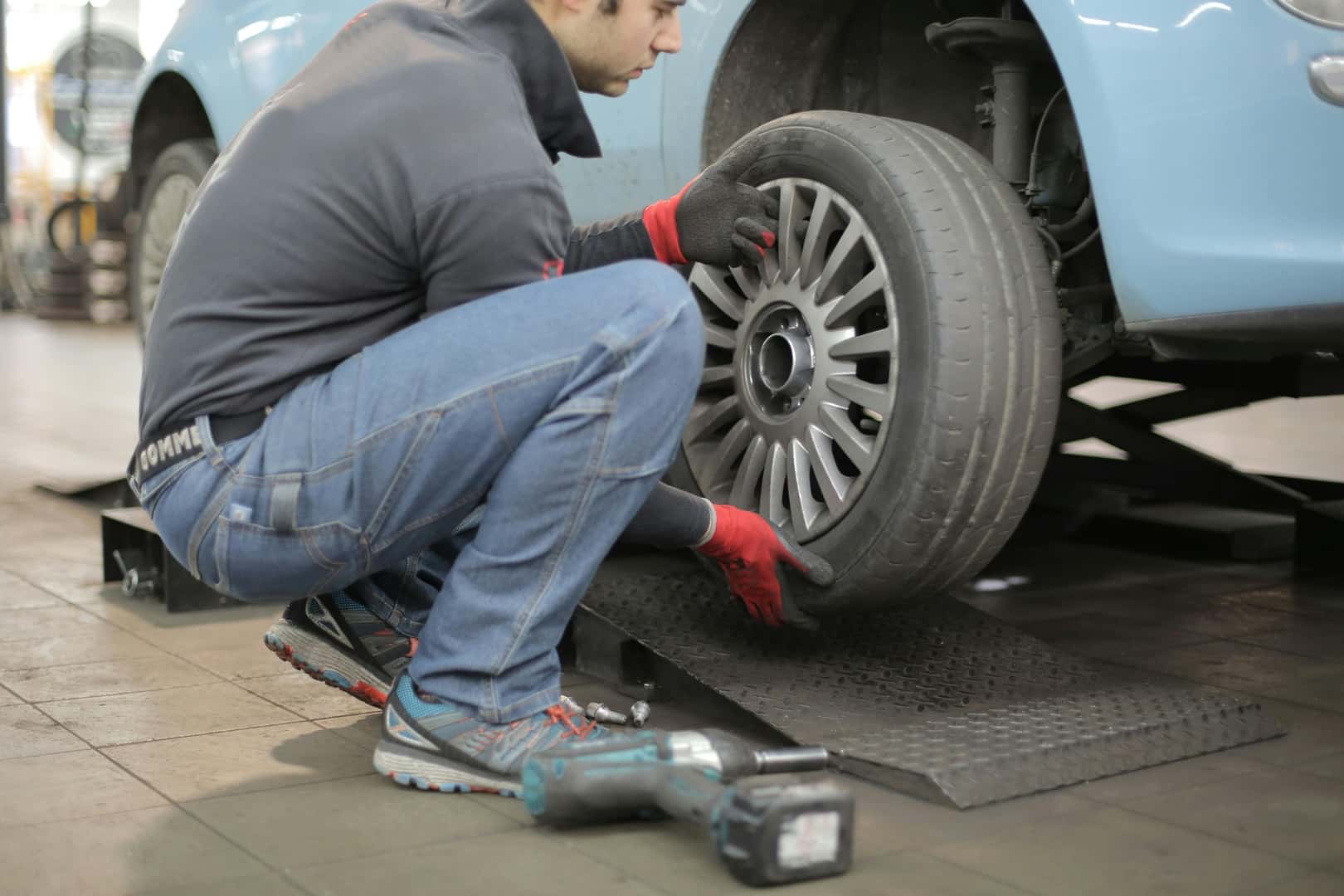
Last month, a 2021 Kia Telluride owner came into our service center complaining about a vibration in the steering wheel that had gradually worsened over several weeks. The vibration was most noticeable at highway speeds on I-675 during his daily commute to Wright-Patterson Air Force Base. He assumed he needed new tires because the vibration seemed tire-related, and he was prepared to spend $800-1,000 on a full set. When we inspected his SUV, we found the tires had plenty of tread remaining but had developed uneven wear from running out of balance for several months. The actual problem was simple: his tires had lost their wheel weights and needed rebalancing. The balancing service cost $80 for all four wheels. However, the uneven wear meant his tires would now need replacement 15,000-20,000 miles earlier than if they’d stayed balanced. Regular tire balancing every 6,000-8,000 miles or with each tire rotation? About $80-100 annually, preventing the premature tire wear that cost this owner $800+ in early replacement.
That Telluride owner learned an expensive lesson about a maintenance item many drivers overlook: tire balancing. Unlike tire rotation, which most owners understand and schedule regularly, tire balancing seems mysterious and easy to dismiss as unnecessary. The reality is that balanced tires are essential for ride quality, vehicle handling, suspension longevity, and maximizing tire life. For Kia SUVs particularly, with their higher center of gravity and greater unsprung weight compared to sedans, proper tire balance matters even more than it does for lighter vehicles.
Dayton’s road conditions create specific challenges that affect tire balance. Potholes on Colonel Glenn Highway after winter freeze-thaw cycles, rough pavement on Route 35, construction zones throughout Beavercreek, and the general wear our infrastructure experiences all contribute to wheels being knocked out of balance more frequently than smooth highway driving would cause. Understanding what tire balancing accomplishes, recognizing when rebalancing is needed, and maintaining proper balance intervals protects your investment while ensuring optimal performance.
This guide explains exactly what tire balancing is, why it matters specifically for Kia SUVs, what symptoms indicate imbalance, and how regular balancing saves money while improving your driving experience.
Understanding Tire and Wheel Balance
Tire and wheel balance refers to the even distribution of weight around the wheel and tire assembly. In a perfect world, every tire and wheel would have completely uniform weight distribution, but manufacturing variations mean that some areas are slightly heavier than others. These weight differences, even just a fraction of an ounce, create noticeable problems when the wheel rotates at highway speeds.
At 65 mph, your wheels complete approximately 850 revolutions per minute. Any imbalance at that rotation speed generates centrifugal force that creates vibration, uneven tire contact with the road, and additional stress on suspension components. The faster you drive, the more pronounced these effects become, which is why imbalance symptoms are most obvious at highway speeds.
Tire balancing corrects these weight variations by adding small weights to the wheel rim at specific locations. A balancing machine spins the wheel and tire assembly to measure where heavy and light spots exist, then calculates exactly where to place weights to achieve perfect balance. These weights are typically small metal pieces that clip onto the wheel rim or stick to the inner barrel depending on wheel design.
Static balance addresses up-and-down movement where heavy spots cause the tire to hop as it rotates. Dynamic balance addresses side-to-side movement where weight differences cause wobbling. Modern balancing machines measure both static and dynamic balance simultaneously, placing weights at the inner and outer edges of the rim to correct both types of imbalance.
The balancing process takes 5-10 minutes per wheel and requires removing the wheel from the vehicle. The technician mounts the wheel on the balancing machine’s spindle, spins it to measure imbalance, then adds or adjusts weights until the wheel achieves proper balance within acceptable tolerances.
“Many customers ask why wheels need rebalancing if nothing has changed,” says David Harrison, Service Manager at our Heller Drive location. “They don’t realize that normal driving constantly affects balance. Hitting potholes can knock off wheel weights. Tires wear unevenly even with proper alignment, which changes weight distribution. Road debris can get stuck in tire treads temporarily affecting balance. The wheel weights themselves can shift or fall off. And as tires wear, the rubber that’s removed from the tread changes the overall weight distribution. Balancing isn’t a one-time service, it’s ongoing maintenance that needs periodic attention just like oil changes or tire rotation.”
Why Proper Balance Matters More for Kia SUVs
Kia’s SUV lineup including Sportage, Sorento, and Telluride features characteristics that make proper tire balance even more critical than for sedans or smaller vehicles.
Higher vehicle weight means more mass resting on each tire and wheel assembly. A Telluride weighs approximately 4,300-4,500 pounds compared to a K5 sedan at 3,200-3,400 pounds. This additional weight amplifies the effects of any tire imbalance. The same 1-ounce imbalance that might cause minor vibration in a sedan creates substantially more noticeable vibration in a heavy SUV.
Larger wheel and tire packages common on Kia SUVs have more total mass that must be balanced. Sportage models come with 17-19 inch wheels, Sorento offers 17-20 inch options, and Telluride features 18-20 inch wheels. Larger wheel and tire assemblies have more potential for weight variation and require more precise balancing to achieve smooth rotation.
Higher center of gravity in SUVs makes the vehicle more sensitive to vibrations that affect handling and stability. Vibration from unbalanced tires creates resonance that affects steering input and driver confidence, particularly at highway speeds or during lane changes on Interstate 675 or Route 35.
All-wheel drive systems standard on many Kia SUVs transmit vibrations through the drivetrain more than front-wheel drive sedans. Unbalanced wheels create vibrations that travel through the wheel bearings, CV joints, driveshaft, and differential, affecting the entire drivetrain and potentially accelerating wear on these expensive components.
Longer stopping distances due to SUV weight and higher center of gravity mean any factor that compromises tire contact with the road becomes a safety concern. Unbalanced tires don’t maintain consistent contact with pavement, creating slight variations in braking effectiveness that increase stopping distances.
Premium ride quality expectations for Kia SUVs, particularly the Telluride with its focus on luxury and comfort, mean that any vibration or harshness detracts from the ownership experience. Customers who chose SUVs for smooth, comfortable family transportation notice and are bothered by vibrations that they might tolerate in a budget vehicle.
A Sorento owner from Centerville who upgraded from a Rio sedan noticed vibration issues far sooner in her new SUV than she’d experienced in her previous vehicle. She’d gone 15,000 miles between tire services in the Rio without noticeable problems, but in the Sorento, vibration developed after just 8,000 miles. The difference wasn’t that the Sorento’s tires were inferior, but rather that the heavier SUV amplified balance issues that the lighter sedan had masked. After we explained this relationship, she adjusted her service schedule to include balancing with every tire rotation, eliminating the vibration problems.
Common Causes of Tire Imbalance
Understanding what causes tires to lose balance helps you anticipate when rebalancing might be needed and avoid conditions that accelerate balance loss.
Normal tire wear changes weight distribution even when wear is uniform. As tread depth decreases, the tire loses rubber from the tread surface, and even uniform wear slightly alters the weight distribution that was originally balanced. This is why balancing should accompany tire rotation, as the wear pattern developed in one position will be different once the tire moves to a new position on the vehicle.
Uneven tire wear from alignment problems, improper inflation, or worn suspension components causes dramatic weight distribution changes. A tire with 8/32-inch tread on one shoulder and 4/32-inch on the other has lost substantially more rubber from one side, creating imbalance that worsens as the uneven wear progresses.
Lost wheel weights are perhaps the most common cause of sudden imbalance. Clip-on weights can be knocked off by hitting curbs, potholes, or debris. Stick-on weights can lose adhesion from wheel cleaning chemicals, pressure washing, or simply age. Hitting a pothole on Dayton streets is often enough to dislodge a wheel weight, instantly creating imbalance.
Pothole impacts jar the wheel and tire assembly violently enough to shift the tire on the wheel rim slightly. Even a small shift changes the relationship between tire and wheel that was originally balanced, requiring rebalancing to correct. Severe pothole impacts can also bend wheels, creating permanent imbalance that requires wheel replacement to fully correct.
Accumulated mud or snow in wheel wells or stuck to wheels adds temporary weight that creates imbalance. This is particularly common during Ohio winters when road spray freezes in wheel wells. The imbalance disappears once the accumulated material is removed, but driving with the temporary imbalance can accelerate wear.
Tire damage including sidewall bulges, separated belts, or road hazard injuries creates localized weight variations that balancing cannot fully correct. These situations require tire replacement rather than just rebalancing.
Wheel damage from curb impacts, pothole strikes, or corrosion can create permanent imbalance that weights cannot fully compensate for. Bent or cracked wheels need replacement for proper balance and safety.
A Sportage owner from Fairborn hit a pothole on Kauffman Avenue hard enough to feel a significant jolt. The immediate result was a noticeable vibration at highway speeds that hadn’t been present before. When we balanced the tires, we discovered the impact had knocked off two wheel weights from the right front wheel. Rebalancing corrected the immediate vibration, but we also found the wheel had a slight bend that would require monitoring and possible replacement if it worsened.
Symptoms of Unbalanced Tires
Several distinct symptoms indicate your Kia SUV’s tires need rebalancing. Recognizing these signs allows you to address the problem before it causes additional wear or damage.
Steering wheel vibration at highway speeds, typically starting around 50-55 mph and worsening as speed increases, is the most common symptom of front tire imbalance. The vibration often peaks at a specific speed range, then may diminish slightly at higher speeds. This occurs because the vibration frequency matches the vehicle’s natural resonance at that speed.
Seat or floorboard vibration without corresponding steering wheel vibration suggests rear tire imbalance. The vibration transmits through the suspension and chassis rather than through the steering system. This symptom is less immediately noticeable than steering wheel vibration but still indicates a problem requiring attention.
Uneven tire wear patterns including cupping, scalloping, or feathering can result from sustained operation with unbalanced tires. The tire bounces slightly as it rolls, creating uneven contact that wears high spots faster than low spots. This wear pattern typically develops over thousands of miles and indicates long-term imbalance.
Increased road noise, particularly a humming or droning sound that varies with speed, can indicate tire imbalance creating uneven wear that generates noise. This symptom often develops gradually as the wear pattern becomes more pronounced.
Premature tire wear where tires need replacement substantially before their expected lifespan indicates problems that may include imbalance as a contributing factor. Tires should last 40,000-70,000 miles depending on the model and driving conditions, and significantly shorter life suggests maintenance issues including possible chronic imbalance.
Poor fuel economy can result from unbalanced tires because the vibration and uneven contact create additional rolling resistance. The effect is modest, perhaps 0.5-1 mpg, but it’s measurable over time.
Unusual handling characteristics including wandering, pulling, or instability at highway speeds can be partially caused by severe tire imbalance affecting how the tires track and maintain contact with the road.
Vibration that worsens gradually over weeks or months rather than appearing suddenly suggests progressive imbalance from tire wear or slowly loosening wheel weights. This gradual onset causes many drivers to dismiss the problem as “just how the vehicle drives now,” when it actually indicates a correctable maintenance need.
If you notice any of these symptoms, schedule tire balancing within a week or two. Don’t continue driving for months assuming the problem will resolve itself or isn’t serious. Unbalanced tires worsen over time and cause additional wear that makes the problem more expensive to correct.
Recommended Balancing Intervals for Kia SUVs
Establishing a regular tire balancing schedule prevents problems before symptoms develop and protects your tire investment by preventing premature wear.
Balance tires with every tire rotation, which Kia recommends every 7,500 miles. Since the wheels are already being removed for rotation, adding balancing costs minimal additional labor (typically $30-50 beyond the rotation cost) but provides substantial benefits. This interval ensures tires never go more than 7,500 miles without balance verification and correction.
Balance when installing new tires as standard practice. All tire shops balance new tires during installation, but verify this is included in your installation cost rather than an optional upcharge. New tires and wheels together need balancing to account for both components’ weight variations.
Balance after any wheel removal for brake service or other repairs. Removing and reinstalling wheels provides the opportunity to verify balance, and the removal process itself can occasionally shift weights or reveal balance issues that weren’t apparent before.
Balance after significant pothole impacts or curb strikes that create noticeable jarring. These impacts can knock off wheel weights or shift tires on rims, creating immediate imbalance. A $20-30 balancing check after an impact is cheap insurance against the vibration and wear that results from ignoring the problem.
Balance if you notice any vibration symptoms regardless of mileage since the last balance service. Don’t wait for your next scheduled rotation if symptoms develop before then. Address the problem promptly to prevent the accelerated wear that occurs while operating with unbalanced tires.
Time-based balancing every 12 months makes sense for low-mileage drivers who might not reach 7,500 miles annually. Even without high mileage, wheel weights can loosen or fall off over time, and having balance verified annually ensures the wheels remain properly balanced.
For Dayton area drivers who frequently encounter rough roads, construction zones, or winter potholes, consider more aggressive balancing intervals of every 5,000-6,000 miles rather than waiting for 7,500-mile rotation intervals. The additional cost is modest but provides protection against the more frequent balance loss that rough roads cause.
“I recommend customers think of tire balancing as insurance for their tire investment,” says David Harrison. “A set of tires for a Telluride costs $800-1,200 depending on the model you choose. Those tires should last 50,000-60,000 miles under normal conditions with proper maintenance. But running unbalanced for just 10,000 miles can cause uneven wear that reduces tire life by 15,000-20,000 miles. You’ll need new tires at 35,000-40,000 miles instead of 55,000-60,000 miles, essentially wasting $250-350 of your tire investment. Regular balancing at $80-100 per service is cheap insurance that protects the much larger tire investment.”
The Relationship Between Balancing, Rotation, and Alignment
Tire balancing works together with tire rotation and wheel alignment to maximize tire life and vehicle performance. Understanding how these services relate helps you maintain all three properly.
Tire rotation moves tires to different positions on the vehicle to ensure even wear. Front tires wear differently than rear tires, and drive wheel positions wear differently than non-drive positions. Rotation equalizes this wear, extending overall tire life. Kia recommends rotation every 7,500 miles, and this service should include rebalancing since the wheels are already removed.
Wheel alignment adjusts suspension angles to ensure tires contact the road at the correct angles and track straight. Misalignment causes rapid, uneven tire wear that no amount of balancing or rotation can prevent. Alignment should be checked annually or when you notice pulling, uneven wear, or after suspension damage from potholes or impacts.
The combination of proper alignment, regular rotation with balancing, and correct tire inflation provides optimal tire life. Neglecting any one element compromises the benefits of the others. For example, religiously rotating and balancing tires won’t prevent rapid wear if alignment is off. Similarly, perfect alignment doesn’t prevent the uneven wear that unbalanced tires develop.
Cost-effective maintenance bundles these services when appropriate. Since tire rotation requires wheel removal and takes 30-45 minutes, adding balancing during the same visit adds minimal additional time and cost. Some shops offer package pricing for rotation and balance together at modest savings compared to purchasing services separately.
A Telluride owner from Huber Heights followed Kia’s rotation schedule religiously, rotating tires every 7,500 miles. However, he never had them balanced during rotation, assuming rotation alone was sufficient. At 45,000 miles, his tires showed uneven wear requiring replacement despite having 4-5/32 inch remaining tread. We measured his alignment and found it was within specifications, so the uneven wear resulted primarily from chronic imbalance creating the cupping and irregular wear that developed. If he’d balanced during each rotation, his tires would likely have lasted another 10,000-15,000 miles, representing $200-300 in wasted tire life.
Cost Analysis: Balancing vs. Premature Tire Replacement
Understanding the financial impact of regular balancing compared to the cost of neglecting it reveals why this maintenance provides exceptional value.
Regular tire balancing costs $20-30 per wheel or $80-120 for all four wheels. Combined with tire rotation, the bundled service typically costs $100-140. Performing this service every 7,500 miles means spending approximately $100-140 annually or $400-560 over a typical 40,000-50,000 mile tire lifespan.
Tire replacement costs for Kia SUVs range from $150-300 per tire depending on brand and model, or $600-1,200 for a complete set. Premium all-season tires for a Telluride can cost $250-300 each, totaling $1,000-1,200 for four.
Premature tire replacement from unbalanced-induced wear typically occurs 15,000-25,000 miles earlier than properly maintained tires would require. Instead of replacing tires at 55,000-60,000 miles, you’re replacing them at 35,000-40,000 miles. This represents 25-35% of the tire’s potential life wasted.
The financial calculation is straightforward: spending $400-560 on balancing over the tire’s life prevents wasting $250-350 (25-30% of $1,000-1,200) in premature replacement costs. The net savings from regular balancing is approximately $200-250 per tire set, not counting the additional benefits of better ride quality, improved fuel economy, and reduced suspension wear.
Additional savings come from preserving suspension components. Chronic vibration from unbalanced tires accelerates wear on wheel bearings, CV joints, tie rod ends, and shock absorbers. While these effects develop slowly and are difficult to quantify precisely, technicians consistently observe that vehicles with poor tire maintenance require more frequent suspension repairs than those with proper maintenance.
Resale value protection represents another financial benefit. Vehicles with unusual tire wear, vibration problems, or suspension issues command lower trade-in and resale values than well-maintained vehicles. The difference might be $500-1,000 on a used Kia SUV, far exceeding the cost of regular tire balancing.
DIY Balancing vs. Professional Service
Tire balancing requires specialized equipment that makes DIY service impractical for most owners, unlike some maintenance tasks that can reasonably be performed at home.
Professional balancing machines cost $3,000-15,000 depending on capabilities and precision. These machines spin the wheel at high speed while sensors measure imbalance, then calculate where to place weights with precision to within 0.25 ounces. Modern machines provide digital readouts showing exactly where weights should be placed for optimal balance.
Portable bubble balancers cost $50-150 and use a level system to find heavy spots. These can achieve reasonable balance for very gentle use but lack the precision and dynamic balance capabilities of professional machines. They’re suitable only for situations where professional service is unavailable, not for regular use on modern vehicles with performance and comfort expectations.
DIY balancing using portable equipment takes 20-30 minutes per wheel for experienced users and requires removing wheels from the vehicle. The results are acceptable for emergency situations but inferior to professional service using computer-controlled machines.
Professional balancing takes 5-10 minutes per wheel, costs $20-30 per wheel, includes expertise to identify wheel damage or tire problems, and provides precision that portable equipment cannot match. The modest cost makes professional service the clear choice for virtually all owners.
Time and convenience favor professional service since most drivers are having tires rotated at shops anyway, making it simple to add balancing during the same visit. Attempting DIY balancing means purchasing equipment, removing wheels yourself, balancing them at home, then reinstalling them—a process taking 2-3 hours versus 30-45 minutes for professional rotation and balancing combined.
Your 30-Day Tire Balance Maintenance Plan
This week: Check your service records to determine when your Kia SUV’s tires were last balanced. If you can’t find documentation or if it’s been more than 7,500 miles or 12 months since the last balance service, schedule an appointment this week. While checking records, verify when your last tire rotation was performed and whether it’s approaching the 7,500-mile interval. If you’re experiencing any vibration symptoms, schedule service immediately rather than waiting for your regular rotation interval.
Within two weeks: If balancing revealed that you’d lost wheel weights or had significant imbalance, inspect your wheels carefully for damage including bends, cracks, or corrosion that might have contributed to balance loss. Take photos of any damage to track whether it worsens over time. Review your typical driving routes and identify particularly rough roads, frequent construction zones, or areas with poor pavement that might accelerate balance loss, then consider avoiding these routes when practical alternatives exist. Update your maintenance tracking system to include tire balancing with every rotation as a standard service rather than an optional add-on.
By month’s end: Establish a comprehensive tire maintenance schedule that includes rotation and balancing every 7,500 miles, pressure checks monthly, and visual inspection for damage quarterly. Add these intervals to your phone calendar with reminders so they don’t get forgotten. Budget for tire services throughout your ownership, allocating approximately $100-140 annually for rotation and balancing plus eventual tire replacement costs. If you’re experiencing ongoing vibration issues despite proper balancing, schedule alignment service to verify suspension geometry is correct and not contributing to accelerated or uneven tire wear.
These steps take less than three hours initially and require about 45 minutes every 7,500 miles ongoing, ensuring your Kia SUV delivers smooth, comfortable operation while maximizing tire life and protecting your investment.
Schedule Your Tire Balancing Service Today
Regular tire balancing represents one of the best values in automotive maintenance, providing immediate benefits in ride quality while preventing expensive premature tire wear. For Kia SUV owners in the Dayton area where road conditions challenge tire and wheel assemblies regularly, maintaining proper balance isn’t optional—it’s essential for protecting your tire investment and ensuring the smooth, quiet ride your vehicle was designed to provide.
Our certified Kia technicians use professional-grade balancing equipment that provides precision measurement and optimal balance for your SUV’s wheels. We combine balancing with tire rotation, inspection, and pressure adjustment to provide comprehensive tire care in a single convenient service visit. Our service includes visual inspection of wheels for damage and examination of tires for uneven wear that might indicate alignment or suspension problems needing attention.
Schedule your tire balancing and rotation service today by calling our service department or booking online. We’re located at 2220 Heller Drive in Beavercreek, easily accessible from I-675, Colonel Glenn Highway, and Route 35. Don’t wait until vibration symptoms develop or uneven wear requires early tire replacement. Proactive tire balancing protects your investment and ensures your Kia SUV delivers the smooth, comfortable ride that makes it perfect for Ohio roads and family transportation.
Proper tire balance maintains ride quality, maximizes tire life, protects suspension components, and provides the smooth, confident driving experience your Kia SUV was engineered to deliver. That’s the performance your vehicle deserves. 🛞

0 comment(s) so far on The Benefits of Regular Tire Balancing for Kia SUVs