



 Telluride Hybrid
The Direct Injection Problem: Why Your Kia Sportage Needs Regular GDI Fuel System Cleaning
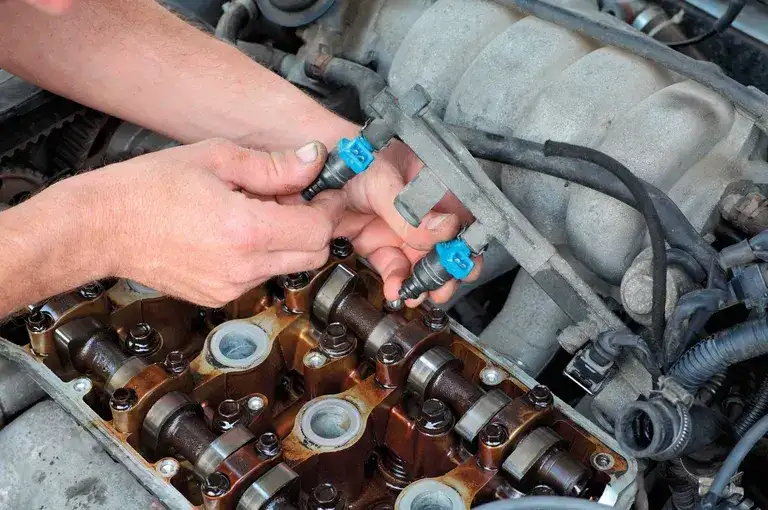
The Kia Sportage has come a long way in engine technology, and the Smartstream GDI powerplant in current models is among the more sophisticated compact SUV engines on the market. But sophistication comes with a maintenance requirement that the previous generation of port-injected engines never had. Carbon buildup on intake valves is a documented reality of gasoline direct injection engines, and when it goes unaddressed, it quietly erodes the performance, fuel economy, and reliability of an engine that was built to last.
Understanding why this happens, how the Sportage’s dual-injection system partially addresses it, and what regular professional cleaning actually does for the engine helps Beavercreek Sportage owners make decisions that protect the long-term health of their vehicle.
Why Direct Injection Creates a Carbon Problem
In a traditional port-injected engine, fuel is sprayed into the intake manifold upstream of the intake valve. Every time the engine runs, fuel washes over the back of the intake valve, carrying away oil vapor and combustion residue before it can accumulate. The valve stays relatively clean through normal operation.
Direct injection eliminates that washing effect. In a GDI engine, fuel is injected directly into the combustion chamber at high pressure, bypassing the intake valve entirely. The back of the intake valve is now exposed only to intake air and blow-by gases from the crankcase ventilation system. Those blow-by gases carry oil vapor, and that oil vapor has nowhere to go but the back of the intake valve, where it bakes onto the hot metal surface with each combustion cycle.
Over tens of thousands of miles, the deposits that accumulate on the intake valve face can build into a thick, hard layer of carbon. As that layer grows, it restricts airflow into the cylinder, disrupts the precise air-fuel mixing the engine was designed around, and creates surface irregularities that affect how cleanly the valve seals against its seat. The result is a gradual degradation in combustion efficiency that shows up as reduced power output, rougher idle quality, lower fuel economy, and in more advanced cases, misfires.
How the Sportage’s Dual Injection System Helps, and Its Limits
The 2.5-liter Smartstream G4KN engine in the fifth-generation Sportage uses a combined injection approach: high-pressure GDI injectors deliver fuel directly into the combustion chamber, while lower-pressure multi-port injectors spray into the intake manifold upstream of the valves. This dual-injection architecture is a deliberate response to the carbon buildup problem. The MPI injectors reintroduce fuel washing to the back of the intake valve under certain operating conditions, which slows the rate of deposit accumulation compared to a GDI-only design.
It is worth understanding, however, that dual injection reduces the carbon problem without eliminating it. Multiple sources confirm that the Smartstream G4KN can still experience carbon buildup over time despite the combined injection system. The degree to which the MPI injectors mitigate accumulation depends on how the vehicle is driven. Frequent short trips, stop-and-go driving, and cold-weather operation all reduce the engine’s time at full operating temperature, which is when the MPI system’s cleaning effect is most active. Beavercreek’s driving environment, with its mix of suburban surface streets, I-675 on-ramp cycles, and cold Ohio winters, creates conditions that favor accelerated deposit formation even on dual-injection engines.
The high-pressure GDI injectors also introduce their own maintenance dimension. Kia issued Technical Service Bulletin FUE068 covering the Sportage’s 2.5L GDI injectors for misfire-related failures, a documented concern involving internal injector component failure that can allow fuel to leak into the cylinder. Keeping the fuel system serviced and inspected by factory-trained technicians with access to current TSB information is part of how Sportage owners stay ahead of issues before they become warranty claims.
What Fuel Additives Can and Cannot Do
This is where many Sportage owners discover a gap between what they expected and what actually works. Fuel additives poured into the gas tank travel through the fuel system and reach the GDI injectors, where they can help keep injector tips clean and flowing properly. What they cannot do is reach the back of the intake valve.
In a GDI engine, the fuel and its additives are injected directly into the combustion chamber. They never contact the intake valve face. No fuel additive in the gas tank can clean carbon deposits from the back of a GDI intake valve, regardless of the product’s claims. This is not a fringe view from online forums — it is a chemical reality of how direct injection works.
That distinction matters because it’s the intake valve deposits, not injector deposits, that account for most of the power loss, rough idle, and efficiency degradation associated with GDI carbon buildup. Fuel additives play a legitimate supporting role in maintaining injector cleanliness, but they cannot substitute for professional intake cleaning when valve deposits have accumulated.
What Professional GDI Fuel System Cleaning Covers
A professional fuel system service at a certified Kia dealership addresses the carbon problem where it actually exists, not just where additives can reach. The service typically includes:
- Fuel injector cleaning and inspection, covering both the high-pressure GDI injectors and the lower-pressure MPI injectors; this confirms proper spray pattern, correct flow rate, and the absence of the kind of internal wear that the TSB FUE068 addresses
- Intake system cleaning, using approved cleaning agents introduced directly into the intake tract to address carbon deposits on the back of the intake valves; this is the step that fuel tank additives cannot replicate
- Throttle body cleaning, removing the buildup of oil vapor residue that accumulates on the throttle plate and bore over time, which affects idle quality and airflow measurement accuracy
- PCV system inspection, confirming that the crankcase ventilation system is flowing correctly; a restricted or malfunctioning PCV system accelerates intake valve carbon accumulation by increasing the volume of oil vapor entering the intake tract
- Post-service verification, confirming that idle quality, fuel trim readings, and throttle response have returned to specification after the cleaning procedure
For more advanced carbon accumulation that has progressed beyond what chemical cleaning can address, walnut shell blasting of the intake valves is the next level of intervention. This involves removing the intake manifold and using pressurized walnut shell media to abrade the carbon deposits directly from the valve face. It is a significantly more involved procedure than a routine cleaning service and carries a meaningfully higher cost, which is why catching and addressing deposits before they reach that stage through regular cleaning intervals is the more economical approach.
Recognizing the Signs of Carbon Buildup in Your Sportage
Carbon accumulation in a GDI engine rarely produces a sudden, dramatic symptom. It’s a gradual process, and many drivers adapt to the slow deterioration without recognizing it as a maintenance problem rather than normal aging. The signs worth paying attention to include:
- A rough or inconsistent idle, particularly on cold starts, that may smooth out somewhat once the engine reaches operating temperature
- Reduced throttle response or a flat feeling during acceleration that wasn’t present earlier in the vehicle’s life
- Fuel economy that has dropped measurably compared to earlier ownership without any corresponding change in driving habits
- A misfire fault code, particularly P0300 through P0304, indicating uneven combustion in one or more cylinders
- Hesitation under load, especially on highway on-ramps or when pulling away from a stop on a grade
Any of these symptoms in a Sportage with significant mileage warrants a fuel system inspection before other diagnoses are pursued. What presents as an ignition or sensor problem is sometimes a carbon problem in disguise.
Protecting Your Sportage Investment in Beavercreek
The Sportage’s Smartstream engine is a genuinely capable and well-engineered powerplant, and the dual-injection system reflects Kia’s awareness of the GDI carbon challenge. Protecting that engineering through regular professional fuel system service is how Beavercreek Sportage owners keep the engine performing the way it was designed rather than watching it degrade gradually through a problem that is entirely preventable with the right maintenance approach.
Schedule your Sportage fuel system inspection and cleaning with the factory-trained service team at Kia of Beavercreek, located at 2220 Heller Dr, Beavercreek, OH 45434, and keep your GDI engine clean, efficient, and performing at its best through every mile ahead.

0 comment(s) so far on The Direct Injection Problem: Why Your Kia Sportage Needs Regular GDI Fuel System Cleaning