


Navigating US-35 & I-675: Kia Brake Rotor Rust Cleanout & Caliper Slide Pin Lubrication
Key Takeaways
- Rust builds quickly on rotors: Rain, humidity, and winter road salt can leave a film of rust on rotors overnight, and heavier buildup around the edges can affect how the pads contact the rotor.
- Slide pins keep calipers moving freely: When the pins dry out or corrode, the caliper can stick, which causes uneven pad wear, pulling, and extra heat.
- Listen and feel for early signs: Squealing, a vehicle that drifts under braking, a burning smell, or a pedal that feels different are all reasons to schedule an inspection.
- Cleaning and lubrication are routine, affordable work: Servicing the brake hardware during a pad replacement or brake inspection costs far less than replacing rotors and calipers early.
Anyone who commutes through Beavercreek knows the rhythm of US-35 and I-675: a long approach, a sudden slowdown, and another stop at the next light or ramp. A brake rotor cleanout and slide pin lubrication costs a small fraction of what replacing warped rotors, seized calipers, and prematurely worn pads costs, and it keeps your Kia stopping evenly. Here is what Beavercreek drivers should know about protecting the brakes that handle all that braking.
Why Beavercreek Driving Is Hard on Brakes
The Dayton area has a driving pattern that asks a lot of a braking system. Trips along US-35 between Dayton and Xenia, merges onto I-675, and the stop-and-go traffic around Fairfield Commons and Dayton-Xenia Road mean frequent speed changes. Each slowdown turns motion into heat through friction between the pads and the rotors, and repeated slowdowns add up.
The weather adds its own pressure. Ohio winters bring snow, slush, and heavy applications of road salt and brine. Summers bring humidity and sudden storms. All of that moisture settles on exposed iron rotors, and iron rusts quickly. A rotor that looks clean in the morning can have a light orange coating by the time you return from lunch after a rainy day.
A thin film of surface rust is normal and usually wears away after a few stops. The trouble starts when corrosion builds in places the pads do not clean, or when the moving parts around the caliper stop moving the way they should.
What Rotor Rust Really Means
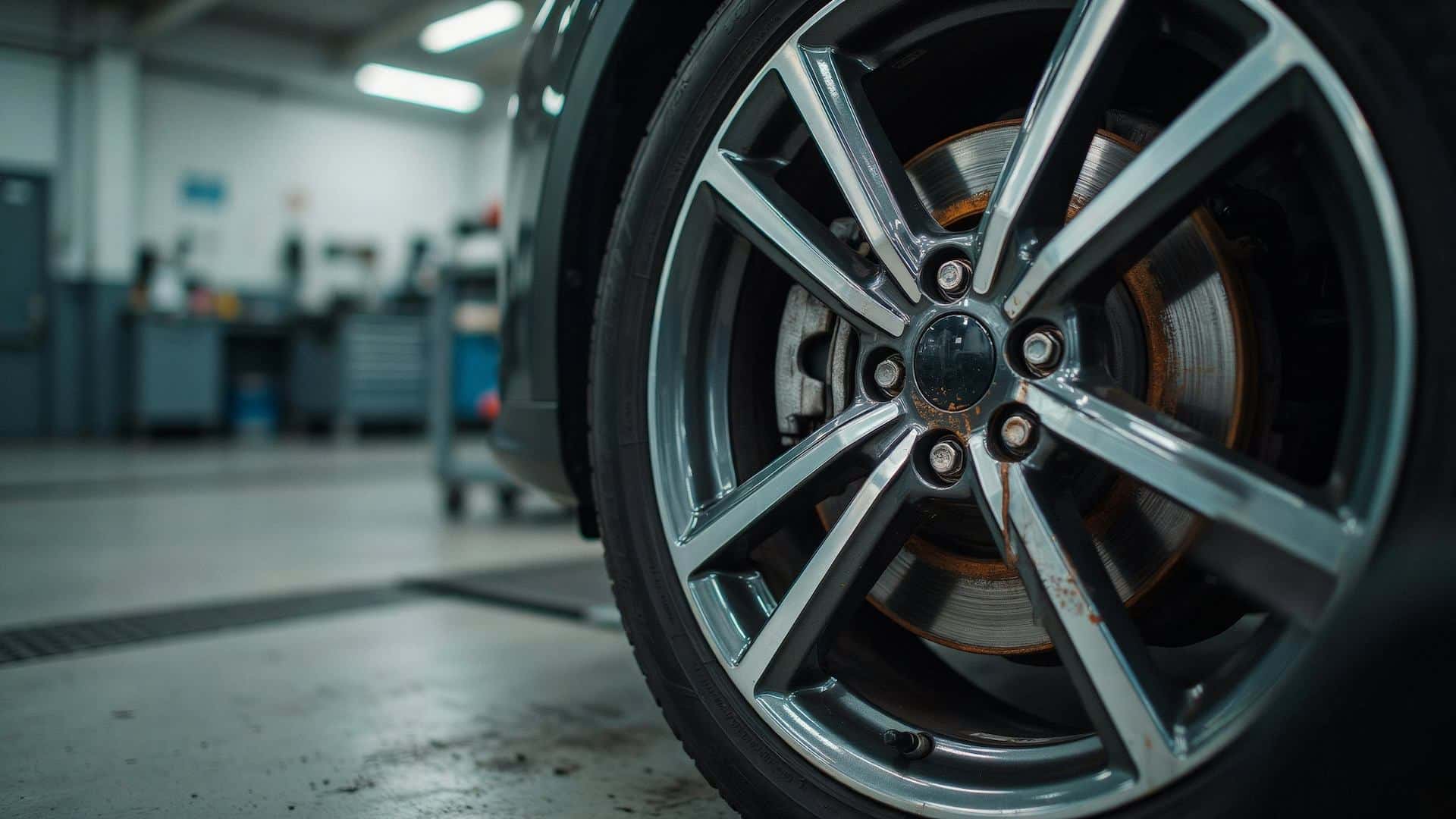
Brake rotors are made of cast iron, which is excellent at absorbing and releasing heat but vulnerable to oxidation. When a vehicle sits, especially in damp conditions, the area swept by the pads can develop a light layer of rust. Normal braking usually removes it, which is why some owners hear a brief scraping sound or feel a slight roughness during the first few stops.
More serious corrosion tends to collect on the outer edge of the rotor and on the hat section, the area that mounts against the wheel hub. A raised ridge of rust at the rotor’s edge can form where the pad does not reach, and it can cause the pad to ride unevenly. Rust between the rotor and the hub can also leave the rotor sitting slightly off, which can lead to vibration, a pulsing pedal, or uneven wear over time.
Vehicles that sit for long stretches, or that mostly make short trips and rarely build up enough brake heat or speed to clean the rotors, are especially prone to heavier buildup. If your Kia often rests in the driveway for several days, that matters for your brakes.
How Caliper Slide Pins Work
Most Kia passenger vehicles use a floating caliper design. The caliper is mounted on a bracket and slides on two pins, so that when you press the pedal, the caliper can center itself and squeeze both pads against the rotor evenly. That sliding motion needs to stay smooth for the pads to wear properly.
Slide pins sit inside protective rubber boots filled with a high-temperature brake lubricant. Over time, heat can break down that lubricant, and a torn or aging boot lets in water, salt, and grit. Once the pins start to corrode or dry out, they can stick or move slowly.
A stuck slide pin can cause one pad to press harder than the other, or can leave a pad lightly dragging against the rotor even when you are off the pedal. That constant contact generates heat, wears the pad quickly, and can overheat the rotor and wheel assembly. It can also reduce fuel economy slightly, because the vehicle is working against its own brakes.
Signs Your Brakes Need Attention
Brake issues often show up gradually. Early recognition can save you from a larger repair.
Listen for squealing or grinding during stops, and notice whether the vehicle pulls to one side when you brake. Pay attention to a steering wheel or pedal that vibrates, a burning smell after a drive, or a wheel that feels noticeably hotter than the others after a trip. Look for pads that appear worn more on one side than the other, or a rotor surface with grooves, a heavy rust lip, or discoloration.
If you see a brake warning light, a pedal that sinks or feels soft, or any sign of fluid near a wheel, avoid driving the vehicle and have it inspected right away. These symptoms involve safety rather than convenience.
Habits That Help Protect Your Brakes
A few practices reduce corrosion and keep the system moving freely. Genuine and approved brake components are available through the Kia of Beavercreek parts center, which helps keep replacements matched to your vehicle.
- Drive regularly: Brakes clean themselves best with normal use, so vehicles that sit benefit from an occasional drive with several gentle stops.
- Rinse after salty drives: Washing the wheels and undercarriage in winter helps remove salt before it settles on brake parts.
- Avoid parking right after hard braking in wet conditions: Hot rotors exposed to puddles or a heavy wash can warp or corrode more quickly, so give them a moment to cool.
- Brake smoothly and early: Gradual deceleration reduces heat and prolongs the life of pads and rotors.
- Have the hardware serviced with every pad replacement: Cleaning the slide pins, bracket, and clips at that time keeps the system working as designed.
What a Professional Brake Cleanout and Lubrication Involves
A thorough service goes well beyond swapping pads. The technician removes the wheel, inspects the pads, rotors, calipers, hoses, and hardware, and measures components against wear limits. Rust ridges are cleaned from the rotor edge where appropriate, and the hub mounting surface is cleaned so the rotor sits flat and true.
The caliper is separated from its bracket, and the slide pins are removed, cleaned, inspected for corrosion or scoring, and lubricated with the correct high-temperature brake grease. The boots are checked for tears, and the bracket’s abutment points, where the pad ears rest, are cleaned and treated so the pads can move freely. Worn or damaged hardware, such as clips or boots, is replaced rather than reused.
Many newer Kia models include an electronic parking brake, where the rear calipers have an electric motor that applies the parking brake. On those vehicles, the rear caliper pistons usually need to be retracted using a service mode before pad work begins, rather than being forced back by hand. This is one more reason to let a trained technician handle brake service.
Brake fluid deserves attention as well, since it absorbs moisture over time and can contribute to internal corrosion. Your owner’s manual lists the recommended service intervals. You can review your vehicle’s needs through the service center, and a conversation with the service team can help you decide what to prioritize.
Planning Ahead for Ohio Roads and Weather
Before winter storms and holiday travel, check current road conditions on OHGO, Ohio’s traveler information resource, so you can plan around closures, crashes, or slow traffic on US-35 and I-675. Smoother, less frantic driving is easier on brakes as well as nerves.
It is also a good idea to confirm there are no open safety recalls on your Kia. You can enter your VIN into the NHTSA recall lookup in about a minute.
On snow and ice, increase your following distance, brake gently, and let the vehicle’s stability and anti-lock systems do their job. Avoid sudden slamming of the pedal when possible, and never ignore a change in brake feel just because the weather is poor.
The Cost of Prevention Versus Repair
The price gap between routine brake maintenance and repairing neglected brakes can be substantial. The ranges below are general and approximate, and they vary by model, year, and what the inspection finds. Always request a written estimate for your specific Kia.
- Brake inspection with hardware cleaning and lubrication: Usually a modest cost, often performed together with pad service, and the most affordable way to keep the system moving freely.
- Brake pad replacement: Commonly a few hundred dollars per axle, depending on the model and parts used.
- Rotor replacement: Often adds a few hundred dollars per axle, and heavy rust or heat damage can make it unavoidable.
- Caliper replacement: Frequently several hundred dollars or more per caliper, plus labor and a brake fluid bleed.
- Towing and lost time: A stuck brake or failed component away from home adds cost and inconvenience beyond the repair itself.
Viewed together, small preventive steps almost always cost less than the damage that follows when moving parts seize.
Keep Your Kia Stopping Smoothly
Between rain, road salt, and the constant slowing and accelerating of daily traffic, your Kia’s brakes work hard every day. Keeping the rotors clean and the caliper slide pins moving freely helps pads wear evenly, keeps braking predictable, and protects more expensive parts.
If you have noticed squealing, pulling, vibration, or a burning smell, or you simply want your brakes checked before the season changes, the team at Kia of Beavercreek, located at 2220 Heller Dr, Beavercreek, OH 45434, United States, can inspect your system and recommend the right service. You can schedule service online at a time that works for you and get back to the road with confidence.
0 comment(s) so far on Navigating US-35 & I-675: Kia Brake Rotor Rust Cleanout & Caliper Slide Pin Lubrication