



 Telluride Hybrid
Navigating WPAFB Commutes & Base Housing Speed Bumps: Suspension & Alignment Care
Key Takeaways
- Wright-Patterson AFB commuters and base housing residents deal with frequent speed bumps and gate checkpoints that put repeated, low speed impacts on suspension components
- Struts and shocks absorb the brunt of speed bump impacts, and repeated exposure over years of daily driving accelerates their wear compared to typical commuting
- Alignment can drift gradually from repeated speed bump impacts, especially if bumps are taken at an angle or at inconsistent speeds
- A periodic suspension and alignment check is far less costly than the tire wear and handling issues that come from ignoring gradual wear
Anyone who lives on or commutes daily through Wright-Patterson Air Force Base knows the drill of slowing for speed bump after speed bump, whether it’s navigating base housing streets or working through the gate checkpoints. A suspension inspection typically runs somewhere in the forty to seventy dollar range, while worn struts or a misaligned suspension left unaddressed can lead to premature tire replacement and handling issues that cost considerably more.
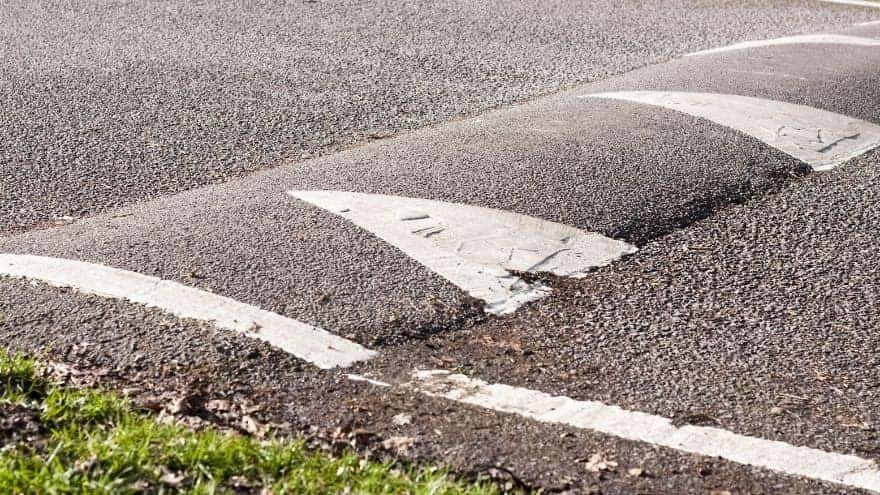
Base housing and the surrounding roads near Wright-Patterson are dotted with speed bumps designed to keep traffic moving slowly and safely through residential and pedestrian heavy areas, which makes plenty of sense from a safety standpoint. For a vehicle taking that same repeated low speed impact day after day on a regular commute, though, those speed bumps add up to a specific kind of wear that a driver commuting on smoother, bump free roads simply doesn’t experience to the same degree.
Why Repeated Speed Bump Impacts Wear Suspension Components Faster
Every time a vehicle crosses a speed bump, the suspension system, primarily the struts and shocks, absorbs the impact and controls how the vehicle’s body responds to that sudden change in road surface. A single speed bump crossing at a reasonable speed isn’t much to worry about. The concern comes from the cumulative effect of crossing multiple speed bumps daily, sometimes at inconsistent speeds or slight angles, over months and years of the same commute.
Marcus Feldman, a technician at our Beavercreek service center, says he sees a fairly predictable pattern among customers who commute through base housing or in and out of the WPAFB gates regularly. He explains that struts and shocks designed to handle occasional bumps and dips in the road wear down measurably faster when they’re absorbing several deliberate impacts every single day, compared to a commute on smoother, more consistent pavement. He notes that this doesn’t mean anything is wrong with the vehicle or that speed bumps should be avoided, since they serve an important safety purpose, but it does mean suspension components on a heavy speed bump commute benefit from more frequent inspection than they might otherwise need.
How Speed Bumps Contribute to Alignment Drift
Beyond strut and shock wear, repeated speed bump crossings can gradually affect a vehicle’s alignment, particularly if bumps are crossed at an angle rather than straight on, or if one side of the vehicle consistently takes more impact than the other due to how a particular road or driveway is laid out. Each crossing is a small jolt to the suspension and steering components that keep the wheels properly aligned, and while a single crossing won’t meaningfully shift alignment, the cumulative effect of hundreds of crossings over time can contribute to a gradual drift.
Danielle Voss, a service advisor here at the dealership, says this is a pattern she’s noticed particularly among customers who live in base housing and cross the same set of speed bumps multiple times a day, every day, as part of their regular routine. She recommends paying attention to subtle changes in how the vehicle handles, since alignment drift from this kind of repeated impact tends to happen gradually enough that it’s easy to miss until uneven tire wear or a pulling sensation becomes noticeable.
- Struts and shocks absorb the brunt of speed bump impacts and wear faster under repeated daily exposure
- Alignment can drift gradually from speed bumps crossed at an angle or with inconsistent impact between the front wheels
- Uneven tire wear is often one of the first noticeable signs that alignment has shifted from repeated impacts
- A vehicle that feels bouncier than it used to after crossing bumps may be showing early signs of worn struts or shocks
Driving Habits That Help Minimize Wear
A few adjustments to how speed bumps are approached can meaningfully reduce the cumulative wear on suspension and alignment. Crossing a speed bump straight on, rather than at an angle, distributes the impact evenly across both front wheels rather than concentrating more force on one side. Slowing to an appropriate speed before the bump, rather than braking hard directly over it, also reduces the abruptness of the impact transferred to the suspension.
Marcus recommends that anyone navigating the same set of base housing speed bumps multiple times a day get in the habit of a consistent, moderate approach speed rather than varying between fast and slow crossings, since consistency in how impacts are absorbed tends to be easier on the suspension system than a mix of hard and soft hits over time. He also points out that a vehicle that starts to feel noticeably bouncier after a speed bump, continuing to bounce rather than settling quickly, is often an early sign that the struts or shocks are starting to wear and could benefit from an inspection.
- Cross speed bumps straight on rather than at an angle to distribute impact evenly across both wheels
- Slow to an appropriate speed before the bump rather than braking hard directly over it
- Keep your approach speed consistent across repeated daily crossings rather than varying between fast and slow
- Pay attention to excessive bouncing after a bump, which can indicate struts or shocks are starting to wear
Recognizing the Signs Your Suspension Needs Attention
A vehicle with healthy struts and shocks should absorb a speed bump crossing and settle back to a stable ride within a bounce or two. A vehicle that continues bouncing noticeably longer than that, or that feels looser and less controlled over bumps than it used to, is showing signs of wearing suspension components. A pulling sensation to one side on a flat, straight road, or a steering wheel that isn’t centered when driving straight, points toward alignment that’s drifted and needs attention. Uneven tire wear, where the inside or outside edge of the tread wears down faster than the rest, is another common indicator worth having assessed.
- Have struts and shocks inspected if your vehicle bounces noticeably after crossing a speed bump rather than settling quickly
- Get an alignment check if the vehicle pulls to one side or the steering wheel sits off center
- Watch for uneven tire wear, which often develops gradually from repeated speed bump impacts over time
- Consider more frequent suspension inspections if your daily commute regularly includes base housing or checkpoint speed bumps
Speed bumps around Wright-Patterson and base housing aren’t going anywhere, and for good reason, but a Kia that’s had regular suspension and alignment attention holds up to that daily routine far better than one that hasn’t. Kia of Beavercreek, located at 2220 Heller Dr, Beavercreek, OH 45434, is glad to take a look at your struts, shocks, and alignment, whether that means a routine inspection or a closer look at a ride that’s started to feel a little bouncier or less centered than it used to on your regular commute.

0 comment(s) so far on Navigating WPAFB Commutes & Base Housing Speed Bumps: Suspension & Alignment Care