


Servicing the 576-HP Performance Beast: Brake & Tire Wear Management for the Kia EV6 GT
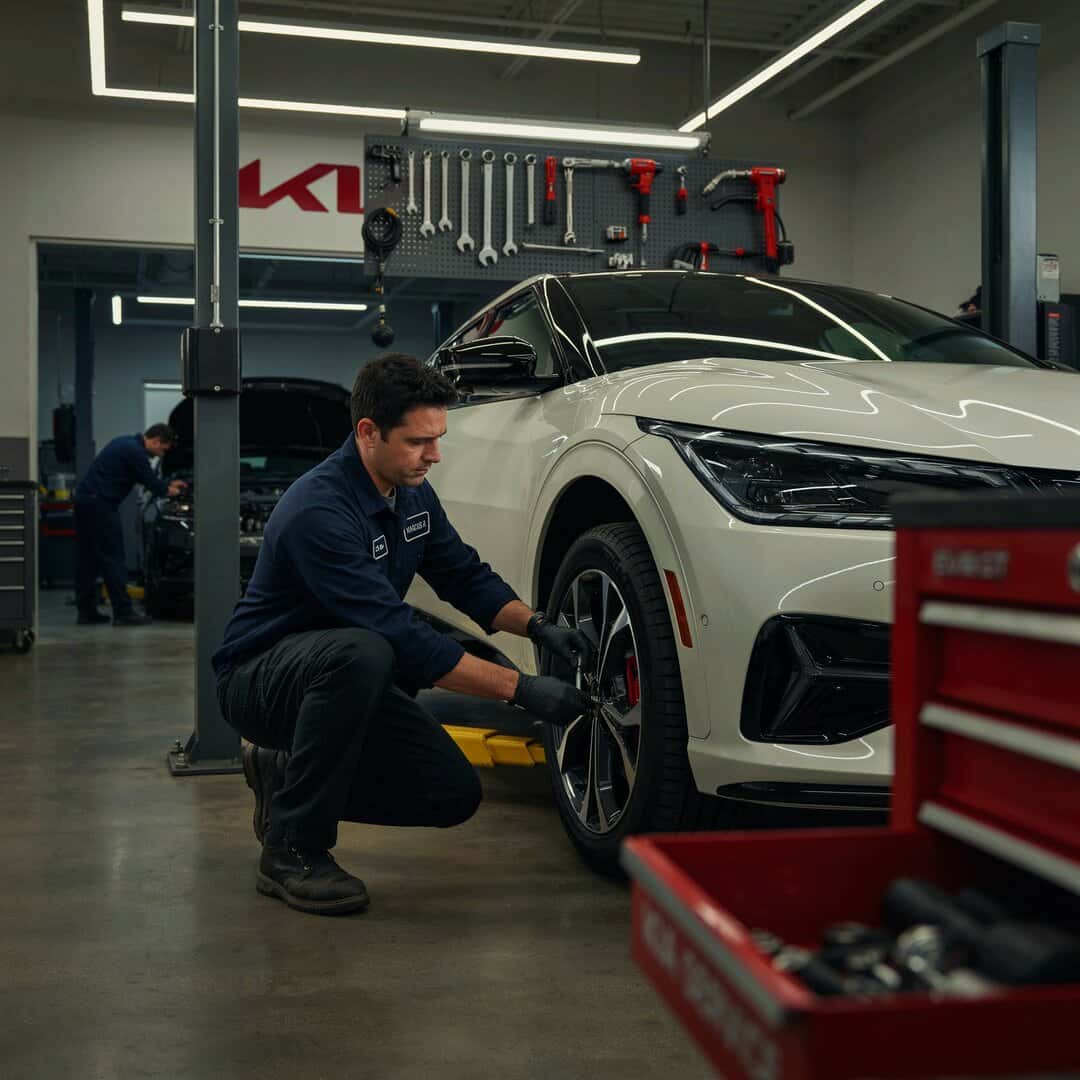
Key Takeaways
- The EV6 GT’s 576 horsepower and instant electric torque place unusual demands on tires, wearing them faster than a typical EV or gas-powered vehicle under enthusiastic driving.
- Regenerative braking changes the wear pattern on the GT’s friction brakes, which can lead to rotor corrosion if the mechanical brakes aren’t exercised regularly.
- Beavercreek’s mix of open roads near Wilberforce and tighter suburban routes creates varied driving conditions that accelerate uneven tire wear if alignment and rotation aren’t kept current.
- The GT’s added curb weight from its battery pack changes braking dynamics compared to lighter performance vehicles, putting more demand on tire contact patches during hard stops.
- Neglecting tire rotation and brake exercise can turn a $60 to $150 service into a $1,200-plus repair involving premature tire replacement or corroded rotors.
Beavercreek drivers who bought the EV6 GT for its 576 horsepower and sub-3.5-second launch capability are driving one of the more demanding vehicles on the road when it comes to tire and brake wear, even if the demands aren’t always obvious day to day. Instant electric torque delivers all of that power the moment a foot touches the accelerator, and tires bear the brunt of it every time. At the same time, the GT’s regenerative braking system does most of the everyday stopping, which means the mechanical friction brakes see far less regular use than they would in a traditional gas-powered car, creating a different kind of maintenance concern than most drivers are used to thinking about. A GT that develops corroded rotors from underused friction brakes, or chews through a set of tires early from uneven wear, can face repair costs well over $1,200, compared to routine rotation and brake service that costs a fraction of that.
Why 576 Horsepower Changes the Tire Wear Equation
Internal combustion vehicles build power progressively as RPM climbs, giving tires a moment to manage traction as torque increases. The EV6 GT doesn’t work that way. Its electric motors deliver maximum torque essentially instantly, which means every hard acceleration, even a moderate one from a stoplight, asks the tires to manage a torque spike that a similarly powerful gas vehicle would deliver more gradually.
This has a few practical effects on tire wear:
- Front and rear tires can wear unevenly depending on how the GT’s all-wheel-drive system distributes torque during acceleration, making regular rotation more important than on a lower-power vehicle
- Aggressive acceleration accelerates tread wear at the rear in particular, since that’s often where a larger share of torque gets sent during hard launches
- Cornering loads are higher given the GT’s weight and power combination, which can accelerate shoulder wear on tires that see spirited driving on the more open stretches near Wilberforce or along Indian Ripple Road
- Launch mode and repeated hard acceleration events compound the effect further, since each use represents a concentrated burst of torque transfer that a slower, more gradual acceleration simply doesn’t produce
None of this means the GT is hard on tires in a way that should discourage enjoying the performance it’s built for, but it does mean tire rotation and wear inspection need to happen on a tighter schedule than a typical commuter vehicle.
How the GT’s Weight Factors Into Tire and Brake Behavior
It’s easy to focus purely on horsepower when thinking about what makes the EV6 GT demanding on consumable parts, but the vehicle’s weight plays just as significant a role. The battery pack that gives the GT its range also adds substantial curb weight compared to a similarly sized gas-powered performance car. That extra mass means more kinetic energy has to be managed every time the vehicle accelerates hard or comes to a stop, and both tires and brakes are the components absorbing that energy.
During hard acceleration, the added weight combined with instant torque delivery increases the load transferred to the rear tires’ contact patches. During hard braking, that same weight has to be arrested quickly, whether by regenerative braking, friction brakes, or a combination of both, and the tire’s grip is what ultimately makes that stop happen safely. This is part of why performance-oriented EVs in general, and the GT specifically, tend to see faster tire wear than their horsepower figures alone might suggest. It isn’t just about power, it’s about power combined with mass.
The Hidden Complication of Regenerative Braking
Regenerative braking is one of the EV6 GT’s most useful everyday features, using the electric motors to slow the vehicle and recapture energy back into the battery rather than relying on friction brakes for most routine stops. It’s efficient, reduces brake dust, and extends the life of brake pads and rotors under normal circumstances.
But that same efficiency creates a maintenance blind spot. When friction brakes are used infrequently because regenerative braking handles most day-to-day slowing, the rotors don’t get the regular light abrasion that naturally keeps surface rust from forming. Over time, particularly during Ohio’s wetter and saltier months, rotors that sit mostly idle can develop surface corrosion that isn’t always obvious until it starts producing a grinding or vibration sensation when the friction brakes are finally engaged hard, such as during an emergency stop.
A proper brake system check for the GT should include:
- Rotor surface inspection for corrosion or pitting, checking for rust buildup that can develop from underused friction brakes
- Brake pad thickness measurement, confirming pads are wearing evenly despite reduced use
- Regenerative braking calibration check, verifying the transition between regenerative and friction braking feels smooth and engages the mechanical brakes appropriately when needed
- Brake fluid condition check, since fluid still absorbs moisture over time even when the friction brakes see reduced mileage
- Caliper movement inspection, confirming calipers aren’t sticking or seizing from infrequent use, which can happen when friction brakes go long stretches without full engagement
Why Beavercreek’s Driving Mix Matters
Beavercreek offers a genuine mix of driving conditions that plays into both tire and brake wear patterns. The more open, higher-speed roads heading out toward Wilberforce and Xenia give GT owners room to use the car’s performance, while the tighter, more congested routes through central Beavercreek and toward Dayton mean plenty of stop-and-go driving where regenerative braking does most of the work. That combination, spirited acceleration on open roads paired with heavy regenerative use in traffic, is precisely the pattern that produces both accelerated tire wear and underused friction brakes in the same vehicle.
Seasonal changes add another layer to this. Winter driving around Beavercreek often means more cautious, gradual acceleration and braking, which shifts more of the stopping duty toward regenerative braking and away from the friction brakes entirely, worsening the rotor corrosion risk during exactly the months when road salt is also present and most likely to accelerate that corrosion once it starts.
What a Performance-Focused Maintenance Schedule Should Include
Keeping the EV6 GT’s brakes and tires in proper condition calls for a service approach tailored to how the car is actually driven:
- Tire rotation every 5,000 to 7,500 miles, tighter than some standard EV recommendations, to manage the uneven wear that comes with high torque output
- Tire pressure and tread depth checks, since the GT’s performance tires are less forgiving of underinflation than standard all-season tires
- Periodic brake exercise or inspection, ensuring the friction brakes are engaging enough to prevent rotor corrosion from taking hold
- Alignment checks, particularly after any spirited driving sessions, since aggressive acceleration and cornering can gradually affect alignment settings
- Seasonal tire evaluation, since performance-oriented tires often trade some cold-weather grip for dry and wet performance, making a winter tire conversation worthwhile for owners who drive year-round
The Cost of Proactive Care Versus Neglect
The numbers make the case for staying ahead of GT-specific wear patterns:
- Tire rotation and inspection: typically $30 to $60
- Brake inspection and rotor corrosion service, if caught early: roughly $80 to $150
- Premature tire replacement due to uneven wear (per set): commonly $800 to $1,400
- Rotor replacement due to advanced corrosion or pitting: frequently $400 to $700 per axle, more if pads and hardware also need replacement
The GT’s performance is a large part of what makes it appealing, and none of this maintenance is about limiting how it’s driven. It’s about recognizing that a 576-horsepower EV wears tires and brakes differently than a typical commuter vehicle, and staying ahead of that pattern keeps repair costs low and the car performing the way it was designed to.
Beavercreek’s mix of open roads and everyday traffic gives GT owners plenty of opportunity to enjoy what the car can do, but that enjoyment holds up best with tires and brakes that are properly rotated, inspected, and exercised on a schedule built around how the GT actually behaves. Kia of Beavercreek, located at 2220 Heller Dr, Beavercreek, OH 45434 offers the rotation, brake inspection, and alignment service needed to keep an EV6 GT’s performance intact, giving Beavercreek drivers confidence every time they put that power down.
0 comment(s) so far on Servicing the 576-HP Performance Beast: Brake & Tire Wear Management for the Kia EV6 GT