



 Telluride Hybrid
Spring Showers & Safe Stops: Why Brake Inspections Matter After Winter
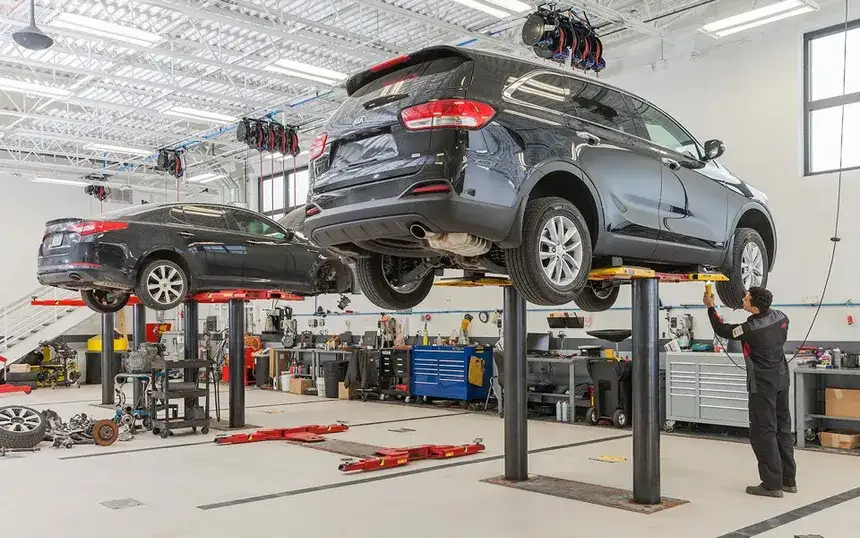
Last month, a Kia Sportage came in from Centerville after its owner noticed a grinding sensation when braking at the bottom of the hill on Feedwire Road. She had felt a subtle pulsation through the brake pedal since February but assumed it was road texture and kept driving her normal route through Beavercreek and down OH-725. After three months of continued driving on rotors that had developed significant surface irregularity from winter salt exposure, the resurfacing window had closed entirely. The rotor resurfacing that was viable in December? $190. The full front rotor replacement she needed by March? $520.
That three-month gap between a noticeable symptom and a resolved service appointment is one of the most consistent patterns we see at Kia of Beavercreek every spring. It’s not that drivers don’t care about their brakes. It’s that a pulsation in February feels easy to rationalize when the roads are rough and the weather is miserable and scheduling feels like one more item on an already full list.
Spring changes the stakes. April and May in Greene County bring the kind of persistent rain that makes stopping distances longer, brake response more critical, and the consequences of degraded brake components more immediate. The wet roads on Dayton-Yellow Springs Road, the standing water at the bottom of the I-675 off-ramps, and the unpredictable pedestrian and cyclist activity that returns with warmer weather all demand a brake system that came through winter in good condition.
This post explains what Ohio winters specifically do to Kia brake systems, how to recognize the signs that service is due, and why spring is the highest-leverage moment of the year to have that conversation.
What an Ohio Winter Does to Your Kia’s Brakes
Brakes are the system most directly and aggressively affected by the conditions that define a Greene County winter, and the damage happens in ways that aren’t always visible from the driver’s seat.
Road salt and brine applied throughout December, January, and February on I-675, US-35, and the surface streets around Beavercreek and Fairborn are effective at keeping roads clear of ice. They’re equally effective at accelerating corrosion on brake rotors, brake hardware, and the caliper slide pins that allow your brake pads to engage and release cleanly. The salt doesn’t distinguish between road ice and brake metal.
Rotor surface rust develops overnight when a salted vehicle sits in a driveway or parking lot. Most of that rust clears with the first brake application in the morning. But repeated cycles of surface rust formation and abrasive clearing across a full winter season gradually etch the rotor surface, creating microscopic irregularities that accumulate into the measurable thickness variation that produces pedal pulsation.
What Freeze-Thaw Cycles Do to Brake Hardware
Ohio’s freeze-thaw pattern, where temperatures cross the freezing threshold repeatedly through a single week, is particularly damaging to the rubber and metal hardware components in your brake system. Caliper slide pin boots crack in sustained cold and admit moisture that corrodes the pin surface underneath. When a slide pin corrodes, it binds rather than slides, causing uneven pad contact across the rotor face and accelerating wear on one side of the pad faster than the other.
Uneven pad wear from a binding slide pin is one of those problems that doesn’t announce itself clearly until the wear is severe. The brake still works. It just works unevenly, and the rotor pays the price over a full winter season of asymmetric loading.
Brake Fluid Moisture Absorption Through Winter
Brake fluid is hygroscopic, meaning it absorbs moisture from the atmosphere over time. A full Ohio winter of temperature cycling, repeated from cold soak to operating temperature and back, accelerates moisture migration into the brake fluid through the rubber components of the hydraulic system.
As moisture content in brake fluid rises, the fluid’s boiling point drops. For everyday Beavercreek driving this rarely becomes a dramatic safety issue, but it does affect brake feel, particularly in the kind of sustained braking that a wet spring descent on Feedwire Road or the long downgrade on New Germany-Trebein Road demands. A brake fluid test takes five minutes and costs nothing during a spring inspection. Knowing your fluid’s moisture content is always more useful than guessing. 🔧
How Spring Rain Specifically Raises the Stakes
Dry roads are forgiving of marginal brake condition in a way that wet roads simply are not. When the April rains arrive across Greene County, several things change simultaneously for a driver with a brake system that came through winter in less than ideal condition.
Wet rotors with surface irregularity don’t just pulsate more noticeably under pedal pressure. They also generate less consistent friction at the moment of initial brake application, creating a brief period of reduced effectiveness before the rotor surface and pad fully engage. On a dry road at normal following distances, that brief reduction is rarely consequential. On a wet US-35 offramp at 55 mph with traffic slowing ahead, it matters.
Worn brake pads have less friction material to work with under any conditions, but wet conditions reduce pad-to-rotor friction coefficient further. A pad at 3mm of remaining thickness stopping adequately on dry pavement may extend your stopping distance meaningfully on a wet road.
A Kia Telluride owner from Xenia came in last April after a close call on the rain-slicked approach to the I-675 and US-35 interchange. His brakes had felt adequate all winter, but a wet road braking event at highway speed revealed a stopping distance that surprised him. Inspection found front pads at 2mm with rotor scoring and a binding driver-side caliper. The spring brake service, pads, rotor resurfacing, and caliper service, ran $480. The alternative was a collision avoidance situation that no repair bill can retroactively fix.
Warning Signs Your Kia’s Brakes Need Attention This Spring
Brake symptoms exist on a spectrum from early and inexpensive to late and costly. Recognizing where your system currently sits determines what the service conversation looks like.
A pulsation or vibration through the brake pedal during moderate to firm braking is the most common sign of rotor thickness variation from winter surface damage. This symptom is often resurfacing-viable early and replacement-required if left long enough.
A pulling to one side under braking, where the vehicle tracks straight normally but veers during a brake application, indicates uneven pad contact most often caused by a binding caliper slide pin from winter corrosion.
A grinding or metal-on-metal sound when braking means pad friction material has worn through to the backing plate. This is a same-week service situation, not a monitor-and-wait item. Continued driving with metal-on-metal contact scores rotor surfaces beyond resurfacing and risks caliper damage.
A soft or spongy brake pedal that travels further than it used to before the brakes engage fully indicates elevated brake fluid moisture content or a hydraulic system issue that warrants immediate professional evaluation.
A scraping sound during the first few brake applications in the morning that clears after one or two stops is typically overnight rotor surface rust burning off and is normal for a vehicle parked outside. If the sound persists past the first stop or two, it deserves a closer look.
Longer stopping distances on wet roads that feel noticeably different from last summer’s performance is a subjective but valid signal that something in the brake system has changed across the winter season.
A burning smell after moderate braking on a downgrade, the kind you encounter on New Germany-Trebein Road heading toward Sugarcreek Township, points to a caliper that isn’t releasing fully and is generating continuous heat from constant pad contact. 🔧
If any of these are part of your current driving experience, the spring brake inspection is not an optional appointment.
The Real Cost of Spring Brake Service vs. Deferred Brake Repair
The cost difference between addressing brake issues at the right time and addressing them after additional damage has accumulated is one of the clearest value propositions in automotive maintenance.
Proactive spring brake inspection approach:
- Full brake inspection: included with service appointment at Kia of Beavercreek
- Front rotor resurfacing if needed: $190 to $240
- Brake pad replacement if at service limit: $180 to $260 per axle
- Caliper slide pin service: $80 to $120
- Brake fluid test and flush if moisture content warrants: $89
- Smart spring total if all items apply: $539 to $709
Reactive approach, waiting until symptoms force the conversation:
- Front rotor replacement after resurfacing window closes: $380 to $520
- Rear rotor replacement if rear brakes also deferred: $340 to $460
- Pad replacement with additional wear from metal contact: $240 to $320
- Caliper replacement if binding pin damages caliper bore: $280 to $380
- Total reactive cost: $1,240 to $1,680
Your savings from a proactive spring inspection: $700 to $970. Those are realistic numbers drawn from the kind of repair orders our service team at the Heller Drive location processes every spring.
“What I see every April is a wave of brake jobs that would have been half the cost in January,” says Marcus Tillman, Lead Kia Service Technician at the Heller Drive location. “The pulsation starts in December, the driver lives with it through winter, and by the time the spring rains make the brakes feel genuinely inadequate, we’re past resurfacing and into replacement territory. The symptom doesn’t fix itself. It just gets more expensive.”
Your 30-Day Spring Brake Check Plan
This week: Do a deliberate brake test on a quiet, wet road or immediately after a rain event. Find a safe stretch of road with no traffic behind you, accelerate to 35 mph, and apply the brakes firmly but not to full ABS activation. Note whether the pedal feels firm and consistent or spongy and progressive, whether the vehicle stops in a straight line or pulls to either side, and whether you feel any pulsation through the pedal surface. This single test, done intentionally rather than noticed accidentally, gives you a clear baseline for your service conversation.
Within two weeks: Walk around your Kia and look at the front rotors through the wheel spokes if your wheel design permits. A rotor in good condition has a consistent, even wear surface across the face. A rotor with a visible ridge at the outer edge, where the pad doesn’t reach, indicates meaningful wear has occurred and the height of that ridge gives a rough sense of how much material has been lost. If the ridge is visible and pronounced, the rotor conversation is already relevant.
By month’s end: Schedule a spring brake inspection at our Heller Drive location. Our Kia-certified technicians will measure pad thickness on all four corners, assess rotor condition for both thickness and surface quality, test caliper function and slide pin movement, and test brake fluid moisture content. The inspection itself is complimentary with your service appointment, and the findings give you a complete picture of where your brake system stands heading into wet spring driving season in Greene County.
These three checks take less than 45 minutes of your time outside the service appointment and can be the difference between a targeted, affordable spring service and a comprehensive brake replacement driven by a season of deferred attention.
Ohio spring driving deserves a brake system that came through winter intact. The rain isn’t optional, the traffic isn’t optional, and the stopping distances that wet Greene County roads demand aren’t negotiable. What is within your control is whether your Kia’s brakes are ready for all of it.
Schedule Your Spring Brake Inspection Today
The Centerville Sportage owner from the opening got her full front brake service completed in a single appointment and drove out with confidence she hadn’t had since the previous fall. She set a reminder for a brake check the following November, before the salt season begins, specifically to avoid repeating the three-month drift between symptom and service. Her follow-up appointment the next spring was a clean bill of health and a tire rotation.
At Kia of Beavercreek, our certified technicians perform comprehensive brake inspections on every Kia model with the training and model-specific knowledge that Greene County and Greater Dayton driving conditions require. Whether you’re already experiencing a symptom or simply want the confidence of knowing your brake system came through winter in good shape, we’ll give you an honest assessment and a clear path forward.
Schedule your spring brake inspection today by contacting our service department or booking online. You’ll find us at 2220 Heller Dr, Beavercreek, OH 45434.
Proper brake maintenance protects your safety, preserves the stopping performance your Kia was engineered to deliver, and ensures wet spring roads in Beavercreek and across Greene County never catch your brake system unprepared. That is what a clean spring inspection delivers.

0 comment(s) so far on Spring Showers & Safe Stops: Why Brake Inspections Matter After Winter