


Squeaking or Grinding Brakes? How to Tell When Your Kia Sorento or Sportage Needs New Brake Pads
Key Takeaways
- Sound is your early warning: A high-pitched squeal often means the pad wear indicator is doing its job, while a deep grinding usually means the pad material is gone.
- Feel tells the rest of the story: Pulsing through the pedal, pulling to one side, or a longer stopping distance all point to brake components that need attention.
- Acting early saves money: Replacing pads on time typically protects the rotors, which are far more expensive to replace than pads.
- Local driving shortens pad life: Stop-and-go traffic along Route 35, Dayton-Xenia Road, and the busy corridors near Fairfield Commons wears brakes faster than steady highway miles.
Most Beavercreek drivers notice their brakes the moment something sounds wrong, but many wait weeks before doing anything about it. A brake pad replacement is a routine, predictable expense, while ignoring the noise until the pads wear through can turn it into a pad, rotor, and caliper repair that costs several times more. Knowing what your Kia Sorento or Sportage is telling you can help you act while the fix is still simple.
How Your Kia’s Brakes Actually Work
Every time you press the pedal, hydraulic pressure pushes brake pads against spinning rotors, and the friction between them slows your vehicle. The pads are designed to wear down gradually, and the rotors are meant to last through multiple sets of pads when they are maintained properly.
Both the Sorento and the Sportage are comfortable, family-oriented vehicles that carry real weight, especially with passengers, cargo, or a roof rack loaded for a weekend trip. That extra mass means the brakes do plenty of work, and it makes regular inspections worth the time. Hybrid versions add regenerative braking, which can reduce wear on the pads in some driving conditions, but they still rely on traditional friction brakes and still need routine checks.
Sign One: A High-Pitched Squeal When You Brake
A thin, metallic squeal when you press the pedal is the most common early sign of worn pads. Many brake pads include a small metal wear indicator designed to scrape against the rotor when the pad material gets low, creating a sound that is meant to get your attention.
Not every squeak is a crisis. Morning moisture, dust, or a light film of surface rust on the rotors can cause brief noise that fades after the first few stops. The difference is persistence. If the squeal returns every time you brake, or it gets louder over a week or two, it is time for an inspection. Waiting only narrows your options.
Sign Two: A Deep Grinding or Growling Sound
Grinding is a more serious signal. It often means the friction material has worn away completely and metal is now contacting metal, which can score the rotors and damage other components. You may hear it as a low, rough growl, and you might feel it through the pedal or steering wheel.
If you hear grinding, limit your driving and schedule service as soon as you can. Continuing to drive on metal-to-metal contact can quickly turn a pad replacement into a larger repair, and it reduces your stopping power when you need it most, such as a sudden slowdown on I-675 or a stop at a busy intersection on Dayton-Xenia Road.
Sign Three: Vibration or Pulsing Through the Pedal
If the brake pedal pulses or the steering wheel shakes when you slow down, the rotors may have developed uneven surfaces. Heat, wear, and age can cause rotors to warp or build up uneven deposits, and the result is a vibration you can feel as you stop.
Drivers who tow, carry heavy loads, or regularly drive down long grades tend to notice this sooner, since sustained braking generates a lot of heat. Rotors can sometimes be resurfaced if enough thickness remains, but many need replacement. A technician can measure them and tell you which option makes sense. You can look at our service center page to see how to get your Kia checked.
What to Look For Beyond the Noise
Not every brake problem makes a sound, so it pays to build a few quick visual and sensory checks into your routine. A short walk around your vehicle, and a few minutes of attentive driving, can reveal a lot:
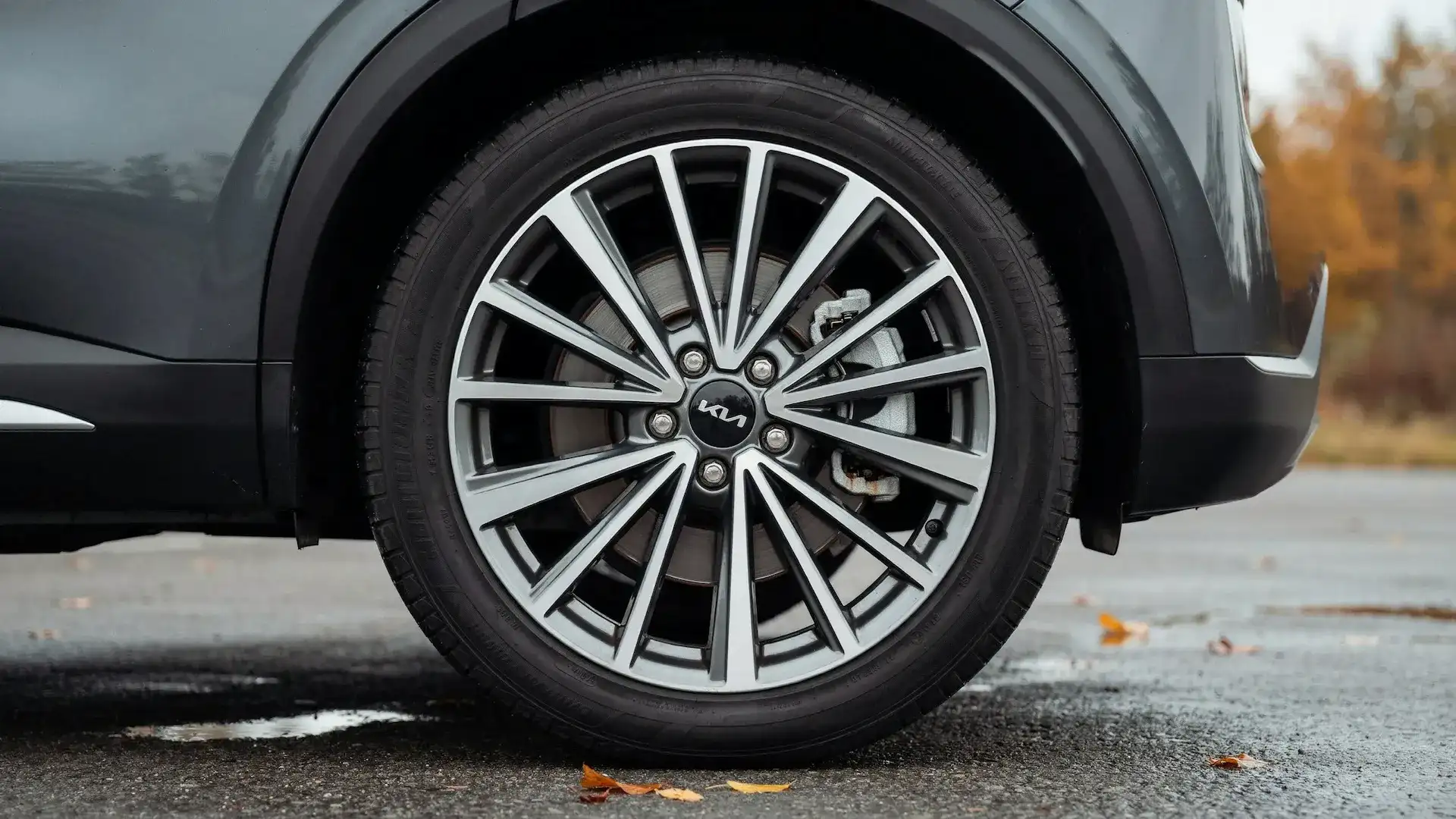
- Thin pads: Look through the wheel spokes at the pad pressed against the rotor. If the friction material looks thinner than about a quarter of an inch, plan for replacement.
- Dashboard warning light: A brake system or ABS light deserves prompt attention and should not be ignored.
- Pulling to one side: If your Kia drifts left or right when you brake, a stuck caliper or uneven pad wear may be the cause.
- Soft or sinking pedal: A pedal that feels spongy or drops closer to the floor can indicate a fluid or hydraulic concern.
- Brake dust buildup: Unusually heavy dust on one wheel compared to the others can point to a sticking component.
Any one of these is a reason to book a visit, and several together make it a priority.
Sign Four: Longer Stopping Distances or a Pull to One Side
If your Sorento or Sportage seems to need more road to come to a stop, trust that instinct. Worn pads, glazed rotors, or low fluid can all reduce braking performance gradually, so the change can sneak up on you. It often becomes obvious only when something forces a hard stop.
A pull to one side during braking is another meaningful clue. It can come from a caliper that is not releasing evenly, a collapsed brake hose, or pads that have worn at different rates on each side. Because braking is a safety system, a change in how your vehicle stops is never something to put off. The National Highway Traffic Safety Administration offers helpful general guidance on vehicle maintenance and safety for owners.
Sign Five: Brake Fluid That Is Dark or Overdue
Brake fluid does not wear out the way pads do, but it absorbs moisture over time, which lowers its boiling point and can cause corrosion inside the system. Southwest Ohio’s humid summers and freezing winters accelerate that process.
Fluid that looks dark or murky, or that has not been changed in several years, can reduce braking performance and shorten the life of calipers and lines. Your owner’s manual lists the recommended interval for fluid service, and a technician can test the condition of your fluid during a brake inspection. It is one of those maintenance items that quietly protects expensive parts.
Why Beavercreek Driving Is Tough on Brakes
Stop-and-go traffic near Fairfield Commons, quick starts and stops along Pentagon Boulevard, and the daily rhythm of school and commuter traffic all add up to a lot of braking. Rolling hills and curves around Little Beaver Creek and the neighborhoods off Grange Hall Road add more demand, and winter salt can accelerate corrosion on rotors, calipers, and hardware.
The seasons play a role too. Wet leaves and early frost make stopping distances longer, and the first icy morning is a poor time to discover that your pads are nearly gone. Checking conditions on OHGO before a long drive helps you plan, and keeping your brakes in good shape means you are ready for whatever the route throws at you.
How Often Should Brakes Be Inspected?
Many drivers have their brakes looked at whenever they rotate their tires, since the wheels are already off and the pads and rotors are easy to measure. That is a practical rhythm for most households, and it catches wear before it becomes a problem. Pad life varies widely depending on how you drive, how much weight you carry, and the type of pads installed, so there is no single mileage that fits everyone.
A quick brake check does not take long, and it gives you a clear picture of how much life is left. You can see what is typically offered on our parts center page if you want to learn about genuine replacement components that are designed for your model.
What Waiting Can Cost You
Putting off a brake job rarely saves money. Here is how the options typically compare:
- Brake pad replacement: A routine, predictable maintenance expense when done at the first sign of wear.
- Pads plus rotor replacement: A larger repair that becomes necessary once grinding has damaged the rotor surface.
- Caliper or hydraulic repair: An even higher cost when a stuck or leaking component has been overlooked for too long.
- Safety risk: The cost that is hardest to measure, since longer stopping distances raise the chance of a collision.
Preventive care is the clear winner on both cost and safety, and members of the Rev Rewards program may find extra value on routine service.
Get Your Kia’s Brakes Checked in Beavercreek
If your Sorento or Sportage is squeaking, grinding, pulsing, or simply does not feel the way it used to when you stop, do not wait for the sound to get louder. A quick inspection can tell you how much pad life remains and keep a small repair from growing. Bring your vehicle to Kia of Beavercreek, located at 2220 Heller Dr, Beavercreek, OH 45434, United States, and our service team will take a careful look. You can schedule your service visit online at a time that works for you.
0 comment(s) so far on Squeaking or Grinding Brakes? How to Tell When Your Kia Sorento or Sportage Needs New Brake Pads