



 Telluride Hybrid
The 2026 EV9 GT: Caring for the 379-hp dual-motor beast and its NACS port.
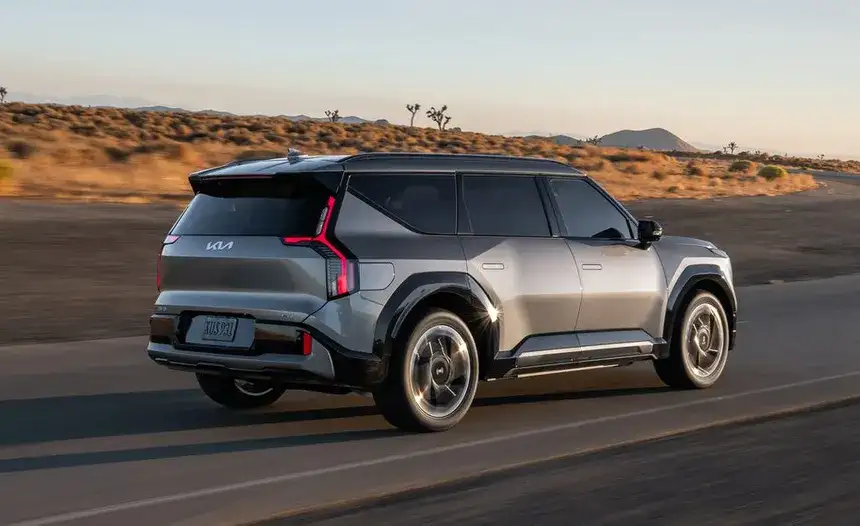
Last month, a 2026 Kia EV9 GT came in from Centerville after its owner had noticed inconsistent DC fast charging behavior at multiple NACS stations along I-70 and I-75 over the previous six weeks. The charging sessions would initiate correctly but throttle to significantly reduced rates after five to eight minutes, cutting sessions that should have taken 25 minutes to 80 percent into 45-minute events that disrupted two planned Columbus and Cincinnati day trips. He had assumed the issue was with the charging network rather than the vehicle and had been logging complaints with the charging provider without resolution. The NACS port inspection, thermal management diagnostic, and software update that identified and resolved the vehicle-side throttling cause? $0 warranty covered. Six weeks of disrupted fast charging sessions and two day trips that required unplanned extended charging stops? Entirely preventable with a post-delivery NACS system verification.
That six-week attribution of a vehicle-side issue to network infrastructure is one of the most consistent patterns we see with first-year EV9 GT owners at Kia of Beavercreek, and it reflects the reasonable assumption that a brand-new vehicle couldn’t be contributing to a charging problem. On a high-performance dual-motor EV with the thermal management demands that 379 horsepower and 516 lb-ft of torque introduce, the charging system, the battery thermal management, and the software that coordinates between them represent a more complex service picture than a standard EV9’s, and understanding that picture from the beginning of ownership is what separates a GT experience that delivers on its considerable promise from one that produces avoidable frustrations on Greater Dayton’s roads.
The EV9 GT is the most performance-oriented production Kia ever offered in the North American market, and its arrival in the Beavercreek market gives Greater Dayton families access to three-row electric performance that the segment hasn’t seen at this price point. But performance engineering requires performance maintenance, and the GT’s dual-motor AWD system, its 800-volt architecture, and its NACS charging capability all carry service requirements that differ from the standard EV9’s already-specific ownership needs. This guide covers what the EV9 GT specifically demands from a maintenance perspective, what Ohio’s driving and seasonal conditions mean for the GT platform, and how to build the service foundation that keeps 379 horsepower performing reliably across every mile of Greater Dayton ownership.
What Makes the EV9 GT Different to Service
The EV9 GT shares the standard EV9’s fundamental architecture but differs in every system that determines performance, and those differences translate directly into specific service considerations that GT owners need to understand from delivery day.
The dual-motor AWD system produces 379 horsepower and 516 lb-ft of torque through independent front and rear motor units, each with its own inverter module and power electronics. The torque vectoring capability that the dual-motor setup enables, distributing power between front and rear axles and between left and right rear wheels on the GT-Line configuration, requires both motor units and their associated power electronics to be operating within specification simultaneously. A standard EV9’s single rear motor has one inverter to maintain. The GT has two, and both require the thermal management and software coordination that the inspection protocol addresses.
The 800-volt electrical architecture is the GT’s most distinctive engineering characteristic from a charging perspective. The 800-volt system enables the EV9 GT’s peak DC fast charge rate of up to 240 kW at compatible stations, which is the specification that makes the 25-minute 10-to-80-percent charge possible under ideal conditions. That charge rate capability requires the NACS port, the onboard charging management system, and the battery thermal management system to all be functioning correctly and coordinating effectively, a multi-system dependency that a standard 400-volt EV’s simpler charging architecture doesn’t involve.
The NACS Port: What It Is and What It Requires
The North American Charging Standard port on the 2026 EV9 GT is Kia’s adoption of the Tesla-developed connector standard that has become the industry standard for new EV introductions in North America. The NACS port is both physically smaller than the CCS1 port it replaces and electrically capable of handling the high current and voltage levels that the EV9 GT’s 800-volt 240-kW charging capability requires.
The NACS port’s service requirements are specific to its high-power application in ways that a lower-power charging port’s service requirements aren’t. The connector contacts that handle 240 kW of charge power carry current levels that generate heat at the contact interface, and contact cleanliness, contact integrity, and the thermal management of the port housing all affect whether the charging session maintains its peak rate or throttles to protect the contacts from thermal stress.
In Beavercreek and Greater Dayton’s environment, the NACS port faces specific challenges that a charging port in a more moderate climate doesn’t encounter at the same rate. Ohio’s road salt and winter moisture creates a corrosive environment for the port housing and contact surfaces. The freeze-thaw cycling that characterizes Greene County winters can affect the port’s protective cover mechanism and the sealing that prevents moisture from reaching the contact surfaces between charging sessions. And the temperature differential between a battery that has been cold-soaked on an Old Troy Pike driveway overnight and the ambient temperature at a charging station can affect the thermal management system’s ability to precondition the battery to its optimal charging temperature before a session begins. 🔧
How Ohio’s Driving Conditions Affect the GT’s Dual-Motor System
The EV9 GT’s dual-motor AWD system delivers its performance advantage most dramatically in the driving conditions that Greater Dayton produces, and understanding how Ohio roads interact with the GT platform helps prioritize the maintenance items that protect its long-term performance.
The torque vectoring capability that distributes power between rear wheels during cornering is activated most frequently in the mixed-surface driving that Ohio’s road network delivers, from the smooth I-675 pavement to the rougher surface streets through Huber Heights and Vandalia to the occasional wet or snow-covered road that Greene County winter produces. Each torque vectoring intervention draws from both motor units simultaneously and requires the power electronics coordination software to be current and the thermal management of both inverters to be within specification.
The GT’s Sport and GT driving modes, which increase torque output and sharpen throttle response, generate significantly more heat in the motor units and inverters than the standard driving mode produces. A Greater Dayton driver who uses Sport mode regularly on the I-675 and US-35 corridors is generating thermal loads in the power electronics that the standard EV9 owner never produces, and the thermal management inspection that the GT-specific service protocol includes is specifically calibrated for these higher thermal demands.
Tire Wear and the GT’s Performance Rubber
The EV9 GT uses performance-compound tires with a lower profile and higher speed rating than the standard EV9’s all-season rubber, and these tires interact with Ohio driving conditions in ways that the standard EV9’s tire service recommendations don’t fully capture.
Performance compound tires wear faster than all-season tires under equivalent load conditions, and the EV9 GT’s 516 lb-ft of torque delivered from a standing start on Ohio surface streets accelerates rear tire consumption at a rate that the 7,500-mile rotation interval is specifically designed to manage. Missing a rotation interval on the GT creates a front-to-rear wear differential that the performance tire’s replacement cost makes significantly more expensive to address than the standard EV9’s all-season tire wear differential would be.
Ohio’s winter road surface also creates a specific challenge for performance compound tires because the compound’s lower-temperature flexibility threshold means grip levels reduce more noticeably in sub-30-degree conditions than an all-season compound would. GT owners who drive through Beavercreek and Fairborn winters on the performance tires should understand the traction threshold difference and adjust their Sport mode use accordingly in cold conditions, both for safety and for preserving tire compound integrity through repeated cold-temperature stress cycles.
A Centerville EV9 GT owner came in last March after noticing his rear tires had worn significantly more than the fronts after only 11,000 miles of mixed Dayton area driving. He had been using Sport mode consistently on his I-675 commute and had missed one rotation interval because he assumed the EV9’s regenerative braking reduced tire wear enough to extend the interval. The rear tire wear differential had advanced beyond the point where rotation could equalize it, requiring two rear tire replacements at the performance tire’s significantly higher per-tire cost. Two performance tire replacements ran $820. Staying on the 7,500-mile rotation interval and adjusting Sport mode use on surface streets would have extended those tires through their full expected service life.
The NACS Charging System: Maintaining Peak Rate Capability
The EV9 GT’s 240-kW peak charging capability is one of its most practically significant advantages for Greater Dayton owners who use the I-70 and I-75 charging infrastructure for regional travel to Columbus, Cincinnati, Indianapolis, and Pittsburgh. Maintaining that peak rate capability requires the three-component system of port condition, battery thermal management, and software currency to all be functioning correctly simultaneously.
Port Inspection and Contact Maintenance
The NACS port should be inspected at every service visit for contact surface condition, housing seal integrity, and cover mechanism function. The contact surfaces that handle peak charging current should be clean and free of the oxidation film that Ohio’s humidity and seasonal moisture exposure promotes on exposed metal surfaces. A thin oxidation film on charging contacts increases contact resistance at high current, which generates additional heat that the thermal management system interprets as a reason to throttle charge rate, producing exactly the symptom the Centerville EV9 GT owner experienced.
Contact cleaning with the appropriate EV charging contact cleaner is a straightforward service procedure that costs minimal labor time and is worth including at every service visit for a GT owner who regularly uses DC fast charging. The cleaning takes less than five minutes and maintains the contact surface condition that peak charge rate requires.
Port housing seal inspection confirms the weatherproofing that prevents Ohio road salt spray, winter moisture, and the standing water that spring road conditions produce from reaching the contact surfaces between charging sessions. A compromised seal that allows moisture behind the contact surfaces creates the oxidation and corrosion pathway that affects charging performance progressively rather than immediately.
Battery Thermal Management and Pre-Conditioning
The EV9 GT’s 800-volt battery pack requires active thermal management to reach its optimal charging temperature before a DC fast charging session begins. Kia’s battery pre-conditioning system, activated through the navigation destination input or the Kia Connect app charging destination feature, begins warming or cooling the battery to its target temperature as the vehicle approaches the charging station.
Pre-conditioning is the single most effective tool for maintaining peak charge rate on Ohio trips, and it’s the tool that GT owners who experience consistent charge rate throttling most often have either disabled or aren’t using consistently. A battery that arrives at a charging station at 15 degrees Fahrenheit from a winter morning in Beavercreek without pre-conditioning will throttle its charge rate to protect the cold cells from the stress of high-current charging. The same battery arriving at the same station after a 20-minute pre-conditioning cycle on the way from Old Troy Pike will accept near-peak charge rate from session initiation.
Confirming pre-conditioning is enabled and the software version managing it is current should be part of every GT service visit at the Heller Drive location. A software update that improves pre-conditioning temperature targeting or reduces pre-conditioning time has a direct and immediate impact on charging session quality for Greater Dayton GT owners who use the regional charging network regularly.
Cost comparison for proactive NACS and charging system maintenance versus reactive diagnosis:
Proactive annual charging system maintenance:
- NACS port inspection and contact cleaning: $60 to $80
- Battery thermal management system diagnostic and software update confirmation: $80 to $120
- Pre-conditioning system function verification: included with thermal diagnostic
- Dual-motor inverter thermal management inspection: $80 to $120
- Smart proactive annual total: $220 to $320
Reactive approach after charging performance issues develop:
- Extended charging system diagnostic for throttling behavior: $180 to $280
- NACS contact cleaning and port housing seal replacement after corrosion develops: $180 to $280
- Battery thermal management recalibration after software gap produces suboptimal pre-conditioning: $120 to $180
- Additional charging session time losses on regional trips before resolution: unquantifiable but consistently described as the most frustrating aspect of deferred charging maintenance
- Total reactive diagnostic and repair cost: $480 to $740
Your savings from proactive annual charging system maintenance: $260 to $420, plus the considerably more meaningful benefit of every regional trip on Ohio’s charging network proceeding on schedule rather than being extended by throttled charging sessions that a port cleaning and software update would have prevented.
Warning Signs Your EV9 GT Needs Service Attention
These symptoms on the 2026 EV9 GT warrant a prompt service appointment at the Heller Drive location rather than continued attribution to charging network quality or normal EV behavior.
DC fast charging sessions that consistently throttle below 150 kW after the initial minutes of a session at stations confirmed to support 250 kW or higher, particularly if the behavior occurs at multiple stations rather than a single location, indicates a vehicle-side charging throttling cause rather than infrastructure limitation.
Pre-conditioning that takes significantly longer than expected or that doesn’t bring the battery to its target temperature within the expected window on familiar Ohio trip routes suggests a thermal management software or hardware concern that the diagnostic assessment will identify specifically.
A reduction in torque vectoring confidence during wet or mixed-surface cornering on familiar routes, where the GT previously felt planted and responsive but now feels less precise in its power distribution, indicates a dual-motor coordination concern that the power electronics diagnostic addresses.
Rear tire wear that advances noticeably faster than front tire wear between rotation intervals, beyond what the rear-biased torque delivery of performance driving produces normally, indicates either a rotation interval that is too long for the GT’s actual usage pattern or a torque vectoring calibration that is placing asymmetric load on specific tires. 🔧
A reduction in Sport mode throttle response that develops gradually rather than appearing suddenly indicates a power electronics thermal management issue or a software version that hasn’t received an update addressing Sport mode response calibration.
NACS port cover that doesn’t seat fully or that shows visible distortion from a charging connector insertion that didn’t align correctly warrants a port housing inspection before additional charging sessions stress a compromised cover mechanism.
Any high-voltage system warning on a vehicle of this performance level should be treated as a same-day appointment with documentation request. The EV9 GT’s 800-volt system generates warnings conservatively, meaning an active warning represents a condition that has already developed past its earliest detectable stage.
Your 30-Day EV9 GT Owner Orientation Plan
This week: Enable battery pre-conditioning as your default charging approach for any DC fast charging session over 30 miles from Beavercreek. In the Kia Connect app, set your regular charging destinations as saved locations so the navigation system activates pre-conditioning automatically when you route to them. For the I-70 corridor stations toward Columbus and the I-75 stations toward Cincinnati that represent the most common GT road trip charging stops from Greater Dayton, having pre-conditioning activate automatically rather than requiring manual input each trip is the configuration that produces the most consistent peak charging performance across Ohio’s seasonal temperature range.
Within two weeks: Inspect your NACS port visually before and after each charging session in the first month of ownership to establish familiarity with its normal condition. The contact surfaces should be clean and consistent in appearance, the housing seal should sit fully against the port perimeter, and the cover mechanism should open and close smoothly without resistance. Any deviation from this baseline in the first month, including any debris in the port housing, any contact surface discoloration, or any cover mechanism stiffness, should be reported at your first service appointment rather than dismissed as normal break-in variation on a new vehicle.
By month’s end: Schedule your first EV9 GT service orientation appointment at the Heller Drive location and ask specifically for the GT-specific inspection protocol that covers the dual-motor inverter thermal management, NACS port condition, battery thermal management software currency, and performance tire rotation. Our Kia EV-certified technicians will complete the full GT inspection checklist, confirm your vehicle is running current Kia-released software, review your charging behavior data from the first month of Ohio ownership, and give you a documented baseline of every GT-specific system’s condition at delivery mileage. Establishing this baseline in the first month makes every subsequent service comparison meaningful and preserves warranty documentation integrity for the high-voltage systems that represent the GT’s most significant engineering investment.
These three steps take less than two hours of your actual time across the first month and create the ownership foundation that the EV9 GT’s 379-horsepower performance and 800-volt charging capability deserve from the first day of Beavercreek ownership.
The 2026 Kia EV9 GT is the most performance-capable vehicle Kia of Beavercreek has ever sold, and Greater Dayton’s highway network, the I-675 and US-35 corridors, the regional charging infrastructure on I-70 and I-75, and the mixed-surface driving that Greene County delivers across four seasons, provides exactly the ownership environment where the GT’s dual-motor AWD and 800-volt charging capability have genuine daily purpose. Caring for that capability requires the specific maintenance attention that 379 horsepower and 800-volt architecture demand, and the service approach this guide describes is what keeps that purpose fully intact across every Ohio mile ahead.
Schedule Your EV9 GT Service Appointment Today
The Centerville EV9 GT owner from the opening had his NACS port cleaned, his thermal management software updated, and his charging throttling cause identified and resolved in a single warranty-covered appointment at the Heller Drive location. His next Columbus day trip proceeded on the 25-minute charging schedule the GT’s 240-kW capability was built to deliver, and he set a pre-conditioning habit and a quarterly NACS port inspection on his ownership calendar before leaving the appointment. The six weeks of disrupted charging sessions that preceded his visit haven’t repeated.
At Kia of Beavercreek, our Kia EV-certified technicians service the 2026 EV9 GT with the dual-motor diagnostic capability, 800-volt system expertise, NACS port service knowledge, and Ohio-specific EV experience that this performance electric vehicle requires. Whether you are taking delivery and want a thorough post-delivery GT inspection, have noticed a charging or performance behavior that warrants diagnostic attention, or are approaching your first service interval and want the GT-specific protocol rather than a standard EV service, we will give you an honest assessment and a clear service plan built around what 379 horsepower and 800-volt charging actually demand.
Schedule your EV9 GT service appointment today by contacting our service department or booking online. You’ll find us at 2220 Heller Dr, Beavercreek, OH 45434.
Proper EV9 GT maintenance protects the dual-motor performance and 800-volt charging capability that define this vehicle’s ownership proposition, ensures every NACS charging session on Ohio’s regional network proceeds at the rate the GT’s engineering was built to deliver, and gives you the confidence that Kia’s most powerful production vehicle is being maintained at the standard its performance demands. That is what GT ownership looks like when the service matches the vehicle.

0 comment(s) so far on The 2026 EV9 GT: Caring for the 379-hp dual-motor beast and its NACS port.