



 Telluride Hybrid
The 2026 Kia EV3: Preparing Your Home Garage for Beavercreek’s Newest Electric Crossover.
A Beavercreek couple came into our showroom last month after placing a deposit on a 2026 Kia EV3 and realizing they had not given any thought to home charging infrastructure during the purchase process. They had a standard 120-volt outlet in their garage and assumed it would be adequate for overnight charging based on what they had read about Level 1 charging being a viable option for some EV owners. When our product team walked them through the EV3’s battery capacity and their specific daily driving pattern on SR-725 and the I-675 corridor, the calculation showed that Level 1 charging would restore approximately 4 to 5 miles of range per hour, leaving them with inadequate charge for their commute on mornings following high-usage days. A Level 2 charger installation that they arranged through our preferred electrician network cost $650 and was completed before their delivery appointment.
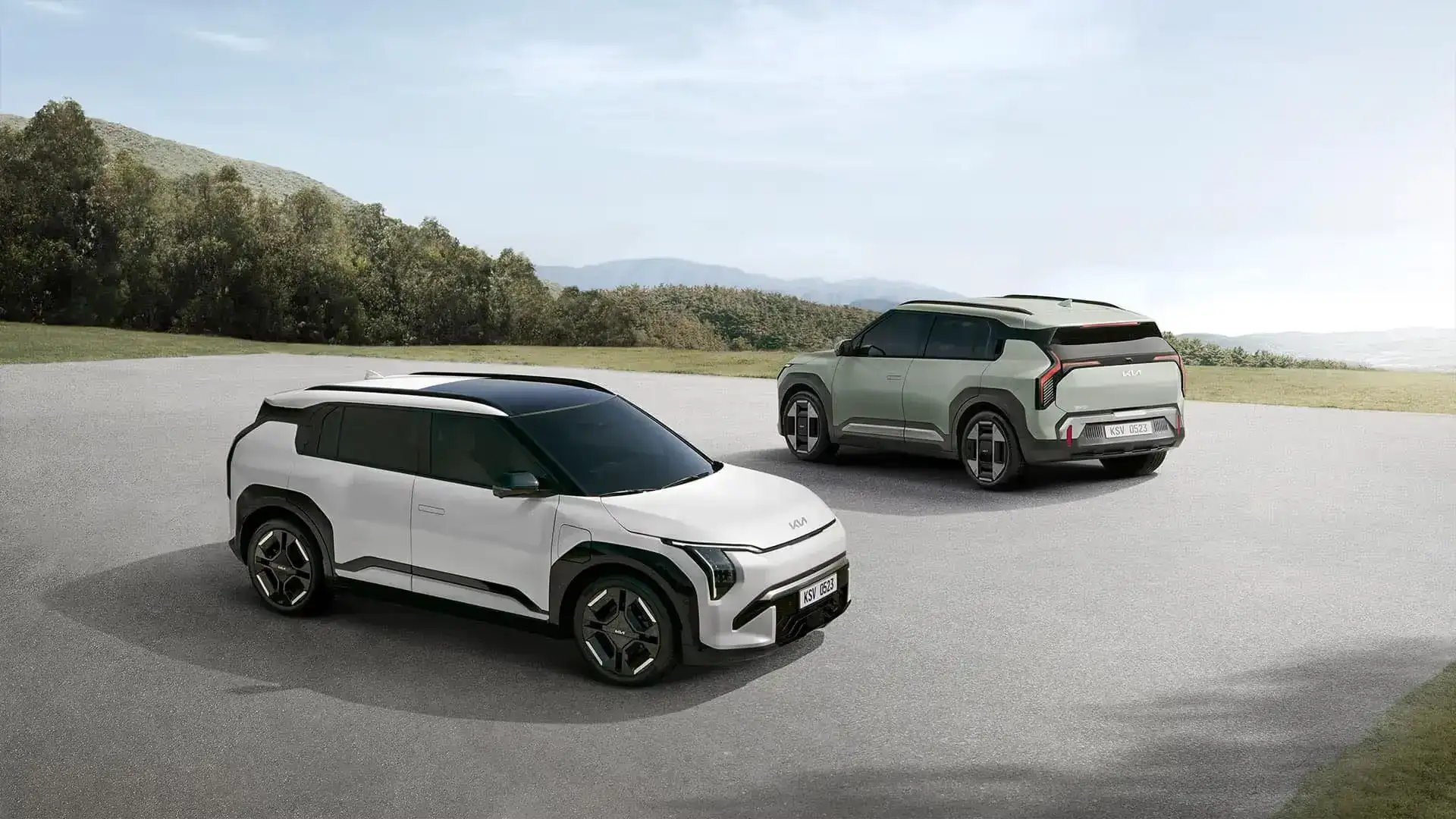
The 2026 Kia EV3 is one of the more anticipated EV arrivals in the Beavercreek market, and the reasons are specific to what the vehicle brings to the compact crossover segment at its price point. The EV3’s combination of a competitive range rating, Kia’s current-generation driver assistance suite, and a starting price that positions it as the most accessible electric vehicle in Kia’s US lineup makes it the EV that Greene County families who have been watching the segment mature are most likely to consider as their first electric vehicle purchase. For many of those buyers, the EV3 will be the first electric vehicle in the household, which means the home charging infrastructure question is being asked for the first time rather than being answered from prior EV ownership experience.
That first-time question deserves a specific and honest answer tailored to the Beavercreek driving environment rather than the generic Level 1 versus Level 2 comparison that applies to any EV in any market. The EV3’s range characteristics, Ohio’s seasonal temperature effects on battery performance, and the specific driving patterns that SR-725, I-675, and the greater Dayton metropolitan corridor produce for Greene County owners all affect which home charging setup delivers the ownership experience the EV3 is capable of providing. At Kia of Beavercreek, we want every EV3 owner to arrive at delivery day with a garage that is ready for the vehicle rather than spending the first month of ownership managing a charging deficit that a pre-delivery preparation would have prevented.
What the EV3’s Charging Requirements Actually Mean at Home
The 2026 Kia EV3 uses an 800-volt electrical architecture that enables its DC fast charging capability at public charging stations. At home, however, the vehicle charges through a standard onboard charger that accepts AC power from a Level 1 or Level 2 home charging setup, and the distinction between those two options has a direct and significant impact on the daily ownership experience for a Beavercreek driver.
Level 1 charging uses a standard 120-volt outlet, the same type that powers any household appliance, and delivers power to the EV3’s battery at a rate of approximately 1.4 to 1.9 kilowatts depending on the outlet’s circuit capacity. At that rate, the EV3 recovers approximately 4 to 6 miles of range per hour of charging. For a Beavercreek owner whose daily commute on SR-725 and I-675 covers 30 to 40 miles round trip, a full overnight Level 1 charge of eight hours recovers 32 to 48 miles, which covers the average daily commute without margin for variation. On days when the commute is longer, when errands extend the daily mileage, or when Ohio’s cold winter temperatures reduce the battery’s charging efficiency and its range contribution, Level 1 charging’s limited recovery rate leaves the next morning’s departure with less charge than the previous night’s arrival started with.
Level 2 charging uses a dedicated 240-volt circuit, the same voltage that powers a clothes dryer or electric range, and delivers power at rates between 7.2 and 11.5 kilowatts depending on the charger and circuit capacity installed. At these rates, the EV3 recovers approximately 20 to 35 miles of range per hour, which means a three to four hour charge from a significantly depleted battery restores the full day’s range requirement with hours of overnight charging time to spare. A Beavercreek owner who arrives home with 20 percent battery remaining after a long Tuesday and plugs into a Level 2 charger at 6 PM leaves Wednesday morning with a full or near-full charge regardless of what Wednesday’s commute demands.
What Ohio’s Winter Does to the Home Charging Calculation 🌨️
The Level 1 versus Level 2 charging decision for a Beavercreek EV3 owner is most consequential in winter, which is precisely the season when the charging calculation is most complicated by factors beyond simple mileage recovery. Ohio’s genuine winter cold affects the EV3’s home charging experience in two specific ways that the warm-weather range and charging calculation does not capture.
Battery charging efficiency declines in cold temperatures because the electrochemical processes that store energy in a lithium-ion cell slow at lower temperatures, which means the EV3’s battery accepts charge more slowly on a 15-degree January morning in Beavercreek than on a 75-degree October evening. A Level 1 charger whose recovery rate is already modest at its best is further reduced in cold temperatures, narrowing the margin between overnight recovery and daily consumption to a point where a high-usage day in winter can leave the morning departure with meaningfully less charge than the calculation predicted in warmer conditions.
The thermal management system that maintains the EV3’s battery within its optimal temperature range during cold weather also consumes energy, both during overnight parking in an unheated garage and during the battery pre-conditioning period before morning departure. This thermal management load does not appear in the daily mileage calculation but it draws from the same battery capacity that the commute requires. A Level 2 charger that recovers energy fast enough to more than offset the thermal management consumption and the commute requirement in parallel leaves the battery in better condition than a Level 1 charger that is barely keeping pace with the commute requirement alone before thermal management consumption is added.
What Home Charging Installation Costs vs. What Level 1 Inadequacy Costs 💰
The home charging infrastructure investment for the EV3 has a cost comparison that is specific and straightforward for a Beavercreek driving pattern:
Level 2 home charger installation:
- Basic Level 2 EVSE unit (hardwired): $400 to $700
- Electrical installation by licensed electrician: $300 to $600 depending on panel capacity and distance
- Total Level 2 installation for most Beavercreek homes: $600 to $1,200
- Federal tax credit for home EV charger installation (if applicable): Up to 30 percent of equipment and installation cost
Level 1 charging consequences in Beavercreek winter commuting:
- Commute days where morning charge is insufficient after high-usage day: Variable, potentially weekly in winter
- Public charging sessions needed to supplement inadequate Level 1 overnight recovery: $8 to $18 per session at area DC fast chargers near the I-675 and Wilmington Pike interchange
- Annual public charging cost to supplement Level 1 inadequacy at two sessions per week in winter: $832 to $1,872
- Charging anxiety management time and planning burden: Not quantifiable but consistent
Level 2 installation payback from eliminated supplemental public charging: One to two years at typical Beavercreek winter commuting patterns
The Level 2 installation is not simply a convenience upgrade over Level 1. For a Beavercreek EV3 owner whose commute pattern involves the SR-725 and I-675 daily mileage accumulation and Ohio’s winter temperature effects, the Level 2 installation is the infrastructure that makes the EV3’s ownership experience match the vehicle’s designed capability rather than requiring daily charging management that the vehicle was not designed to demand.
A Fairborn Owner Who Prepared Before Delivery
A Kia EV3 owner from Fairborn who commutes daily to his workplace near Wright-Patterson Air Force Base on US-35 had followed our pre-delivery charging preparation guidance and arranged a Level 2 charger installation through our preferred electrician network two weeks before his EV3 delivery appointment. The installation added a 50-amp dedicated circuit to his garage and mounted a 48-amp Level 2 EVSE unit that delivers the maximum charging rate the EV3’s onboard charger accepts. His total installation cost was $780 after the federal tax credit reduced the gross cost. On his first full week of ownership, he established the charging habit of plugging in every evening regardless of the day’s usage level and departing every morning with a charge level between 80 and 90 percent. Through his first Ohio winter, he has not made a single public charging stop for commute supplementation and has used the DC fast charger near the Fairborn gate area only twice for weekend trips that exceeded his normal range requirement. He described the Level 2 installation as the single most important decision in his EV3 ownership experience, which is exactly the outcome the pre-delivery preparation conversation was designed to produce.
Warning Signs Your Garage Is Not Ready for the EV3 ⚠️
These indicators suggest that the home garage infrastructure needs attention before EV3 delivery day rather than after the first week of ownership reveals the inadequacy:
A garage with only standard 120-volt outlets and no existing 240-volt circuit: This is the most common infrastructure gap for first-time EV buyers in Beavercreek, and it is entirely correctable before delivery day with a licensed electrician visit. The absence of an existing 240-volt circuit in the garage does not prevent Level 2 installation, but it does require a circuit run from the main electrical panel that adds to the installation cost and time.
An electrical panel that is near or at capacity: A Beavercreek home whose main electrical panel is already carrying significant load from HVAC, electric appliances, and other 240-volt circuits may not have the spare capacity for a 50-amp EV charger circuit without a panel upgrade. Our preferred electrician network can assess panel capacity during the pre-installation site visit and identify whether an upgrade is needed before delivery day rather than discovering the limitation after the vehicle arrives.
A garage whose layout puts the outlet on the opposite wall from the intended parking position: A 120-volt outlet on the wrong wall of a two-car garage is a cord-management problem that Level 2 installation planning addresses by positioning the EVSE unit on the wall nearest the EV3’s charge port location. The pre-installation site visit is the opportunity to identify the optimal mounting location before conduit and wiring are committed to a specific path.
Daily commute that regularly exceeds 50 miles round trip: A Beavercreek owner whose commute on SR-725, I-675, or the Dayton-Yellow Springs Road corridor exceeds 50 miles round trip on a regular basis is in the usage profile where Level 1 charging’s limited recovery rate creates a charging deficit on high-usage days even in mild weather. This commute profile makes Level 2 installation more urgent than for owners with shorter daily mileage accumulation.
A household with multiple drivers sharing the EV3: Two drivers sharing one EV3 and one Level 1 outlet creates a charging competition that Level 2 installation resolves by recovering the full day’s consumption quickly enough that the second driver’s usage pattern does not deplete the first driver’s morning charge requirement.
No experience with EV ownership and no established charging habit: First-time EV owners benefit from the Level 2 charger’s forgiveness for inconsistent charging habits. A Level 2 charger that can restore 35 miles of range per hour accommodates the owner who occasionally forgets to plug in until 10 PM without consequence. A Level 1 charger that restores only 5 miles per hour does not accommodate the same forgetting with the same grace.
What Our Service Team Says
“The home charging preparation conversation is the one we have most productively before delivery rather than after it, because the owner who arrives home on delivery day and discovers their garage is not ready for the vehicle they just purchased is in a frustrating situation that was entirely preventable. What we tell every EV3 customer is that the Level 2 installation is not optional for a Beavercreek commuter who uses SR-725 and I-675 regularly and whose garage sees Ohio winter temperatures. Level 1 will technically charge the vehicle. It will not charge it fast enough to cover the commute pattern and the winter thermal management load that Beavercreek driving produces without supplemental public charging that adds cost and inconvenience that the Level 2 installation eliminates. Do it before delivery day.” — Kevin Slade, EV Product Specialist, Kia of Beavercreek
When Pre-Delivery Preparation Changed the First Month
Maria and her husband had placed their EV3 deposit and were six weeks from their delivery appointment when they attended our EV ownership preparation session at the Heller Drive facility. The session covered home charging infrastructure, Ohio winter range management, and the MyKia app’s pre-conditioning features. They left with a referral to our preferred electrician network and had their Level 2 installation scheduled within the week. The installation was completed 10 days before their delivery appointment, which gave them time to test the charger function and establish familiarity with the app-based charging scheduling before the EV3 arrived. Their first month of ownership produced no charging anxiety, no public charging supplementation for commute purposes, and no winter morning departure shortfalls. They described the pre-delivery preparation as the difference between an ownership experience that matched their expectations and one that would have required a month of adjustment to manage a charging setup that was never adequate for their Beavercreek driving pattern.
Your 30-Day EV3 Home Charging Preparation Plan
This week, walk through your garage and assess the existing electrical infrastructure. Note the location and type of outlets available, identify where the main electrical panel is located and estimate the distance to the garage, and note where the EV3 would be parked relative to the available outlet locations. That walk-through takes 10 minutes and produces the site information that our preferred electrician network needs to provide a preliminary installation estimate before a formal site visit.
Within two weeks, contact our service team at Kia of Beavercreek for a referral to our preferred licensed electrician network and schedule the pre-installation site visit that assesses your panel capacity, identifies the optimal EVSE mounting location, and provides the installation cost estimate before you commit to a specific setup. The site visit typically takes 30 to 45 minutes and provides the specific infrastructure information that converts a general Level 2 installation discussion into a confirmed plan for your specific garage.
By month’s end, if your EV3 delivery is within 60 days, have the Level 2 installation scheduled and preferably completed before delivery day. The installation’s completion before delivery gives you the opportunity to test the charger function, establish the app-based charging schedule that optimizes the EV3’s battery management, and confirm the circuit capacity is supporting the EVSE’s rated output before the vehicle’s daily charging requirement begins. These steps take less than a day of total time across the preparation period and ensure that delivery day produces the ownership experience the EV3 was designed to deliver.
Schedule Your EV3 Preparation Consultation at Kia of Beavercreek
The Beavercreek couple whose Level 1 charging gap was identified before their delivery appointment left our facility with a Level 2 installation scheduled and a clear understanding of the charging habit that would make their EV3 ownership experience what they had anticipated when they placed the deposit. Their delivery day was the beginning of an ownership experience that matched the vehicle’s capability rather than the beginning of a month of charging management that an inadequate infrastructure had made necessary. That outcome was the result of one conversation with our product team before delivery day, which is the conversation we want to have with every EV3 buyer before their vehicle arrives at Heller Drive.
Visit us at Kia of Beavercreek, 2220 Heller Dr, Beavercreek, OH 45434. Our showroom and service department are open Monday through Saturday. Schedule your EV3 home charging preparation consultation online through our website or speak with one of our product specialists directly. We serve drivers from Beavercreek, Fairborn, Xenia, Kettering, Centerville, and throughout Greene County. Your EV3 deserves a garage that is ready for it on delivery day. Let’s make sure yours is. ⚡

0 comment(s) so far on The 2026 Kia EV3: Preparing Your Home Garage for Beavercreek’s Newest Electric Crossover.