



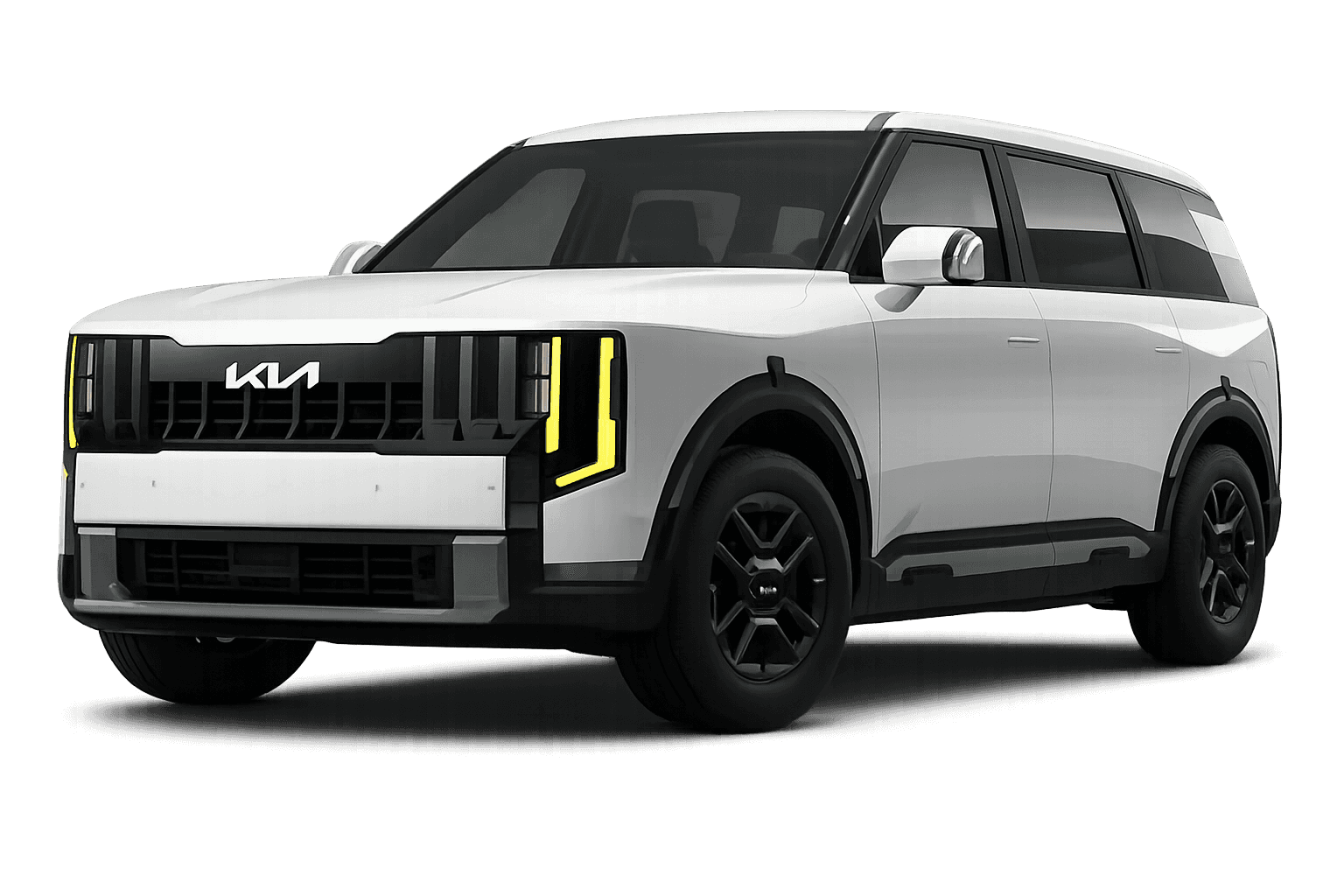
 Telluride Hybrid
The Telluride Family Guide: Ensuring Your Kia’s Safety Tech is Calibrated for I-675 Driving
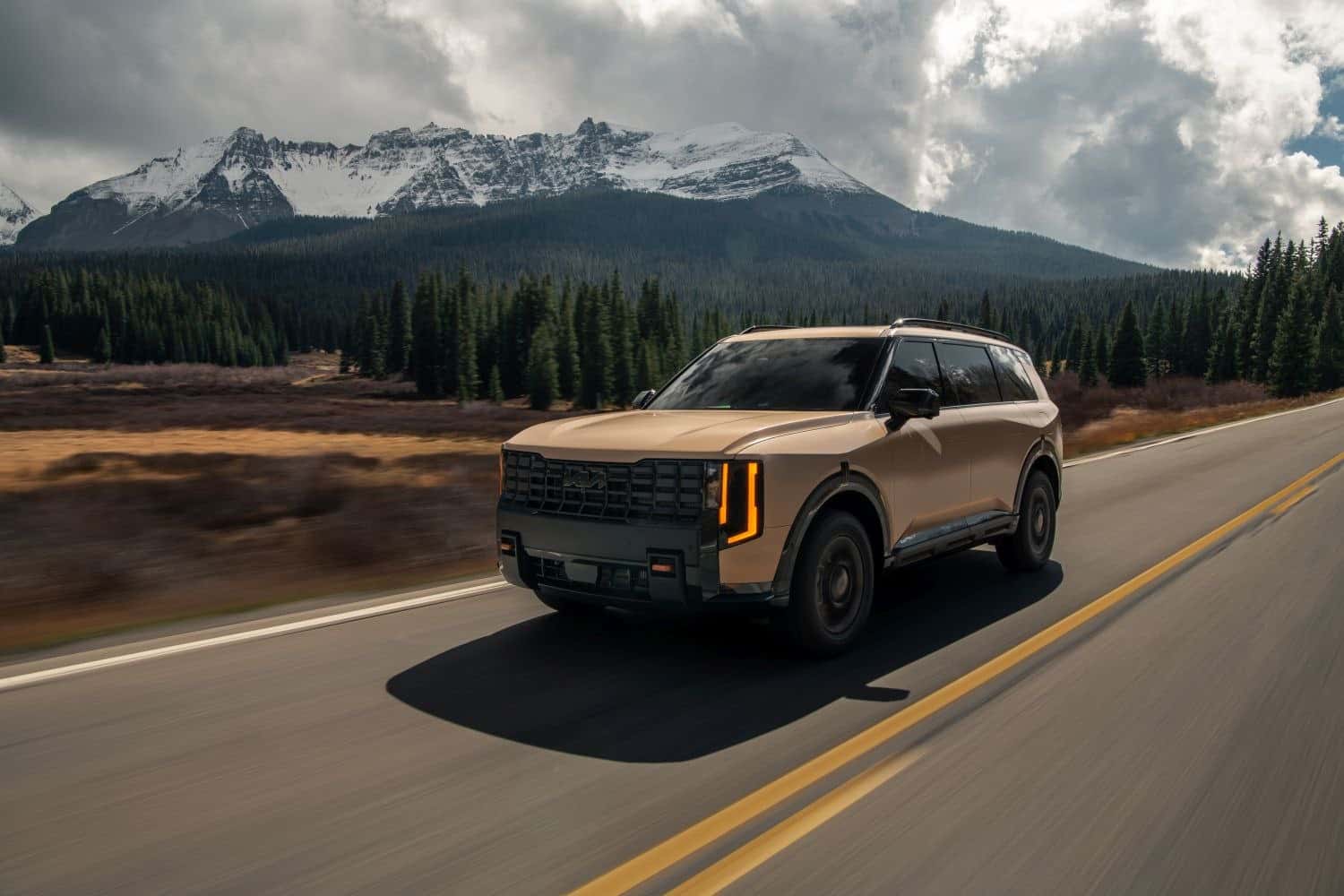
A Kia Telluride owner came into our service bay last month after her forward collision system had triggered an unexpected emergency braking event on I-675 northbound near the Wilmington Pike interchange with her family in the vehicle. There was no vehicle or obstacle ahead that warranted the response. She had assumed the system was functioning correctly because no warning lights had appeared. A diagnostic check revealed the forward-facing camera had drifted outside of its calibration specification following a windshield replacement performed at a non-Kia facility three months earlier. The recalibration that should have been performed at the windshield replacement cost $175. The diagnostic visit to identify why it hadn’t been done cost $145, followed by the recalibration itself.
The Kia Telluride is one of the most safety-technology-rich three-row SUVs available to Beavercreek families, and for good reason. The combination of Forward Collision-Avoidance Assist, Lane Keeping Assist, Blind-Spot Collision Warning, Rear Cross-Traffic Alert, Driver Attention Warning, and the Safe Exit Assist system that monitors for passing traffic before rear passengers open doors makes the Telluride’s active safety suite genuinely comprehensive in a way that families who use I-675 between Beavercreek and the Dayton corridor appreciate in practical daily terms. These are not marketing features that demonstrate their value in controlled conditions and disappear in real driving. They are systems that earn their keep on the I-675 merge zones, the Wilmington Pike interchange approach, and the SR-725 corridor through Centerville where traffic density and variable speeds create exactly the conditions the suite was designed for.
What makes the Telluride’s safety technology consequential also makes it dependent on calibration in a way that simpler vehicles are not. Every camera, every radar unit, and every sensor in the suite is calibrated to specific parameters that define what constitutes a threat, what constitutes a lane, and what constitutes a vehicle in the blind spot. When those calibration parameters drift from their specified values, the system’s responses drift with them, sometimes toward excessive sensitivity that produces false interventions like the Telluride owner’s unexpected braking event, and sometimes toward insufficient sensitivity that reduces the protection the system provides without producing any warning. Neither outcome is acceptable for a family vehicle on I-675, and neither announces itself reliably through warning lights before the behavioral change has already occurred.
At Kia of Beavercreek, we perform safety system calibration checks regularly, and the conditions that produce calibration drift in Greene County and Montgomery County Telluride vehicles are consistent enough that every Beavercreek family deserves a clear understanding of what those conditions are and how to manage them proactively.
What the Telluride’s Safety Systems Actually Require to Function Correctly
The Telluride’s Forward Collision-Avoidance Assist system uses a forward-facing camera mounted at the top of the windshield and a forward-facing radar unit in the lower grille to simultaneously measure distance, closing speed, and object classification for vehicles, pedestrians, and cyclists ahead. The camera provides the visual data for object classification and the radar provides the ranging data for distance and speed measurement. Both sensors must be calibrated to a common reference frame for the system to correctly interpret their combined data and produce appropriate responses on I-675.
Lane Keeping Assist and Lane Following Assist use the same forward-facing camera to identify lane markings and calculate the vehicle’s position within the lane. The camera’s calibration defines the relationship between what the camera sees and what the vehicle’s steering system does in response. A camera that is calibrated correctly keeps lane keeping interventions proportional and well-timed on the I-675 straightaways and the SR-725 curves through Centerville. A camera that has drifted produces interventions that feel too early, too late, or too aggressive on the same sections of road.
Blind-Spot Collision Warning uses rear-facing radar units in the rear bumper fascia to monitor the zones beside and behind the vehicle that mirrors cannot cover. These units are calibrated to monitor specific angular and distance parameters that define the blind-spot detection zone for the Telluride’s specific dimensions. A rear bumper impact, even one that causes no visible damage to the vehicle, can shift a radar unit’s mounting alignment enough to change the detection zone in ways that the system’s self-monitoring cannot identify as a calibration issue because the unit is still functioning, just pointed slightly differently than it should be.
What I-675 Driving Conditions Do to Calibration Over Time 🔧
The I-675 corridor between Beavercreek and the Dayton area creates specific conditions that affect the Telluride’s safety system calibration in ways that are worth understanding before they produce a behavioral change in the system.
Ohio’s winter road treatment season deposits road salt and fine particulate on the Telluride’s front sensors during the months when the I-675 and SR-725 corridors receive the heaviest treatment application. The forward camera lens and the radar cover accumulate this material in a way that affects sensor performance before the accumulation reaches the level where a warning light appears. A camera lens with a thin salt film reduces the contrast sensitivity of the lane marking detection algorithm in ways that are most apparent on I-675 sections where lane markings have been worn by winter traffic and are less distinct than freshly painted markings. The system compensates within its calibration range, but sensors operating at the edge of their designed input quality provide less reliable performance than clean sensors operating at the center of that range.
Spring pothole damage on the I-675 corridor and the surface streets connecting Beavercreek neighborhoods to the freeway creates the impact events that most directly affect safety system calibration. A significant pothole hit on Heller Drive or the I-675 on-ramps transmits force into the vehicle’s structure that can shift windshield-mounted camera positions and affect the alignment of grille-mounted radar units. The shift may be small enough that it produces no visible indication and the vehicle feels unchanged to drive, but the calibration parameters that were correct before the impact may no longer match the sensor’s actual position after it.
Summer heat in the Dayton area adds a thermal dimension to calibration stability. The extreme underbody and sensor housing temperatures that a Telluride parked in an exposed lot near Cornerstone of Centerville or the Beavercreek Golf Club accumulates on a July afternoon can affect adhesive bonds on sensor mounting hardware and produce dimensional changes in sensor brackets that alter calibration over successive heat cycles. This effect accumulates gradually and is not specific to any single event, which makes it harder to identify than a pothole impact but equally real in its effect on system accuracy.
What Safety System Calibration Costs vs. What Miscalibration Costs 💰
The calibration cost structure for the Telluride’s safety suite reflects the importance of correct diagnosis and professional calibration access:
- Forward camera recalibration (static target method): $175 to $250
- Radar unit alignment check and adjustment: $95 to $145
- Blind-spot radar recalibration: $145 to $210
- Full safety suite diagnostic and calibration check: $145 to $210
- Post-windshield replacement camera recalibration: $175 to $250
Proactive annual calibration maintenance: $145 to $210 for a full diagnostic check
Consequences of miscalibration on I-675:
- False emergency braking event (potential rear-end collision): Property damage from $1,500 to $15,000 plus insurance implications
- Lane keeping assist that pulls into adjacent lane: Potential collision exposure on multi-lane I-675 sections
- Blind-spot warning that misses vehicles in merge zone: Collision exposure during I-675 and SR-725 lane changes
- Diagnostic visit to identify undisclosed miscalibration: $145 plus recalibration cost
The safety system calibration investment is the maintenance item with the most direct connection to the physical safety of everyone in the vehicle. A miscalibrated forward collision system is not a diminished convenience feature. It is a compromised safety system in a vehicle carrying Beavercreek families on I-675 every day.
A Fairborn Family That Came In After a Windshield
A Kia Telluride owner from Fairborn came in last winter after having his windshield replaced at an auto glass shop on Dayton-Yellow Springs Road following a stone chip. The glass shop had not mentioned camera recalibration at the time of the replacement, and he had not known to ask about it. Three weeks later his wife mentioned that the lane keeping assist had been making corrections that felt slightly early compared to how the system had behaved before the windshield replacement. He came in and our diagnostic confirmed the forward camera calibration had shifted when the windshield was replaced without the recalibration step. The camera was performing within functional limits but outside its specified calibration parameters. The recalibration cost $195 and his wife described the lane keeping behavior on their next I-675 drive as immediately returning to the smooth, well-timed response they had been used to before the windshield replacement.
Warning Signs Your Telluride’s Safety Tech Needs Calibration ⚠️
These indicators suggest the Telluride’s safety suite may have drifted from its calibration specification and warrants a diagnostic check before the next I-675 family drive:
Forward collision warnings that trigger without a clear threat ahead: False positive alerts on I-675 straightaways with no vehicle in the detection zone, or alerts that trigger significantly earlier than the system previously did for the same closing distance, indicate a forward camera or radar calibration issue rather than appropriate system sensitivity.
Lane keeping assist that feels different than it did when new: A system that now makes corrections that feel earlier, later, more aggressive, or less smooth than it did on familiar I-675 sections shortly after purchase has either experienced a calibration event or accumulated gradual drift from Ohio’s road conditions. Both causes are correctable through recalibration.
Blind-spot warning that activates inconsistently on I-675 lane changes: A system that sometimes alerts and sometimes doesn’t in similar lane-change situations on the I-675 merge zones near the Wilmington Pike interchange may have a rear radar unit whose detection zone has shifted from a minor impact or bracket change. Inconsistency in a safety-critical system on a busy freeway is not an acceptable operational state.
Safety system behavior that changed after a windshield replacement: Any change in forward collision, lane keeping, or lane following behavior that appeared after a windshield replacement at any facility is almost certainly a camera recalibration that was not performed. This is the most common and most correctable source of safety system miscalibration we see in Telluride vehicles.
Driver Attention Warning that triggers at unexpected moments: The driver monitoring system’s camera calibration is separate from the forward-facing suite. A system that produces attention warnings during normal attentive driving on I-675 may have a monitoring camera that drifted from its calibration position.
Safe Exit Assist that activates inconsistently: The rear cross-traffic monitoring that powers Safe Exit Assist uses the same rear radar units as blind-spot detection. Inconsistent Safe Exit Assist behavior in the Beavercreek Golf Club parking area or any familiar parking environment points to the same rear radar calibration issue that inconsistent blind-spot warnings indicate.
Any safety system warning light that appeared and cleared: A warning light that appeared during an I-675 commute and cleared on its own has logged a fault code that remains in the diagnostic system even after the light extinguished. A cleared warning is not a resolved warning, and reading the stored code is the only way to understand what condition produced it.
What Our Service Team Says
“The Telluride’s safety suite is genuinely one of the more comprehensive systems we work with in this segment, and it delivers what it promises when every component is calibrated correctly. What we see most often is calibration events that owners don’t connect to a specific incident, particularly the gradual drift from Ohio’s winter road conditions and the camera shifts that follow windshield replacements at facilities without Kia-specific calibration equipment. The system continues to function after those events, just not as accurately as it should, and the difference between accurate and close-enough in a forward collision system on I-675 with a family in the vehicle is not a difference most families are comfortable accepting once they understand it.” — Kevin Slade, Safety Systems Advisor, Kia of Beavercreek
When Early Detection Protected What Mattered Most
Patricia drives her Telluride between her home near the Beavercreek Golf Club and her workplace near the I-675 and US-35 interchange daily, with her two children in the third row on school pickup days. She came in last fall for a routine service and mentioned that the forward collision system seemed to be alerting slightly more frequently than it had when the vehicle was new, though no warning lights had appeared. Our diagnostic confirmed a minor camera calibration drift consistent with the combination of the previous winter’s road conditions and a pothole impact on Heller Drive she recalled from the spring. The recalibration cost $195 and she described the system’s behavior on the next school pickup commute on I-675 as returning to the unobtrusive, well-calibrated performance she had been used to when the vehicle was delivered. She now schedules an annual safety system check every August before the school year commute pattern resumes.
Your 30-Day Telluride Safety Tech Check
This week, drive your Telluride on a familiar I-675 route with all safety systems active and pay deliberate attention to how each system behaves compared to your memory of how it behaved in the first several months of ownership. Note whether forward collision alerts feel proportional to actual traffic situations, whether lane keeping interventions feel smooth and well-timed on the straightaways between the Wilmington Pike and SR-725 interchanges, and whether blind-spot alerts are appearing consistently during lane changes in the merge zones. These observations take no additional time because they use your existing commute as the calibration reference, and any behavioral difference from your early-ownership recollection is worth documenting.
Within two weeks, check your service history for any windshield replacement, significant front-end work, or rear bumper repair performed at any facility since your last Kia safety system calibration check. Any of those events at a non-Kia facility that did not include a documented camera or radar recalibration is a gap that warrants a diagnostic visit regardless of whether behavioral changes have been noticed. The absence of obvious miscalibration symptoms does not confirm that calibration is correct, and Kia’s factory diagnostic tools provide the only definitive answer.
By month’s end, schedule a safety system calibration check at Kia of Beavercreek if any of the warning signs described above have appeared or if your vehicle has not had a documented calibration verification since delivery. Our technicians can run a full diagnostic of every camera and radar unit in the Telluride’s safety suite, compare the current calibration state of each component against Kia’s specified parameters for your model year, and perform any indicated recalibration using the factory equipment and static target methods that this work requires. These steps take less than two hours and confirm that the safety technology your family depends on for every I-675 commute is performing at the accuracy level it was designed to deliver.
Schedule Your Telluride Safety System Check at Kia of Beavercreek
The Telluride owner whose unexpected emergency braking event traced to an uncalibrated windshield replacement came back after the recalibration and reported that the forward collision system had not produced a single unexpected intervention on her subsequent I-675 commutes. The system that had been alarming her family with false emergency responses was performing correctly once the calibration the windshield replacement required had been applied. The $175 recalibration that should have accompanied the windshield replacement cost $320 total by the time the diagnostic visit was added, and the emergency braking event that preceded both was the cost that cannot be assigned a dollar figure because of how much worse it could have been with her family in the vehicle on a busy I-675 afternoon.
Our team at Kia of Beavercreek has the factory calibration equipment, the Kia-specific diagnostic access, and the I-675 corridor knowledge to ensure that every component of your Telluride’s safety suite is performing at the accuracy level that Beavercreek family driving demands. Safety technology that is close to calibrated is not the same as safety technology that is correctly calibrated, and on I-675 with a Telluride full of your family, that difference is the only one that matters.
Visit us at Kia of Beavercreek, 2220 Heller Dr, Beavercreek, OH 45434. Our service department is open Monday through Saturday. Schedule your Telluride safety system check online through our website or speak with one of our service advisors directly. We serve drivers from Beavercreek, Fairborn, Xenia, Kettering, Centerville, and throughout Greene County. Your Telluride’s safety technology was built to protect your family on I-675. Make sure it is calibrated to do exactly that. 🛡️

0 comment(s) so far on The Telluride Family Guide: Ensuring Your Kia’s Safety Tech is Calibrated for I-675 Driving