


Towing Campers to Caesar Creek: Transmission & Braking Maintenance for the Kia Sorento X-Pro
Key Takeaways
- The Sorento X-Pro’s 8-speed automatic transmission works significantly harder under trailer load, generating more heat that accelerates fluid breakdown on long grades like those leading into Caesar Creek State Park.
- Braking systems face amplified stress towing a camper, especially on the descents along Clarksville Road and State Route 73 approaching the lake.
- A pre-towing inspection of transmission cooling, fluid condition, and brake components prevents overheating and premature wear before a weekend trip turns into a roadside problem.
- Skipping trailer-prep maintenance can turn a $220 to $320 service into a $2,500-plus transmission repair, particularly if fluid breakdown goes unnoticed over a full camping season.
Beavercreek families heading out to Caesar Creek State Park for a weekend of camping put their Sorento X-Pro through a very different kind of workload than the daily commute down North Fairfield Road. Towing a camper, even a modest travel trailer, changes how hard the transmission and brakes have to work, especially once the route picks up the rolling hills along State Route 73 and the grades near the lake’s western shoreline. The Sorento X-Pro is rated for real towing capability, but that capability depends on a transmission and braking system that are properly maintained and ready for sustained load, not just casual daily driving. A transmission that overheats on a loaded tow up the hills near Caesar Creek can mean a repair bill well over $2,500, compared to a routine pre-towing service in the low hundreds, which makes seasonal preparation one of the more financially important things a towing Sorento owner can do.
Why Towing Puts Extra Strain on the Sorento X-Pro’s Transmission
The Sorento X-Pro’s 8-speed automatic transmission is built to handle its rated towing capacity, but “capable of” and “coasting through it without consequence” are two different things. Under trailer load, the transmission works through more gear changes, holds gears longer on grades, and generates substantially more internal heat than it does during unloaded driving. Automatic transmission fluid is engineered to handle a specific heat range, and once it’s pushed beyond that range repeatedly, it begins to break down faster than its service interval assumes.
This matters specifically for the Caesar Creek route because the drive isn’t flat. Depending on the approach, Beavercreek drivers heading south and east toward the park pass through rolling terrain that requires the transmission to downshift and hold lower gears more frequently than a straight highway cruise would. Each of those sustained pulls adds heat cycles that a casual driving pattern simply doesn’t produce.
A pre-towing transmission check should include:
- Transmission fluid condition and level inspection, checking for discoloration or a burnt smell that indicates heat damage
- Transmission cooler and cooling line inspection, confirming the cooling system isn’t restricted or leaking, since this is the primary defense against heat buildup under load
- Fluid temperature sensor diagnostic scan, checking for stored codes related to overheating events from previous trips
- Mount and linkage inspection, since trailer weight transfers additional stress through the drivetrain mounts during acceleration and braking
Catching degraded fluid or a partially restricted cooler before a towing season starts is far less expensive than diagnosing a transmission that’s already suffered heat damage from a summer of camper trips.
Braking Demands on the Descents Near Caesar Creek
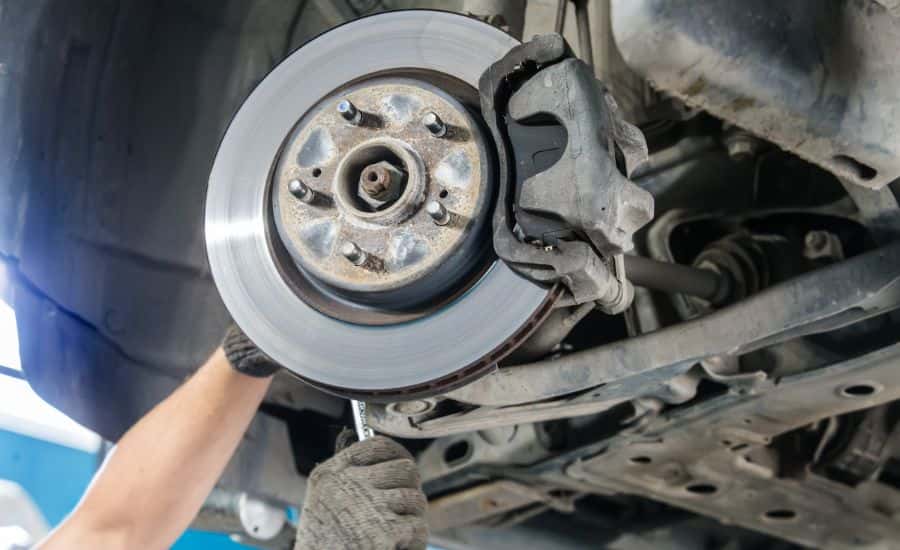
Towing adds weight, and added weight changes stopping distances and brake wear in ways that aren’t always obvious until they matter most. The descents along Clarksville Road and the hillier stretches of State Route 73 near the park’s western entrance put sustained load on the brake pads and rotors as drivers manage a loaded trailer down grades that would barely register in an unloaded vehicle.
Riding the brakes on a long descent, which many drivers do instinctively when towing, builds heat in the rotors and pads far faster than normal stop-and-go braking. Over repeated trips across a camping season, that heat cycling can glaze brake pads, warp rotors, and in more severe cases, cause brake fluid to absorb enough heat to affect pedal feel.
A pre-towing brake inspection should cover:
- Pad and rotor thickness measurement, confirming there’s enough material left to handle sustained braking on grades, not just city driving
- Brake fluid condition check, since fluid that has absorbed moisture over time has a lower boiling point and is more prone to fade under heat
- Trailer brake controller function test, if the camper is equipped with electric brakes, confirming the controller is properly calibrated to the trailer’s weight
- Caliper and hardware inspection, checking for sticking calipers that could cause uneven wear or dragging under load
Getting these components checked before the first Caesar Creek trip of the season means the braking system is working with the transmission’s engine braking, not compensating for a transmission that’s already run hot on the way there.
How Transmission and Braking Systems Work Together Under Tow
It’s worth understanding that these two systems aren’t independent when towing. The Sorento X-Pro’s transmission uses engine braking on descents to help manage speed and reduce strain on the brakes, particularly in lower gear selections designed for towing. If the transmission isn’t shifting properly, whether from degraded fluid or a sensor issue, it may not hold the lower gears needed for effective engine braking, which shifts more of the workload onto the brakes than the system was designed to handle on a given grade.
This is why a towing-prep inspection makes more sense as a combined transmission-and-brake service rather than two separate concerns. A Sorento with a healthy transmission holding proper tow-mode gear selection will naturally reduce the braking demand on the hills near Caesar Creek, while a transmission that’s slipping or shifting inconsistently puts more strain on pads and rotors that are already working harder than usual.
The Cost of Prevention Versus the Cost of a Breakdown
Laid out side by side, the financial case for pre-towing maintenance is clear:
- Transmission fluid service and cooling system inspection: typically $150 to $220, depending on fluid type
- Brake pad and rotor inspection with minor service: roughly $70 to $150 if caught early
- Full brake pad and rotor replacement (per axle): commonly $300 to $550 if wear has progressed
- Transmission repair after sustained heat damage: frequently $2,500 to $4,500 or more, and in severe cases a full transmission replacement can run higher
The pattern holds true across almost every towing-related failure: components that fail expensively, the transmission and the braking system, are exactly the ones a seasonal inspection is designed to catch early, well before a trip to Caesar Creek turns into a call for a tow truck instead of a trip pulling one.
Caesar Creek State Park is one of the better weekend destinations within reach of Beavercreek, and the Sorento X-Pro is a genuinely capable vehicle for getting a camper there and back. But that capability holds up best when the transmission and brakes have been checked and serviced ahead of a season of towing, not after the first sign of trouble on State Route 73. Kia of Beavercreek, located at 2220 Heller Dr, Beavercreek, OH 45434 offers the transmission fluid service, cooling system inspection, and brake evaluation needed to get a Sorento X-Pro ready for a full season of camper trips, giving Beavercreek families one less thing to think about before the next weekend at the lake.
0 comment(s) so far on Towing Campers to Caesar Creek: Transmission & Braking Maintenance for the Kia Sorento X-Pro