


Winter-to-Spring: Why “Terrain Mode” Isn’t a Substitute for Tire Rotation
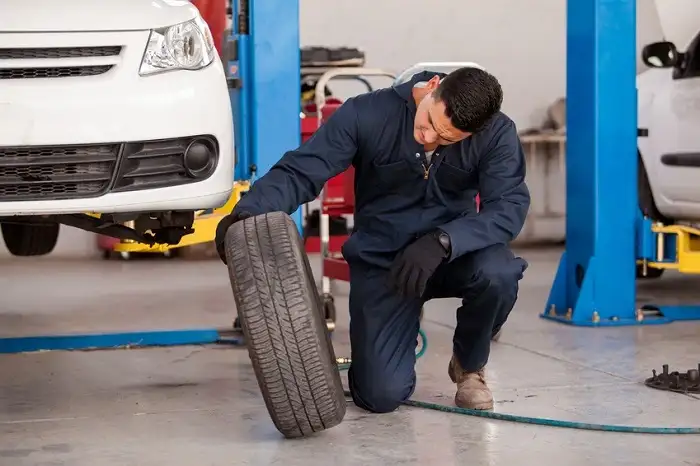
A Kia Telluride owner came in last March after noticing a loud hum from the front axle on I-675 that hadn’t been there in the fall. He had leaned heavily on Terrain Mode through a tough Greene County winter, assuming the system was managing his tires through the ice and snow on Heller Drive and the slush on US-35. He hadn’t rotated his tires in 18 months. Replacing the two front tires that had worn into a cupped pattern from uneven load distribution cost him $480. Keeping up with rotations every 6,000 miles would have cost him $140 over the same period.
Terrain Mode is one of Kia’s more capable driver assistance features, and it genuinely earns its reputation during a southwest Ohio winter. When the roads through Beavercreek ice over overnight and the morning commute on Dayton-Yellow Springs Road turns unpredictable, having a system that adjusts torque distribution and throttle response for low-traction conditions makes a real difference. It is easy to understand why drivers come to trust it through a hard season.
What Terrain Mode cannot do is redistribute the physical wear that accumulates on tires when the same wheels bear the same loads mile after mile through months of winter driving. That is a mechanical reality no electronic system addresses, and it is exactly what tire rotation exists to correct. At Kia of Beavercreek, we see the consequences of this misunderstanding every spring when the snow clears and owners start noticing noises, vibrations, and wear patterns that built up quietly through the winter months.
What Terrain Mode Actually Does and What It Doesn’t
Kia’s Terrain Mode adjusts several vehicle systems simultaneously when activated. It modifies the all-wheel-drive torque split to send power more aggressively to the wheels with traction, dials back throttle sensitivity to reduce wheelspin on slippery surfaces, and in some models adjusts the stability control thresholds to allow a controlled amount of wheel slip when that helps maintain momentum through loose or slick conditions.
Those are genuine and useful adjustments that make a Kia Sportage, Telluride, or Sorento meaningfully more capable in winter conditions on Greene County roads. What the system does not do is change which tires are bearing the primary braking, steering, and drive loads of the vehicle. On a front-wheel-drive Sportage, the front tires are still doing the majority of the work regardless of what mode the vehicle is in. On an AWD Telluride, the torque split adjusts dynamically but the front tires still carry the steering load and typically see higher wear rates than the rear. Terrain Mode manages how power is delivered. It does not manage how rubber is consumed.
How an Ohio Winter Sets Up Uneven Wear 🌨️
Southwest Ohio winters create a specific tire wear pattern that becomes visible every spring. Beavercreek roads go through repeated freeze-thaw cycles that leave surfaces rough, patchy, and unpredictable from week to week. US-35, the I-675 interchange, and the surface streets through the fairgrounds district near Dayton-Yellow Springs Road all develop the kind of irregular texture that puts higher stress on tires than smooth pavement does.
When tires run on rough, variable surfaces through an entire winter without rotation, the wear that develops is not even across the tread or consistent from tire to tire. The front tires on a front-wheel-drive Kia scrub harder through every turn on Heller Drive and every braking event on North Fairfield Road. The outside edges of those tires wear faster than the center or inside edges because of the lateral load transferred during cornering. After four or five months of that, the wear pattern is set in a way that rotation can no longer fully correct if it has been deferred too long.
This is the timing problem with waiting until spring to think about rotation. The damage from a winter without rotation is often already done by the time March arrives. The value of consistent rotation is that it prevents the pattern from developing in the first place.
What Consistent Rotation Costs vs. What Deferred Rotation Costs 💰
The arithmetic on tire rotation is straightforward:
- Tire rotation every 6,000 miles: $35 to $55 per visit
- Three rotations over an 18-month winter-to-winter period: $105 to $165 total
- Full rotation and balance: $65 to $90 per visit
Staying on a rotation schedule over 18 months: $105 to $165
Replacing prematurely worn front tires after 18 months without rotation:
- Budget tire replacement (pair): $280 to $380
- Mid-range tire replacement (pair): $420 to $560
- Premium tire replacement (pair): $580 to $780
A driver who skips three rotations over 18 months to save $140 and then replaces a pair of front tires four years early spends three to five times more than the rotations would have cost. That math holds regardless of what vehicle you drive or what mode you use through the winter.
A Pattern That Showed Up Every Spring
A Kia Sorento owner from Fairborn came in last April after her vehicle developed a noticeable vibration above 55 mph on I-675 northbound. She had purchased the car the previous summer and had used it heavily through the winter for school pickups and weekend errands around the Beavercreek area. The tires had never been rotated. When we inspected them, the front tires had developed a cupping pattern, meaning the tread had worn in an irregular scalloped pattern from repeated impacts on rough road surfaces without the load relief that rotation provides. We rotated the tires, but the cupping was advanced enough that the vibration could only be fully eliminated with new front tires. Total cost: $510. A rotation schedule through the winter would have cost her $70.
Warning Signs Your Tires Need Attention After Winter ⚠️
Spring is the right time to assess what winter did to your tires. These are the indicators to look for:
Humming or droning noise that changes with speed: A low hum that increases with vehicle speed and sometimes shifts when you change lanes on I-675 is a classic sign of cupped or unevenly worn tires. It often appears after a winter of deferred rotation.
Vibration through the steering wheel above 45 mph: Uneven wear creates imbalance that shows up as vibration at highway speeds. If your Kia felt smooth in October and vibrates now, the winter’s wear pattern is the most likely cause.
Steering that feels less precise than it did in fall: Uneven front tire wear changes the contact patch geometry and can make steering response feel slightly vague or inconsistent on Dayton-Yellow Springs Road compared to how it felt before winter.
Visible wear difference between front and rear tires: Stand at the side of your Kia and compare the front and rear tires visually. If the fronts look noticeably more worn or show a different tread depth than the rears, rotation has been deferred too long.
Tread depth that differs across the width of the tire: Run your hand from the inner to outer edge of the front tire tread. If one side feels lower than the other, uneven wear has already set in and a rotation should happen immediately.
Vehicle pulling to one side on a level road: Uneven wear between the left and right front tires can create a pull on straight roads like Heller Drive. This can also indicate an alignment issue, and the two should be checked together after a winter of heavy driving.
What Our Service Team Says
“Every spring we see the same thing: customers who trusted their AWD system or Terrain Mode to manage their tires through winter and come in with front tires that are significantly more worn than the rears. The electronic systems are doing exactly what they’re designed to do, but none of them move rubber from one tire to another. That’s what rotation does, and there’s no substitute for it. If you didn’t rotate through the winter, come in now before the wear pattern gets any more established.” — Kevin Slade, Service Advisor, Kia of Beavercreek
When Timing the Rotation Right Made the Difference
James drives a Kia Sportage and commutes daily between Beavercreek and Wright-Patterson Air Force Base, putting significant miles on the vehicle through every season. He came in last November before the first real cold snap of the season and asked us to set up a rotation schedule he could actually stick to. We mapped out three rotation visits across the winter and spring months based on his typical mileage and tied each one to an oil change visit so he wouldn’t need a separate trip. He came in on schedule through February and again in late March. When we checked the wear at the spring visit, all four tires were within 2/32 of each other in tread depth. He will get the full expected life out of that set without any uneven wear compromise. Total rotation cost for the winter: $120.
Your 30-Day Winter-to-Spring Tire Check
This week, do a walk-around inspection of all four tires and compare them visually. Look at the tread depth from the front axle to the rear and note whether the fronts appear more worn. Then run your hand across each front tire’s tread surface and feel for any scalloping, cupping, or variation in wear depth across the width of the tire. If anything feels irregular, schedule a rotation before adding more miles on top of an existing wear pattern.
Within two weeks, check your service records for the last tire rotation date and calculate the mileage you’ve driven since then. Kia recommends rotation every 5,000 to 7,500 miles, and the winter months often stretch that interval without owners realizing it because service visits feel less urgent when the car is otherwise running fine. If you’re past 7,500 miles since the last rotation, you’re already overdue.
By month’s end, schedule a rotation and inspection at Kia of Beavercreek and ask us to check alignment alongside the rotation. Winter impacts on Greene County roads frequently shift alignment angles enough to accelerate the uneven wear that deferred rotation allows to develop. Combining both services in one visit gives you a complete picture of where your tires stand heading into spring. These three steps take less than two hours total and protect a tire investment that costs far more to replace than to maintain.
Schedule Your Tire Rotation at Kia of Beavercreek
The Telluride owner who came in with $480 worth of front tire wear from that winter of deferred rotation came back the following fall and asked us to set up a rotation reminder system through his service account. He hasn’t missed one since, and his current set of tires is tracking evenly at well past the mileage where his previous set had already failed. Terrain Mode kept him safe through a tough winter. Consistent rotation is keeping his tires alive through every season after it.
Your Kia was engineered with systems that work together, and tire rotation is part of that system. It is not optional maintenance that can be substituted with a driving mode or deferred until something sounds wrong.
Visit us at Kia of Beavercreek, located at 2220 Heller Dr, Beavercreek, OH 45434. Our service department is open Monday through Saturday. Schedule your rotation online through our website or stop in and speak with a service advisor directly. We serve drivers from Beavercreek, Fairborn, Xenia, Kettering, and throughout Greene County. Spring is the right time to find out what winter did to your tires. Come in and let us take a look. 🔄
0 comment(s) so far on Winter-to-Spring: Why “Terrain Mode” Isn’t a Substitute for Tire Rotation